
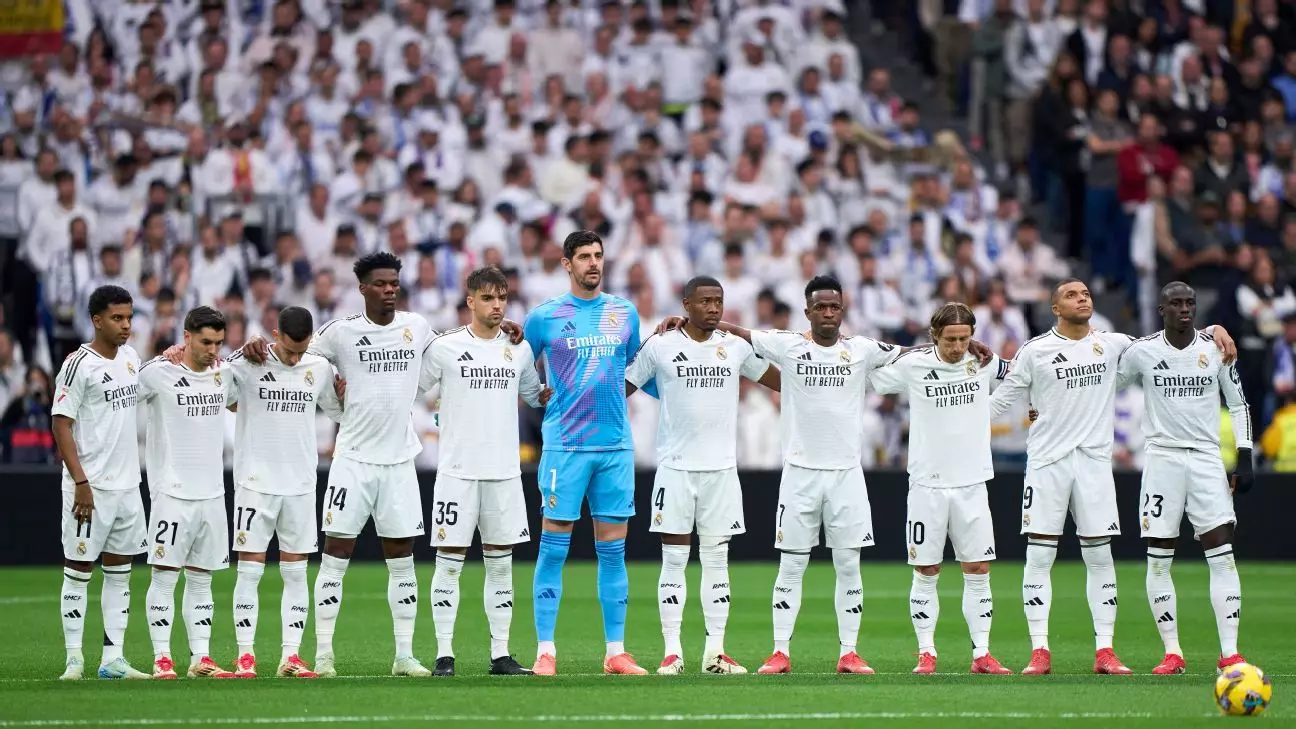
In the high-stakes world of professional football, scheduling clashes and a congested calendar are often accepted as part of the game. However, Real Madrid’s recent stand against an unreasonable fixture schedule has brought to light the pressing issue of player welfare. Manager Carlo Ancelotti’s declaration that the club would refuse future matches without at least 72 hours of rest between games doesn’t merely echo a sentiment; it spearheads a necessary movement for player protection in modern football, a landscape increasingly dictated by television contracts and financial incentives over athlete health.
Football has morphed into a relentless enterprise, squeezing players into a non-stop cycle of games that frequently puts their well-being at risk. Ancelotti’s frustration stems from a Champions League encounter against city rivals Atlético Madrid, which saw his squad endure nearly two hours of play followed by a nerve-wracking penalty shootout. This match, scheduled inconveniently late, left little room for recovery before a LaLiga clash against Villarreal just 72 hours later. The ramifications of such a tight timeline are significant: not only do players risk physical injuries, but the mental toll of inadequate recovery can also impair performance and increase the likelihood of burnout.
The Consequences of Neglecting Recovery
Injuries have become all too common in the world of football, sparking regular debates around player safety. FIFA recommends a standard recovery period of 72 hours, yet many clubs often find themselves playing within even tighter timeframes. In Real Madrid’s case, Ancelotti’s insistence on enforcing this minimum rest period signals a critical juncture. The fresh contract negotiations and lucrative broadcasting deals often supersede player considerations, creating a culture that prioritizes profit over welfare.
As Ancelotti pointedly remarked about the decision-makers: “the last thing on anyone’s mind is the players’ recovery.” His candid acknowledgment reflects a broader frustration shared by many within the sport. Promoting a culture in which financial interests dictate player usage time can jeopardize not only the players’ health but also the quality of the games played. Tired athletes are less effective, and the spectacle that draws in fans is ultimately diminished when teams are unable to field their best players.
A Call for Change: The Role of Governing Bodies
The matter extends beyond Real Madrid. Their plight might echo the feelings of numerous clubs navigating similar challenges. Encouragingly, Real Madrid has escalated their demands, seeking the support of FIFA to address scheduling practices. This is where the governing bodies must take action. If institutions like FIFA and LaLiga are truly committed to safeguarding the integrity of the sport, they must concede that overly congested schedules can harm not just players, but the very essence of what fans love about football.
Players are not mere commodities; they are the heart of the sport. Protecting them must come first. After securing a hard-fought victory over Villarreal, Ancelotti emphasized his pride in his exhausted players, emphasizing their resilience and unity. However, such fortitude should not be the basis of club culture; rather, their health and safety need to be foundational pillars guiding league decisions and match schedules.
Rethinking the Fixture Calendar
As the 2024-25 season approaches, predictions of intensified fixture congestion—particularly with the expansion of the FIFA Club World Cup—paint a daunting picture. The question now stands: will powers like LaLiga listen, or will profit margins continue to rule the roost? To maintain a high level of competition, leagues must start prioritizing significant recovery periods for their players, leading to better performances, minimizing injuries, and enhancing the overall quality of football.
Real Madrid’s bold stance may indeed be the catalyst needed for change within football’s corridors of power. The momentum generated by this and similar movements could result in a crucial shift in how leagues view player welfare. It’s not just a localized issue; it’s an opportunity for collective leadership in the sporting world to establish a foundational standard for how clubs prioritize their players in the relentless pursuit of success.