
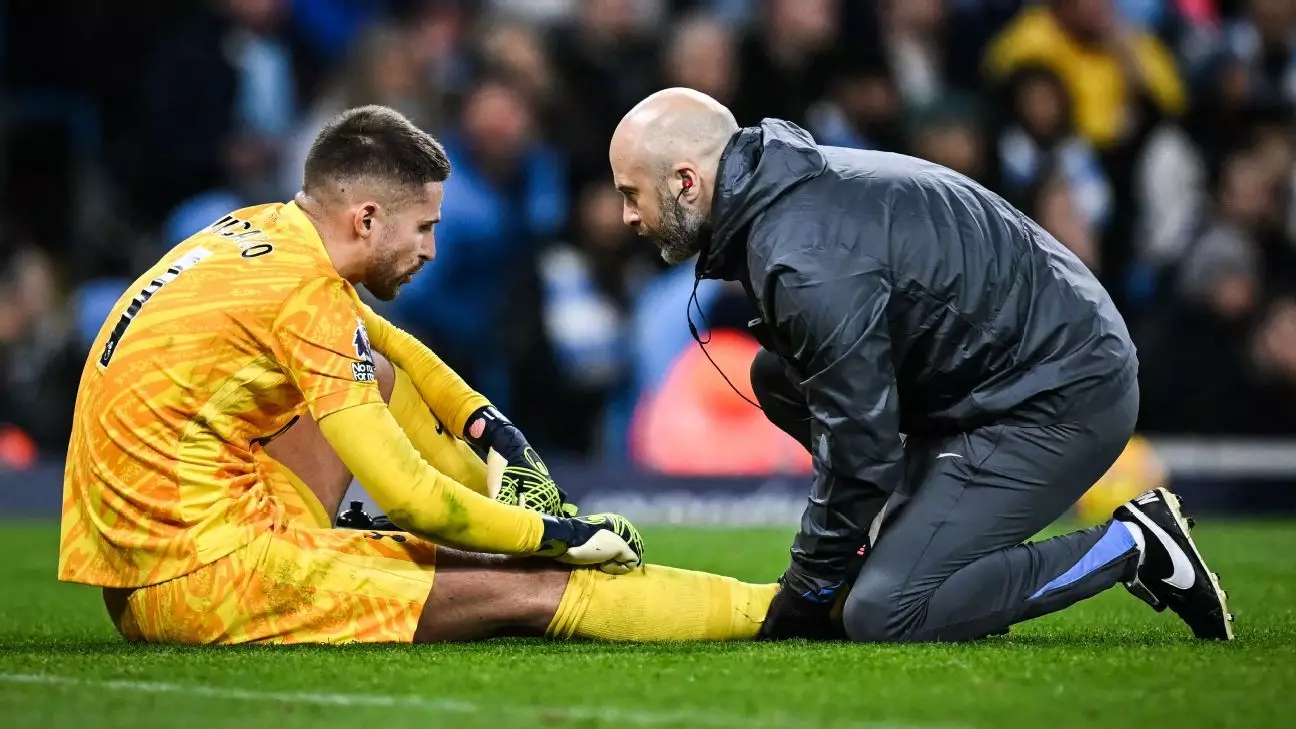
In a stunning revelation following Tottenham Hotspur’s emphatic 4-0 victory over Manchester City, manager Ange Postecoglou expressed his shock upon learning that goalkeeper Guglielmo Vicario had sustained an ankle fracture during the match. The incident occurred in the first half when Vicario collided with City’s Savinho. Despite the injury, Vicario displayed remarkable fortitude by finishing the game, contributing crucial saves that helped preserve Spurs’ lead and fend off Manchester City’s advances. This determination embodies the spirit of modern football, where athletes frequently push through pain barriers for the sake of their team.
A Testament to Toughness
Postecoglou’s commendation of Vicario’s resilience underscores not only the player’s toughness but also the broader narrative of sportsmanship. The fact that Vicario continued to perform at a high level with a significant injury is a testament to his character and determination. As the manager noted, playing through such a painful condition for over an hour is indeed “quite outstanding.” This scenario raises questions about the expectations placed on players and the fine line between heroism and reckless decision-making. Players are often lauded for their grit, but pushing through injuries can have long-term consequences, both physically and mentally.
Following the confirmation of Vicario’s injury and subsequent surgery, the impact on the team dynamic becomes a focal point for Postecoglou and his squad. Vicario has been a standout performer this season, evolving into a key leadership figure within the team. While his absence is undoubtedly a blow for Spurs, the coaching staff must navigate this setback strategically. Postecoglou’s admission that Vicario could be sidelined for “months” emphasizes the necessity for the remaining squad members to step up, particularly the backup goalkeeper, Fraser Forster.
Forster’s experience will be vital as he steps in to fill the ambitious role left by Vicario. Having previously played in crucial matches this season, including the Europa League clashes, Forster represents stability in an otherwise tumultuous scenario. But the question arises: Can he replicate Vicario’s form and maintain the team’s momentum in a highly competitive Premier League season? The answer will depend on how well the team adapts to this challenge.
As Tottenham prepares for their Europa League encounter against AS Roma, they face a dual challenge of maintaining performance levels while compensating for Vicario’s absence. The historical context of Roma’s coaching situation under Claudio Ranieri hints at a potentially competitive match. Ranieri’s repeated returns to coaching illustrate a deep commitment to the sport and highlight the evolving landscape of managerial tenures in football.
Postecoglou’s respect for Ranieri showcases a broader acknowledgment within football regarding the importance of experience, persistence, and adaptability in management. As Spurs navigate their current dilemma, the strategic choices made by Postecoglou will be tested. How he unleashes the strengths of his existing squad without Vicario will be pivotal.
The ongoing saga of Guglielmo Vicario’s injury serves as a reminder of the unpredictability and adversities that define professional sports. For players and managers alike, the need to adapt and innovate in the face of setbacks is crucial. Tottenham’s resolve will be thoroughly assessed as they tackle their upcoming fixtures, aiming to remain competitive in both domestic and European campaigns. With Vicario’s indomitable spirit echoing within the ranks, the team is poised to respond, demonstrating that resilience is not solely about the individual but a collective ethos that reflects the heart of football. As they face the future, both the players and fans will undoubtedly be eager to witness how Tottenham rises to the occasion, transforming a significant hurdle into an opportunity for greater unity and strength.