
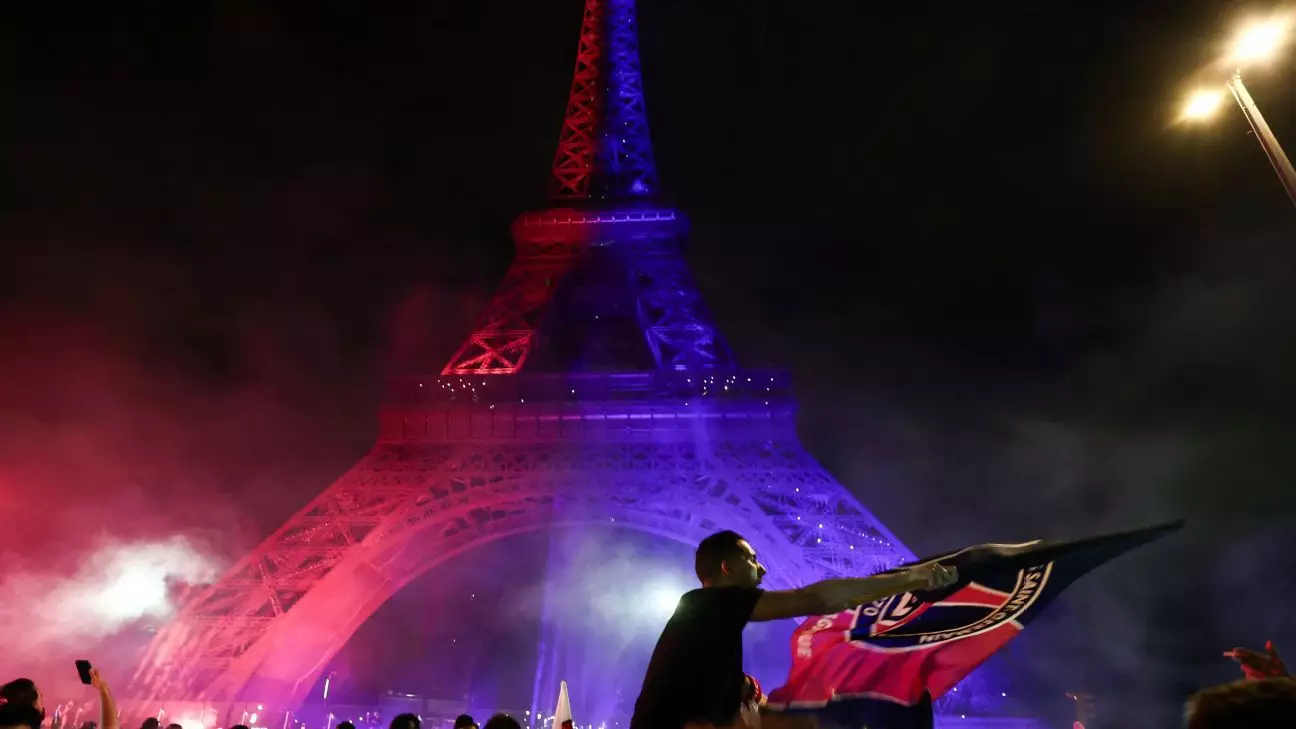
Paris Saint-Germain’s (PSG) triumphant journey to their first-ever UEFA Champions League title sparked nationwide celebrations in France, showcasing the deep passion supporters have for this storied football club. However, what began as jubilant festivities quickly spiraled into chaos, leading to two tragic fatalities and leaving a police officer in critical condition. This stark contrast between celebration and tragedy raises questions about how sporting events can unify or divide a population, often revealing darker undercurrents within society amid the fervor of victory.
The Champions League title match was a landmark achievement for PSG, culminating in a resounding 5-0 victory over Inter Milan. Streets illuminated with team colors and euphoric fans danced through the night. The Eiffel Tower, aglow in the Parisian night, symbolized not only the victory but also a potential moment of national pride. Yet, this jubilance was clouded by incidents of violence and disorder that marred the post-match atmosphere.
The Cost of Celebration
The unfortunate events that unfolded revealed how quickly euphoria can be undermined by tragedy. Reports indicate that a 17-year-old boy lost his life amid knife violence during celebrations in Dax, while another man in his twenties died in Paris due to a tragic accident when a car collided with his scooter. These deaths overshadowed the night, reframing a moment of triumph into a moment of deep sorrow for families and communities.
Moreover, the physical toll on law enforcement was severe, with one officer placed in an artificial coma due to horrific injuries sustained from fireworks during a public gathering. This incident highlights the risks law enforcement faces while maintaining public order during mass celebrations, particularly as they navigate the complexities of crowd control amid escalating tensions.
A Fragile Balance of Joy and Disorder
The emergency response was stretched thin, with police and firefighters overwhelmed by the volume of incidents requiring assistance. Reports of looting, fires, and chaotic scenes painted a stark picture of a divided populace: on one side, fans celebrating their team’s historic achievement with joy; on the other, individuals exploiting the situation for violent acts and criminal behavior.
This dissonance raises significant concerns about the societal implications of such celebrations. Police chief Laurent Nunez attributed the violence to a minority of individuals whose motives appeared rooted in malice rather than genuine support for the team. This points to a troubling trend: how communal joy can quickly turn into opportunities for discord, often fueled by a reckless minority amid a seemingly united crowd.
Security Measures and Public Sentiment
In anticipation of public gatherings, authorities enforced extensive security measures, which included deploying thousands of police officers, closing significant traffic routes, and utilizing crowd control tactics resembling past incidents of violence. The parallels drawn to the aftermath of France’s World Cup win in 2018 demonstrate a pattern in which grand sporting victories can elicit both euphoria and chaos.
The fact that security forces resorted to tear gas and water cannons to manage unruly crowds disrupts an atmosphere meant to foster unity and celebration. Such tactics can alienate well-behaved supporters, who may feel that their joy is being stifled by the reckless actions of a few. This essence of frustration over security measures in the midst of celebration poses a critical question: how can we better manage celebrations in a manner that prioritizes safety, respects public spirit, and ensures that sports events bring communities together rather than tear them apart?
Reflections on a National Obsession
France’s passionate connection to football is undeniable, acting as a cultural tapestry that binds communities together. Yet, the stark realities unveiled by this tragic night necessitate a deeper reflection on the dynamics of sports fandom and its impact on societal behavior. As fans contemplate the consequences of their actions, it becomes crucial to initiate dialogues focused on fostering a culture of respect and responsibility among supporters.
While PSG’s historic victory should stand as a beacon of hope and accomplishment, it is imperative that both fans and authorities learn from the tragedies born from this night of reckoning. Society must channel the fervor of support into positive expressions that elevate the shared experience of celebration, ensuring that future victories do not come at such a high human cost.