
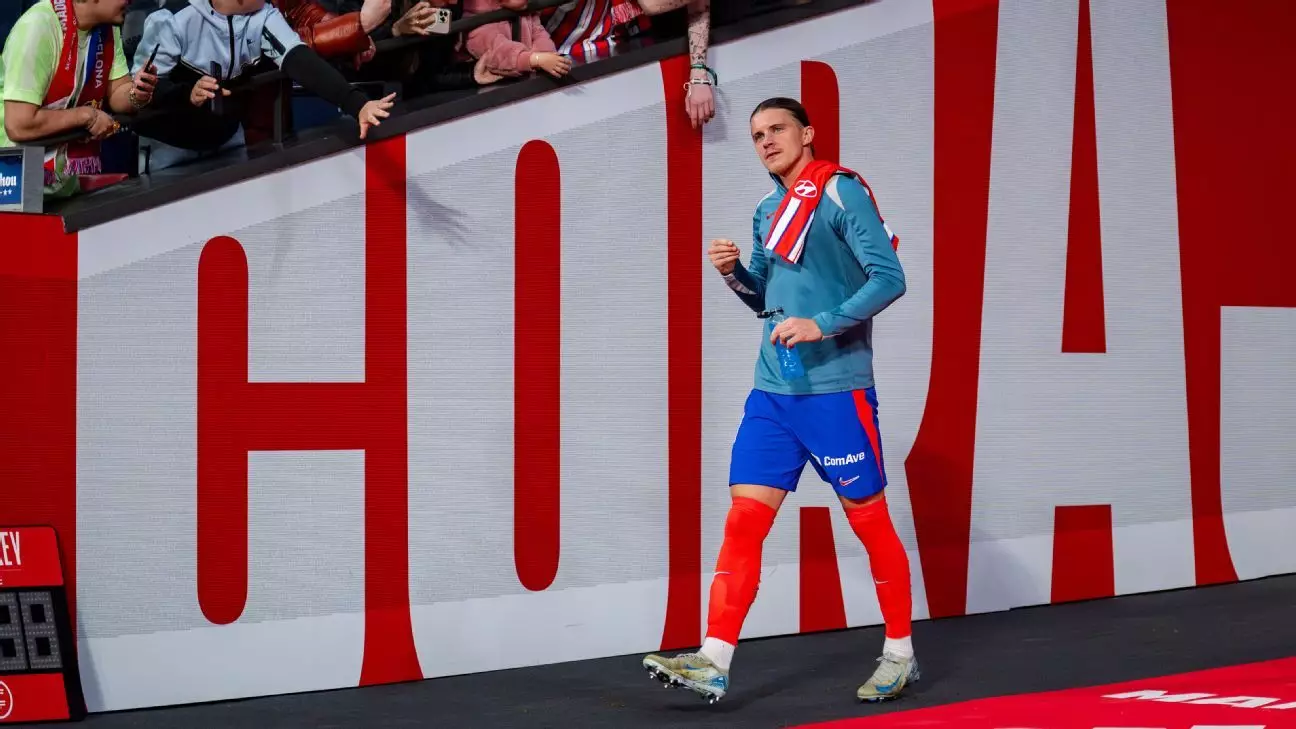
Conor Gallagher’s transition from Chelsea to Atlético Madrid resonates far beyond mere geographical relocation. Leaving the pressure-laden environment of the Premier League, where competition is fierce, Gallagher embraced a fresh challenge in LaLiga. His arrival in Spain was underlined by the sentiment that he was deemed surplus to Chelsea’s requirements. This could have been a demoralizing experience, yet Gallagher has turned it into an opportunity for growth and transformation. Atlético’s head coach, Diego Simeone, acknowledged the courage involved in such a move, especially for a young player adapting to a new footballing culture.
Adapting to New Challenges
Adapting to a new league can be daunting, especially for English players who traditionally face a steep learning curve in Spain. However, Gallagher has tackled this head-on. His versatility has allowed him to fill various roles in the midfield, enhancing Atlético’s tactical structure. While some might falter under such pressure, Gallagher has embraced his responsibilities, frequently stepping back to support the defense and making incisive runs into the opponent’s box. Simeone’s admiration for Gallagher’s “youth, energy, and intensity” reflects not only his physical capabilities but also his determination to succeed against the odds.
Room for Growth
The understanding that Gallagher has potential for further evolution is particularly noteworthy. Simeone recognizes that a player’s development is an ongoing journey. In Gallagher’s case, the fact that he is learning to adjust his game while contributing significantly to the team’s dynamics signals his commitment. His capacity to operate in positions outside of his comfort zone is not just a testament to his skill but also his mental fortitude. This adaptability could position Gallagher as a key figure for Atlético as the season progresses.
Balancing Criticism and Support
While cheerleading Gallagher’s performance, Simeone has made it apparent that not everyone is meeting the expected standards. Argentine full-back Nahuel Molina has come under scrutiny for his inconsistency, a reminder that in high-stakes environments, complacency is not tolerated. Simeone’s approach—highlighting Molina’s potential while advocating for improved performances—illustrates the duality of his management style, balancing encouragement with the demand for excellence. This is an acute reminder of the environment in professional sports where players must navigate personal development and collective responsibility.
The Tireless Nature of Competition
Atlético Madrid currently finds itself in a precarious position in LaLiga, trailing behind leaders Barcelona by 10 points. The urgency of regaining competitive momentum compounds the pressure on coach Simeone, who expressed his desire for consistent match days as an antidote to training monotony. The defeat in the Copa del Rey semi-finals and an earlier ousting from the Champions League linger in the minds of players and fans alike. Success in football hinges on momentum, and the longer a team stays away from competitive fixtures, the more restless anticipation builds. In this light, Gallagher’s emergence could be critical for reviving the team’s fortunes, showcasing just how swiftly fortunes can change in football.
In embracing this new chapter at Atlético Madrid, Conor Gallagher has not only managed to carve a niche for himself but also symbolizes resilience and adaptability, which are essential for anyone aspiring to succeed in the world of elite sports. His journey may just be beginning, but it holds immense promise for both him and the club.