
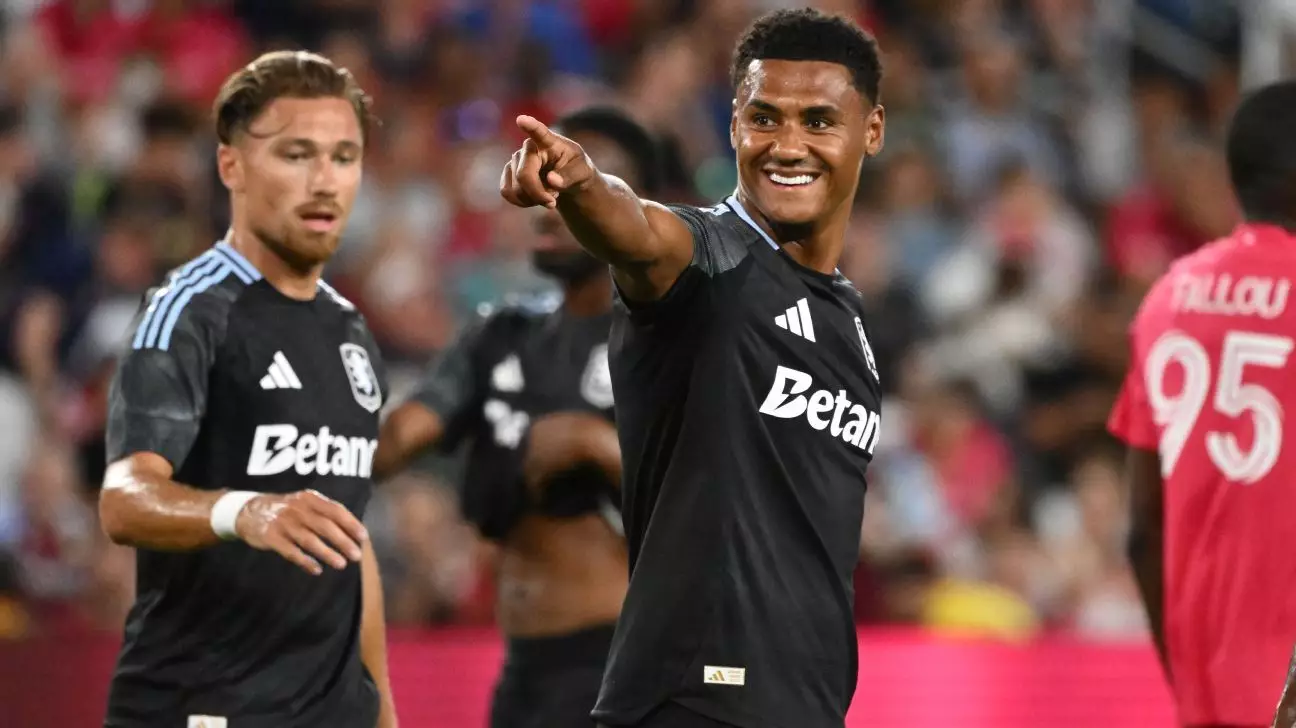
In the world of football, transfer windows are more than just periods of player movement; they are tactical battlegrounds where clubs vie for supremacy through strategic acquisitions and strategic retreats. The latest round of transfer rumours underscores this reality, revealing a chess game of high stakes, where clubs aim to optimize their squads for future success. Manchester United’s pursuit of Ollie Watkins illustrates a club’s willingness to pivot swiftly when initial plans falter, emphasizing the importance of adaptability in transfer strategies. Brighton’s interest in high-caliber prospects like Benjamin Sesko and Dusan Vlahovic signals a trend towards aggressive talent procurement, aiming to elevate the club to new heights. Meanwhile, Arsenal’s cautious stance toward Eberechi Eze reflects a nuanced approach, prioritizing financial prudence alongside squad development certainty.
These transfers reveal that modern football is less about signing players; it’s about crafting a cohesive team that aligns with a club’s tactical philosophy. It is a delicate balancing act—aggressively targeting marquee signings while ensuring financial sustainability—and often, the difference between success and mediocrity hinges upon such well-calibrated decisions.
Strategic Player Appraisals and Market Realities

The decision-making process in football transfers is increasingly shaped by market realities and long-term planning. Manchester United’s tentative pursuit of Sesko prompts reflection on how clubs balance immediate needs with future potential. Dropping about €80 million on a young striker like Sesko signals an ambition for immediate impact, but clubs also hedge their bets by exploring alternative options like Vlahovic or even veteran targets such as Watkins. This layered approach reflects an understanding that uncertainty is inherent in high-stakes negotiations—no deal is ever guaranteed, and flexibility remains paramount.
Similarly, Liverpool’s recent deliberations about signing a striker reveal a strategic internal debate. While adding attacking firepower seems logical, some critics, including former players like Luis Garcia, question whether more attacking options are genuinely necessary, or whether internal growth suffices. This internal scrutiny underscores a broader trend: clubs are increasingly scrutinizing their core needs versus perceived gaps. Financial considerations, player performance metrics, and squad harmony all converge into an intricate decision-making matrix that determines whether a high-paying signing will truly shift the needle.
Furthermore, the fluidity with which clubs explore options like Raspadori, Lookman, and even loan-based strategies demonstrates that the transfer market is less about static deals and more about agile, multi-option negotiations. The goal is to minimize risk while maximizing value—an art that distinguishes forward-looking clubs from their less-prepared counterparts.
Emerging Strategies and the Role of Data-Driven Decisions

The increasing reliance on data analytics and scouting reports has revolutionized transfer decisions. Clubs now favor players whose performance metrics align closely with tactical requirements, rather than relying solely on reputation or market hype. This trend is evident in Atlético Madrid’s nuanced approach to attacking signings, considering alternatives like Kubo, Fernandez-Pardo, and even long-term targets such as Ademola Lookman. Their cautious approach underscores an emphasis on precision and strategic fit.
Moreover, clubs are prioritizing youth development and loan strategies to optimize return on investment. The loan move of Will Lankshear to Oxford United, and Jovic’s transfer to AEK Athens, exemplify this model—develop talent while reducing immediate wage burdens. This agility allows clubs to adapt their squad composition dynamically, filling needs with short-term solutions while preparing for future core players.
Importantly, clubs are also leveraging the transfer market to send signals—whether to fans, competitors, or internal stakeholders—about ambitions and tactical philosophies. A high-profile signing like Randal Kolo Muani or Kit Kubo sends an immediate message of intent, while quieter squad adjustments maintain operational flexibility.
In football’s modern era, transfer strategies are less about individual deals and more about constructing cohesive, competitive entities. Successful clubs are those that understand the psychological, tactical, and financial dimensions of player acquisitions. The current transfer window exemplifies this shift—remaining adaptable, data-informed, and strategic in approach is key. As clubs continue to refine their methods, what remains constant is the understanding that the right player at the right time can redefine the trajectory of a team, crafting a legacy built on foresight and tactical acumen.