
In the ever-evolving landscape of international sports, the recent death of a migrant worker during the construction of Aramco Stadium in Al Khobar, Saudi Arabia, has raised serious questions about worker safety practices. On March 12, the construction site, overseen by the Besix Group, witnessed the tragic fall of Muhammad Arshad, a Pakistani worker. This incident serves as a stark reminder of the risks faced by laborers in the construction industry, particularly in high-stakes projects like the 2034 World Cup preparations. The importance of safety protocols cannot be overstated, especially considering the narrative surrounding major sporting events often overlooks the human cost involved in their execution.
Government Response and Accountability Measures
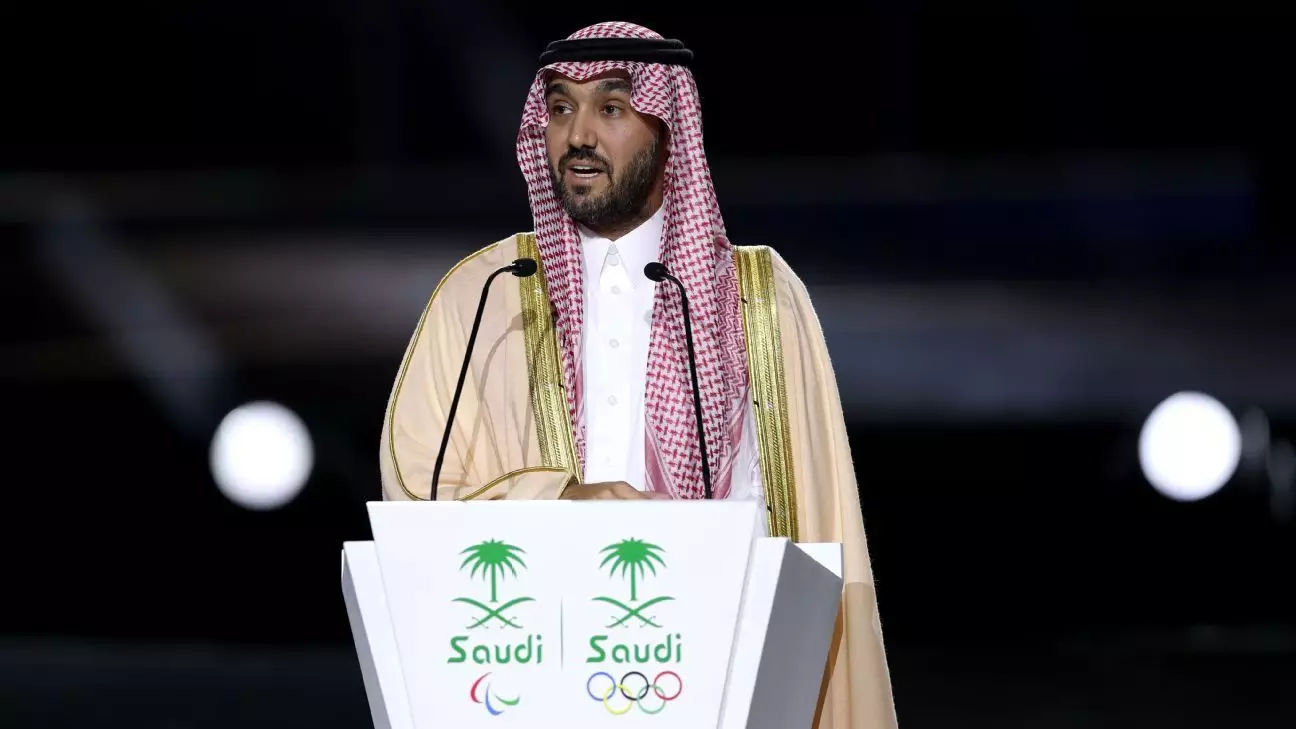
Saudi Arabia’s Minister of Sport, Prince Abdulaziz bin Turki Al-Faisal, has publicly stated that the kingdom takes such incidents seriously. He emphasized that an investigation has been initiated following Arshad’s death. “Every incident we take seriously,” he mentioned, reflecting a commitment to transparency in the aftermath of such tragedies. However, this declaration prompts a deeper inquiry into the effectiveness of the safety measures currently in place and whether condolences can replace actionable change. While Saudi Arabia boasts of having a large workforce managing significant infrastructure projects, the tragic reality is that the risk of fatal accidents continues to loom.
Al-Faisal’s remarks highlighted the measures implemented at other sites, suggesting that certain projects, such as the ongoing developments in Diriyah, have maintained worker safety without incident for extended periods. Yet, one cannot help but question the consistency of these safety standards across different project sites. Is there a systematic approach to ensuring worker safety, or is it merely reactive following incidents? The disregard for the lives at stake, as evidenced by this latest incident, might indicate that the latter is too often the case.
Migrant Workers’ Plight: A Broader Perspective
The global community’s scrutiny of worker treatment in the Gulf states is not new. Human rights organizations have long warned of the perils faced by migrant laborers, highlighting systemic issues that lead to unsafe working conditions. Despite assurances from FIFA and Saudi officials that hosting the World Cup will catalyze positive social changes, the overwhelming sentiment remains skeptical. Can a sporting event really bring about the necessary reforms to protect the rights of these vulnerable workers, or are these merely empty promises cloaked in the guise of sporting diplomacy?
FIFA President Gianni Infantino’s assessment that events like the World Cup can drive social progress emerges in stark contrast to the realities on the ground. The assertion that significant transformations will occur while humanitarian concerns linger leaves much to be desired. The decision to award the 2034 World Cup to Saudi Arabia, particularly without competitive bidding or substantive discussion, has been met with backlash. Critics argue that such a move prioritizes profit and prestige over the lives of the individuals who form the backbone of these construction projects.
Learning from Past Mistakes
Reflecting on the controversies surrounding the 2022 World Cup in Qatar, where similar issues plagued the discourse, one wonders if substantive change is truly being prioritized by Saudi authorities. Al-Faisal’s comments about learning from Qatar’s experiences imply a shift towards heightened awareness, but the veracity of such claims remains to be seen. What concrete steps are being taken to safeguard workers’ rights? What mechanisms are in place to ensure that such tragic incidents are not repeated?
It is pivotal for both Saudi Arabia and FIFA to go beyond rhetoric if meaningful change is to occur. Holding regular reviews of safety standards, collaborating with international organizations to monitor conditions, and being transparent about worker welfare statistics are essential steps that can help rebuild trust with the global community. An ongoing dialogue between employers, embassies, and human rights groups is crucial in fostering a culture of accountability. Before any future accolades can be heaped upon Saudi Arabia for hosting the World Cup, a visible commitment to workers’ safety should be prioritized, not just acknowledged in press statements.
The road to a successful World Cup in 2034 must not be paved over the bodies of migrant workers. The burden lies on the shoulders of local authorities and international organizations alike to ensure that justice is not only served in the form of investigations but also enacted through stringent safety protocols for all workers involved. The backbone of progress is, after all, built upon the foundation of rigorous worker treatment and unwavering safety practices.