
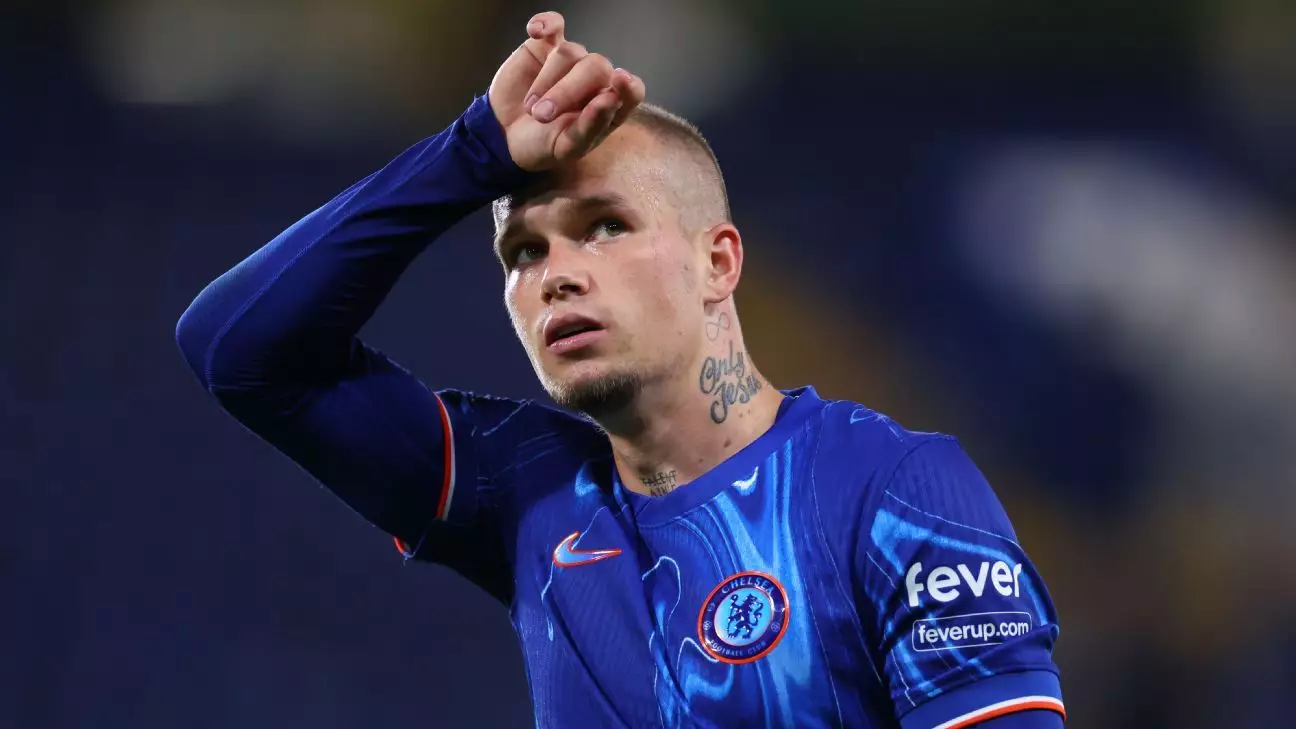
In professional sports, the integrity of athletes is critical, and thus, the stakes are immensely high. Recently, Chelsea Football Club was rocked by news that Mykhailo Mudryk, their promising Ukrainian winger, returned a positive test for a banned substance. Both the player and the club expressed shock at the findings. Chelsea’s head coach, Enzo Maresca, took to the media spotlight to articulate the club’s stance on this alarming incident and the importance of supporting an athlete facing such scrutiny.
Mudryk, who had joined Chelsea amidst much fanfare earlier this year, found himself at the center of instability as the news broke. While the Football Association (FA) had reached out to the player regarding an ‘adverse urine sample,’ the club swiftly underlined their unwavering faith in Mudryk. While the coach emphasized the significance of standing by one’s players in distressing times, one cannot help but wonder if this stance reveals a deeper concern regarding the culture of drug testing within the sport.
Maresca articulated the team’s sorrow regarding the situation, suggesting an emotional solidarity among the squad. Trust emerged as a central theme in his statements. The head coach remarked, “We trust Mykhailo,” highlighting that supporting Mudryk transcends mere statements, as it requires tangible action from the club and his teammates. However, it raises questions about the implications of such fervent backing when the potential repercussions of a positive test could range from a few months’ suspension to a multi-year ban from the sport.
Reports mainly from Ukraine have indicated that a prohibited substance was detected in an “A” sample from Mudryk. The football community is keenly awaiting the results of the “B” sample, which, as of the latest updates, has yet to be tested. Speculation is rife regarding the forthcoming conclusions and the possibilities they present—not only for Mudryk as a player but also for Chelsea as an institution that prides itself on integrity.
The aftermath of this situation is multifaceted, affecting various aspects of Chelsea’s operations. Mudryk had previously been labeled as one of Europe’s brightest football talents, transferring for a reported fee that might reach £88 million. However, he has struggled to make significant contributions on the field, having started only 26 Premier League games since his arrival and merely one in the current season. The impending uncertainty surrounding his availability undoubtedly complicates team dynamics as Chelsea navigates a potentially critical January transfer window.
As Maresca pointed out, the upcoming fixtures could spur the necessity for additional reinforcements in the squad. The club’s head coach has three crucial matches lined up against Shamrock Rovers, Everton, Fulham, and Ipswich Town, whose results could dictate the urgency for new signings. Chelsea must be on high alert, not just in terms of player performance but also in addressing the myriad factors that impact team cohesion during crises.
Maresca’s comments also unearth a broader societal issue prevalent in professional sports, particularly regarding athletes and drug testing. The world of sports has seen numerous players embroiled in doping scandals over the years, with fallout often enveloping entire teams and leagues. The head coach’s acknowledgment that “this will happen again for different players” is a sobering recognition of the ongoing challenge that the sport faces in maintaining ethical standards.
The consequences of adverse drug tests extend beyond arbitrary suspensions; they can create lasting damage to an athlete’s career and overall reputation. With FIFA stipulating that the maximum ban for anti-doping violations can extend to four years, the stakes could not be any higher for Mudryk. Amid all the tribulations, one can only hope that the truth prevails, leading to a fair resolution that serves justice both for the player and the integrity of the sport.
While Chelsea and Maresca’s support for Mykhailo Mudryk is commendable and reflects a united front, this situation opens up dialogues regarding transparency in sports, the efficacy of current drug testing protocols, and what true support means in challenging times. As the football community watches their next moves with bated breath, the complex interplay of trust, integrity, and performance continues to unfold.