
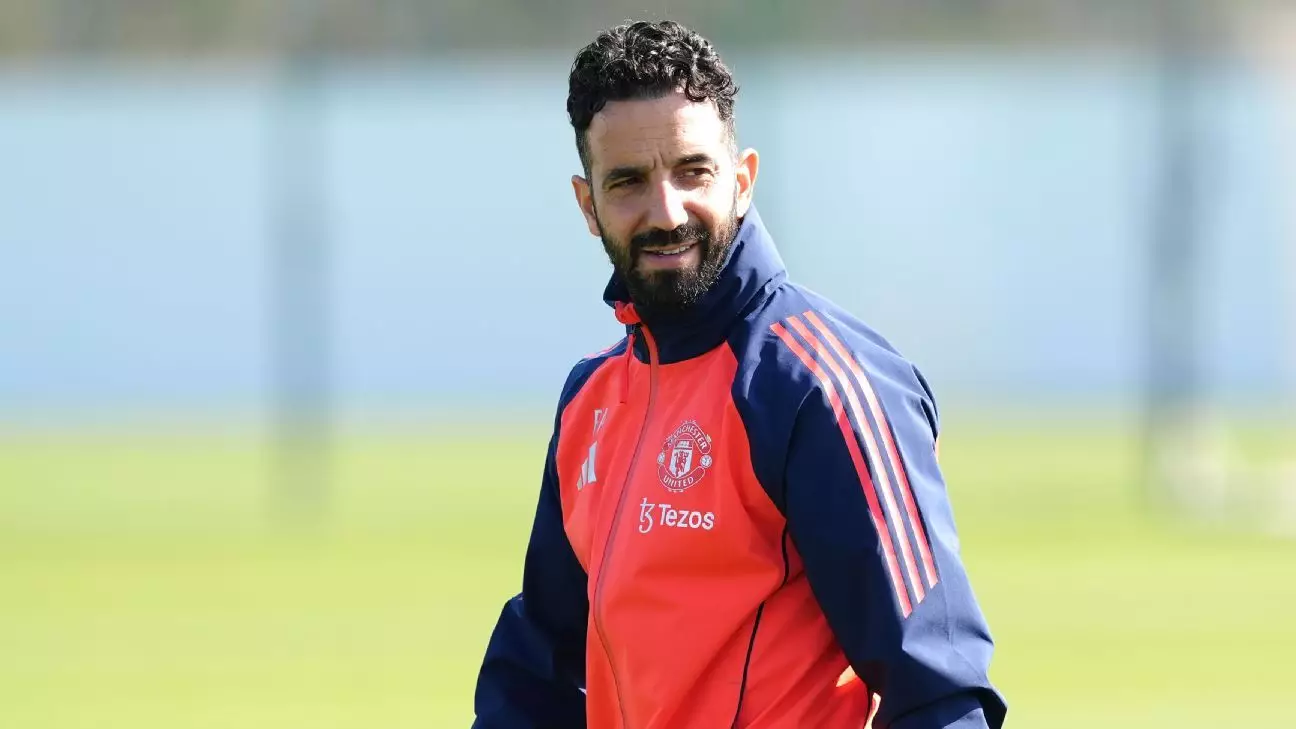
Ruben Amorim’s recent comments regarding Manchester United’s performance in the Europa League versus the Premier League have sparked an intriguing debate. His assertion that the slower tempo of the Europa League allows his players to think and execute more effectively sheds light on the fundamental differences between these two competitions. The Portuguese manager has observed that United have found success in Europe, with five wins and one draw in their six fixtures since his appointment. Meanwhile, their Premier League journey is riddled with challenges, having secured just six wins in 20 matches. This stark contrast raises questions about whether the fluidity and intensity of the Premier League could be crippling the potential of a team traditionally suited for high-caliber football.
The Physicality Factor
Amorim’s emphasis on “pace and physicality” is telling. The English top-flight is notorious for its relentless tempo, where split-second decisions can make or break a game. In contrast, the Europa League’s relatively relaxed pace could provide players with the mental space they need to make strategic decisions. Amorim noted, “If you have one more second to think with the ball, it’s a different game.” This statement indicates a significant insight into how psychological preparation is just as essential as physical readiness. The mental aspect of the game, often overlooked, might be the very key to success in European clashes where opponents may not apply the same relentless pressure as seen in the Premier League.
Hope Amidst Hardship
United’s current situation leaves fans yearning for much-needed optimism. With the team positioned at a disappointing 13th in the league, their hopes for redemption lie squarely on the shoulders of the Europa League. Amorim acknowledges the enormous weight of these games, noting that winning a European title would be monumental for the club’s confidence. He emphasizes the interconnectedness of success in Europe with future endeavors, particularly regarding budget allocations for summer transfers. The stakes are high, and the pressure to perform is palpable, but under Amorim’s guidance, there is a flicker of optimism.
The Return of Key Players: A Potential Game Changer
The recent return of Kobbie Mainoo from injury could breathe new life into United’s campaign, possibly altering their trajectory in both competitions. His youthful exuberance and skill may be exactly what the squad requires to bridge the gap between mediocrity and success. Alongside Mainoo, the presence of Luke Shaw, who is recovering from his own troubles, brings experience and stability to the side. However, the absence of Matthijs de Ligt still looms large, highlighting the challenges Amorim faces in terms of squad depth and resilience. The strategic deployment of players in the upcoming tie against Lyon could be crucial as United seeks to build momentum.
The dichotomy between the Premier League and the Europa League lays bare the complexities of modern-day football. Ruben Amorim’s reflections illuminate more than just the disparities in match pace—they highlight the psychological nuances that could very well dictate the fate of Manchester United this season. As the Europa League beckons, there is more at stake than mere victories; it calls into question the very identity of the club amidst a turbulent season. United fans, while weary from inconsistency, can only hope that, within the relative calm of European play, this storied club can rediscover its purpose and passion.