
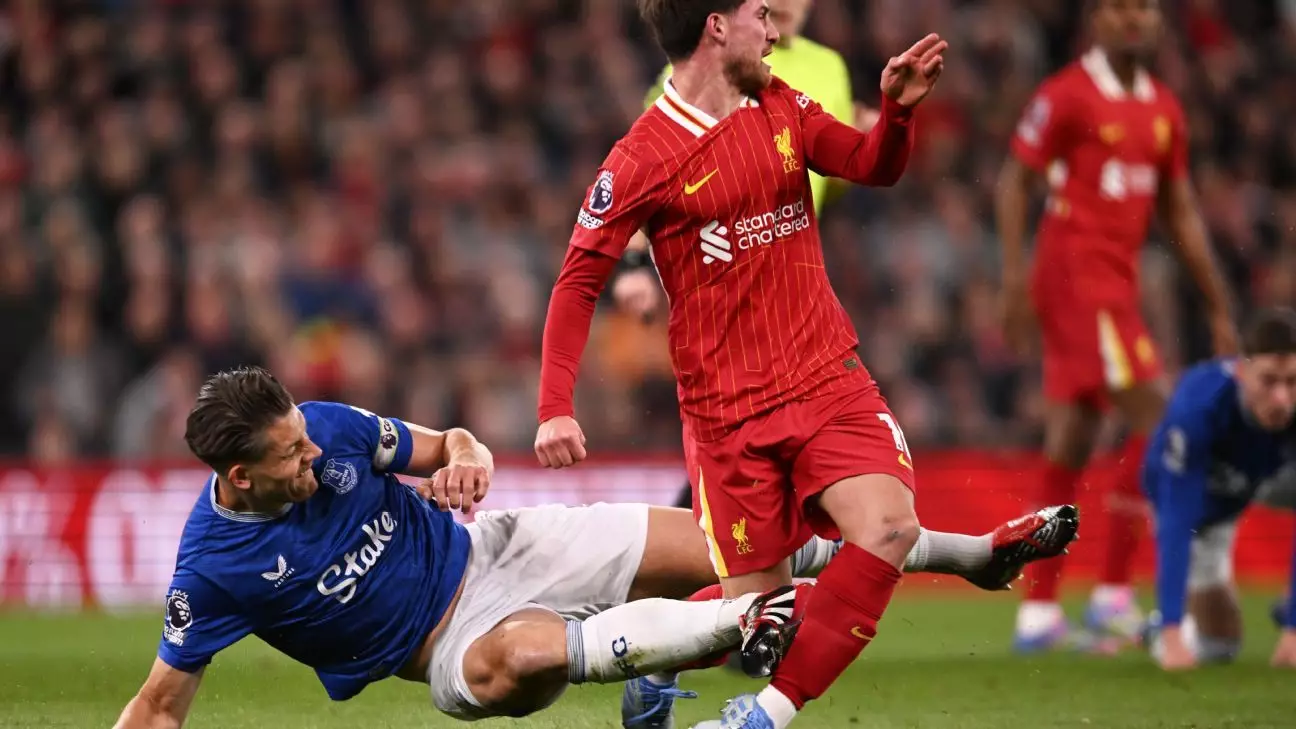
The recent Merseyside derby showcased the intense rivalry between Liverpool and Everton, but it also put the spotlight on a contentious refereeing call that left fans and pundits reeling. Liverpool’s head coach, Arne Slot, expressed his lack of surprise regarding James Tarkowski’s non-dismissal for a high challenge on Alexis Mac Allister. In a match that ultimately saw Diogo Jota score the lone goal, the officiating decisions carried significant weight in shifting the energy of the game and sparking debates that have since dominated social media. With VAR’s inaction in the incident, questions about the effectiveness of the technology and the consistency of officiating standards have resurfaced.
Slot’s demeanor post-match was a mix of annoyance with the refereeing process and relief at securing a vital win, which helped Liverpool retain a substantial lead at the top of the Premier League. The decision not to send Tarkowski off wasn’t just a minor grievance; it encapsulated a larger theme within the Premier League — the questioning of integrity and fairness in the officiating ranks. Slot’s reluctance to dwell excessively on the incident reflects not just tactical acumen but also a strategic approach to keeping his team focused on the positives, like Jota’s return to form.
Jota’s Resurgence: A Bright Spot Amidst Controversy
Despite the tumultuous atmosphere surrounding the officiating, Diogo Jota’s performance emerged as a beacon of hope for Liverpool fans. After a drought of ten games without a goal, Jota’s strike symbolizes not just personal redemption but also potential momentum for both player and team. Slot’s remarks highlight a critical understanding of player psychology—celebrating small victories is essential in a high-pressure environment like the Premier League. His recognition of Jota’s efforts, particularly against an ‘incredibly strong’ Everton defense, showcases a nuanced analysis of the match that goes beyond mere statistics.
The importance of Jota’s goal cannot be overlooked; it not only helped secure the three points but could also reignite his confidence at a pivotal moment in the season. Liverpool’s heavy reliance on their attacking players means that every goal, especially in closely contested matches, can serve as a catalyst for both individual and collective momentum.
David Moyes’ Frustrations: The Offside Debate
On the flip side, Everton’s manager David Moyes aired his grievances regarding refereeing decisions, specifically pointing to an offside call that he believed impacted the result directly. His assertion that Luis Díaz was interfering with play sheds light on the subjective nature of such decisions and their ramifications. In a tightly contested derby, where every inch matters, debates around offside calls can overshadow the thrill of the game itself. Moyes’ frustration speaks to a broader narrative in the Premier League: the battle between technological advancement in officiating versus the human element, which remains ever so fallible.
As both managers navigate the emotional highs and lows of this fierce rivalry, the derby serves as a microcosm for the larger issues plaguing modern football, particularly regarding decision-making processes. Ultimately, while passionate debates will continue around VAR and referees, it is the players and their performances that remain in focus, producing memorable moments amidst the controversy.