
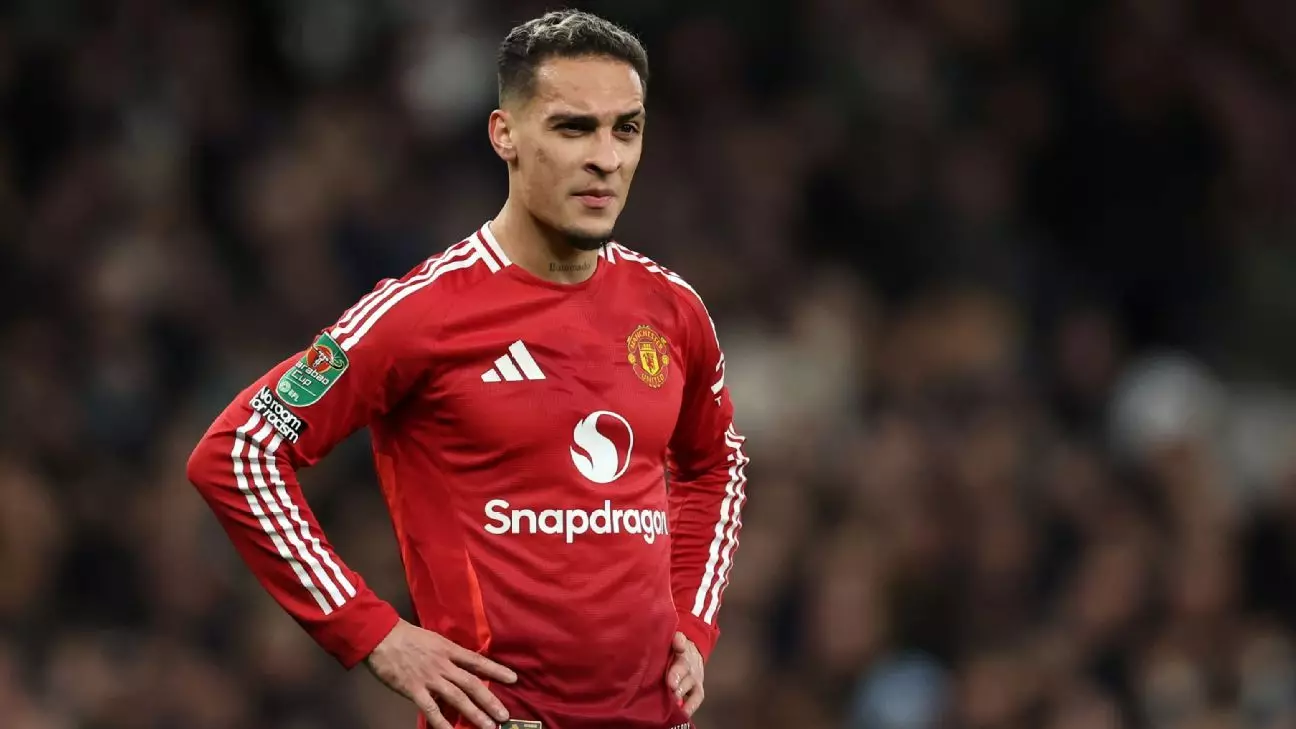
Antony’s odyssey through the ranks of football has been anything but smooth, marked by the heavy and often suffocating weight of expectations. Signed for a staggering £100 million ($132.6 million) by Manchester United, the Brazilian winger arrived with the instrumental promise of turning the team’s fortunes around. However, what followed was a harrowing saga of personal and professional challenges that marred his potential. Struggling to adapt to the blaring spotlight at one of the world’s most storied football clubs, Antony has recently opened up about how tumultuous personal circumstances took precedence over his performance on the pitch.
In a candid interview with ESPN Brasil, he expressed the emotional toll that allegations and inquiries stemming from both the UK and Brazil inflicted upon him. Throughout his tenure at Old Trafford, he faced an uphill battle where external distractions overshadowed his innate talent. Antony reflects on this, stating, “My personal life got in the way a lot.” Rather than mere performance metrics or highlights, this narrative invites a deeper examination of mental health—something often neglected in professional sports. It highlights the precarious balance athletes must maintain between their public personas and private lives.
Challenges in Adaptation: A Difficult Integration
Antony reunited with his former Ajax manager Erik ten Hag, hoping to replicate past successes at United. However, the transition from the Eredivisie to the Premier League proved more arduous than anticipated. Despite showcasing flashes of brilliance, he struggled to earn consistent trust and game time under Ten Hag’s leadership. Notably, the expectations associated with his hefty transfer fee loomed large, creating an environment ripe for scrutiny.
His experience underscores a broader commentary on how player dynamics can shift significantly between clubs. Performance in one landscape does not easily translate to another; context matters immensely. The Brazilian’s acknowledgment of this disparity further emphasizes how vital supportive systems are in helping players acclimate, particularly when compounded by personal issues.
Building Bridges, Not Walls
Despite the personal and professional adversities faced during his spell at United, Antony chose not to harbor resentment toward Ten Hag. His gratitude speaks volumes about his character, highlighting a maturity that is often overlooked in contemporary sports narratives. “I don’t hold any grudges,” he said, pointing out his appreciation for the mentorship and guidance he received. This response reflects the importance of viewing coaches as pivotal figures in an athlete’s development, rather than mere decision-makers.
Moreover, Antony’s respect for Ten Hag sheds light on a crucial aspect of professional football: the role of relational dynamics. The relationship between players and coaches can significantly influence performance, with mental support often proving more impactful than tactical instructions. While he may have felt out of favor at United, the recognition of positive interactions illustrates a commendable ethos of growth that stands in contrast to the cutthroat mentality prevalent in the sport.
A New Chapter in Betis: The Quest for Redemption
With his loan move to Real Betis in January marking a new chapter, Antony has an opportunity for rejuvenation away from the daunting shadows of Manchester. This development aligns with a trend among footballers where stepping back is essential to step forward—an acknowledgment that sometimes, a break from pressure can lead to rediscovery and reaffirmation of one’s talents and worth. As he transitions under new management with Ruben Amorim, the hope is that this environment will foster creativity and flourish outside the stifling gaze of relentless scrutiny.
Antony’s sentiments regarding Amorim are optimistic, as he recognizes a burgeoning potential for collaborations that can reinvigorate his career. His pronouncement of Amorim as “a very good coach, a very intelligent coach” suggests a promising future where adaptability and growth can take precedence.
The journey of Antony is emblematic of the struggles faced by many athletes who navigate the complexities of fame and personal turmoil. His response to adversity paints a picture of a resilient spirit, one that remains determined to recapture form, striving towards greatness at Real Betis. This narrative invites reflection on the broader implications of mental health within sports and the supportive frameworks needed to help athletes thrive.