
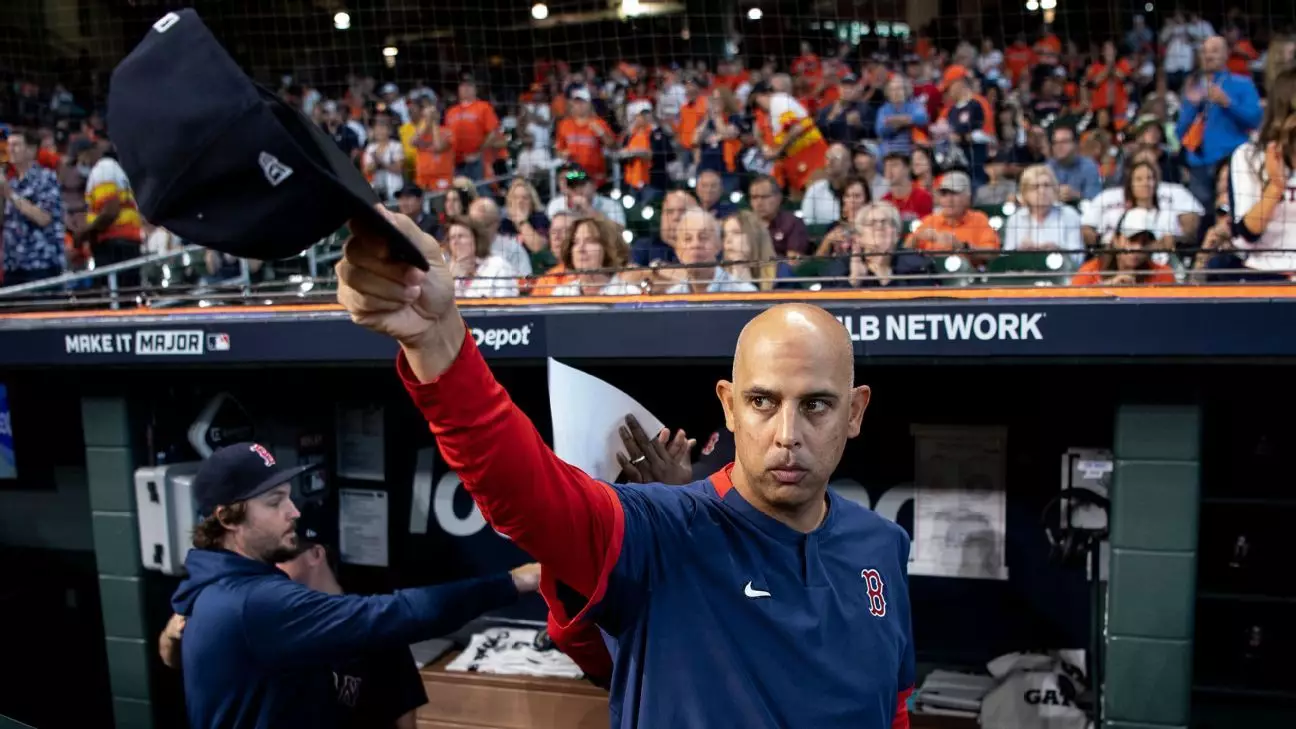
Boston Red Sox manager Alex Cora’s transition from an indifferent observer to an avid soccer enthusiast illustrates a captivating journey in sports appreciation. His epiphany occurred at Anfield during a match between Liverpool and Manchester City in 2019. Cora marvels at the soccer calendar’s intricacy and intensity, suggesting that the challenges faced by soccer players and managers are on par with those in Major League Baseball (MLB). When he expressed his admiration for the Premier League’s competitiveness, Cora noted how even a fourth-place finish can symbolize a successful season, particularly when it grants access to the coveted Champions League. His observations provoke intriguing questions about the psychological and physical strains athletes endure in a world where sports schedules are meandering into chaotic territories.
The Overload: Soccer’s Schedule in Crisis
The unfolding 2024-2025 soccer season is poised to be the longest on record, introducing yet another variable into an already limp calendar. The FIFA Club World Cup’s four-week marathon in the United States raises alarms about fixture congestion and player fatigue. While it’s not a new discourse, the voices of prominent players like Rodri, Erling Haaland, Kylian Mbappé, and Jude Bellingham convey the enormity of the stress athletes face in juggling league commitments alongside national duties. Managers such as Pep Guardiola and Jürgen Klopp echo these sentiments, highlighting a glaring problem in today’s football ecosystem: the incessant demand for performance without adequate recovery time.
It’s not merely a statistical observation; the spike in injuries across major clubs from Arsenal to Real Madrid serves as a somber testament to the consequences of overloaded schedules. The toll on players encapsulates a broader issue—what if the relentless chase for trophies leads to deleterious long-term effects? Cora’s discussions with Liverpool captain Virgil van Dijk further illuminate the contrasting nature of sports in both leagues. Cora’s claim that soccer players contend for multiple trophies while navigating a busy international calendar paints a vivid picture of dual pressure exerted on players, making the comparison between MLB and soccer particularly apt.
A Gripping Parallel: MLB’s Rigorous Road
In drawing comparisons between the two sports, Cora underscored that while a comprehensive MLB season entails 162 games, the soccer calendar is dotted with tournaments that detract from player recuperation. The stark reality is that achieving the feat of playing all 162 games in a season is a Herculean task. Historically, fewer than five players accomplish it annually, emphasizing how the physical demands in baseball, albeit intense, are somewhat tempered compared to soccer’s relentless pace. Cora’s dialogue with Van Dijk reflects an enlightenment that transcends simple statistics; it hints at an overwhelming realization of the burden athletes bear, one that could recalibrate the entire sporting landscape.
Moreover, Barcelona manager Hansi Flick’s recent advocacy for better scheduling protocols echoes growing calls for awareness in protecting player well-being. His insistence that players deserve proper rest following international breaks is crucial, but it’s also a plea that seems to be overshadowed by commercial priorities and corporate agendas in the sport. Such discrepancies raise a pertinent question—are the governing bodies, including UEFA and FIFA, doing enough to safeguard the players’ interests, or are they caught up in a vortex of financial imperatives?
The International Perspective: An Unforgiving Landscape
Even in the United States, where global soccer is steadily rising, players like Lionel Messi juggle an array of commitments spanning Major League Soccer, the Concacaf Champions Cup, and the Club World Cup, not to mention their national teams. The operational demands that players face are more than just exhausting; they verge on the unsustainable. This overextension risks not only individual player careers but could also jeopardize the overarching integrity and appeal of the sport, particularly when combined with rigorous international duty schedules and extended pre-season tours.
As clubs chase operational profitability during preseason, and as FIFA promotes initiatives that inflict prolonged strain on players, the paradox complicates the narrative. It is drawn into stark relief when considering the threat of injuries and exhaustion looming over both soccer and baseball athletes alike.
The Commercial Juggernaut vs. Athletic Integrity
With FIFA’s critical remarks regarding leagues’ commercial interests being prioritized over player welfare, a troubling picture emerges. Clubs seem locked in a tit-for-tat relationship with football’s commercial machinery, leading to potential fractures within the sport. Players, relegated to mere cogs in a profitable machine, risk becoming mere footnotes while the giants of the sport thrash in financial pursuits. This attitude not only questions the commitment to player health and safety but suggests a recalibration of priorities is imperative.
In a world increasingly concerned with mental health and physical well-being, the sporting calendar’s expansion reflects broader societal themes. As fans, we must scrutinize whether the heart of the game—athleticism, competition, and integrity—is being overshadowed by a relentless commercial push. Hence, as Cora humorously mused about adding more baseball into the soccer schedule, it becomes ever clearer—we owe it to players to give them the space, time, and respect to compete without losing their essence.