
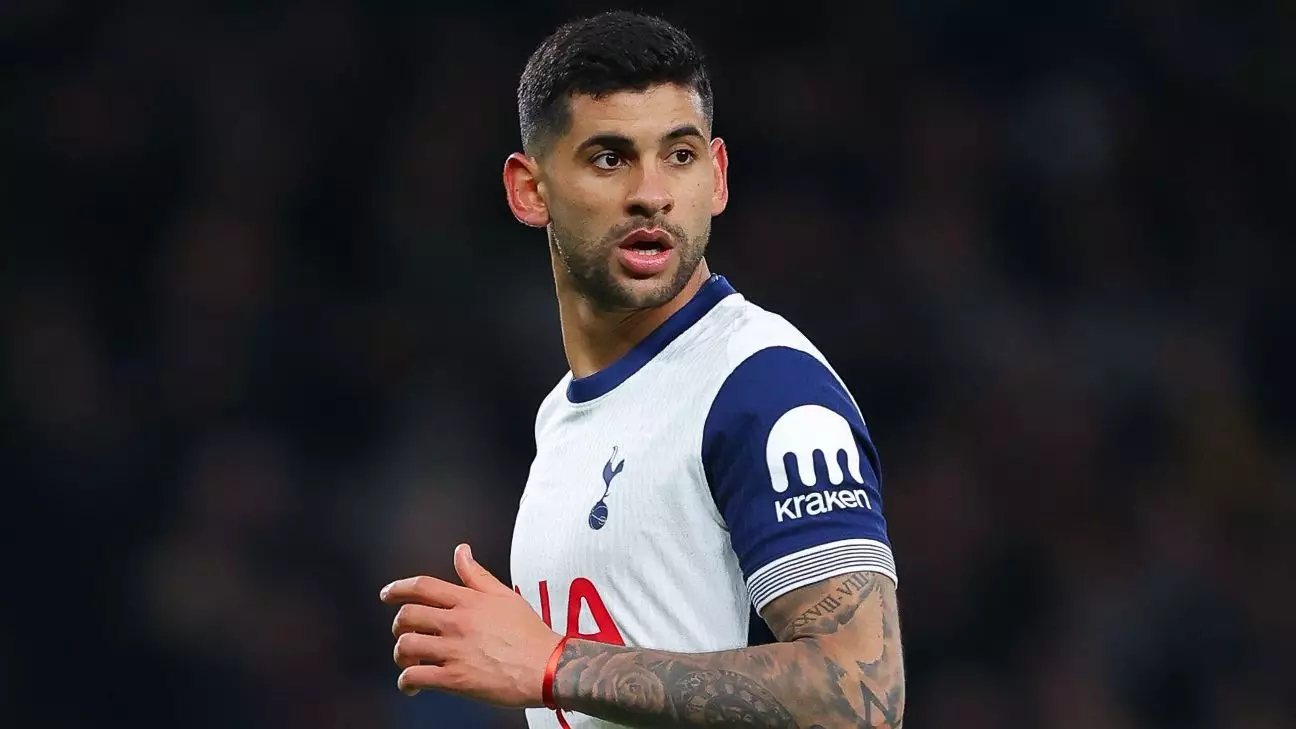
Football management thrives on the dynamics of the transfer market, and Real Madrid’s interest in Cristian Romero epitomizes a strategic shift towards enhancing defensive capabilities. The 26-year-old Argentine, renowned for his prowess during the 2022 FIFA World Cup, embodies the kind of player that Los Blancos require to solidify their backline. Romero’s injury-plagued season, where he has managed only 16 appearances across competitions, raises red flags, yet his undeniable talent keeps him on Madrid’s radar as a “concrete possibility” for the upcoming summer transfer window.
Defensive players often shoulder immense responsibility, yet they frequently attract underappreciation in comparison to their attacking counterparts. However, the recent trends suggest a notable reclamation of value placed on competent defense, driven by teams recognizing that a robust defense can be as critical as a potent offense. The potential signing of Romero, alongside Spurs right-back Pedro Porro, indicates Real Madrid’s dual approach; solidifying their defense while staying flexible for alternatives. Their pursuit is not just about recruitment; it reflects a thoughtful analysis of their tactical needs in a highly competitive LaLiga landscape.
Newcastle’s Forward Vision: Kolo Muani’s Potential Transition
In the north of England, Newcastle United appears to be navigating a meticulous approach towards strengthening their attack by eyeing on-loan Juventus striker Randal Kolo Muani. Currently under contract with Paris Saint-Germain, Kolo Muani demonstrated his ability to adapt and shine within the demanding atmosphere of Serie A. His inclusion on Newcastle’s shortlist suggests a clear intention to pair exciting talent with established players, particularly considering Alexander Isak’s uncertain status.
The prospect of Kolo Muani transitioning to St. James’ Park entails implications beyond pure numbers—it’s a symptomatic measure of how important adaptability and growth are to the Magpies’ ambitions. If Isak departs, Newcastle has solidified its intent to replace him with talent that combines youth with significant playing experience. Moreover, the competition they may face reflects the lavish spending power prevalent among Premier League clubs, highlighting the strategic nuances that clubs must navigate as they attempt to lure standout talent amidst sky-high stakes.
The Bundesliga’s Shift: Bayern’s Focus on Future Stars
Across Germany, Bayern Munich is signaling its intent to refresh its midfield by targeting Florian Wirtz of Bayer Leverkusen. As reports indicate him as a priority, Bayern’s strategy reveals more than a mere roster enlargement; it speaks volumes about anticipating the future. Effective clubs are not merely reactive; they are proactive architects of team composition. Wirtz, just 21, offers a tantalizing mix of creativity and influence that encapsulates the very essence of modern football.
By prioritizing young talents such as Wirtz, Bayern is setting a tone for sustainable growth while addressing the impending transitions that accompany player retirements and transfers. Additionally, pairing his potential with the likes of Jamie Gittens illustrates that clubs are not solely seeking established stars but are also willing to invest in players who possess the potential to blossom and emerge as leaders on the pitch.
Scouting Talent: The Lake of Young Wingers
The scouts’ eyes are fervently fixated on Lyon winger Malick Fofana, with Arsenal, Liverpool, and Paris Saint-Germain now tracking the 19-year-old’s promising development. Fofana’s statistics are compelling, featuring nine goals and five assists over 34 appearances, showcasing his ability to make impactful contributions to his team’s offensive play. The engagement from top-tier clubs underlines an essential focus within the sport: youth players possess the ability to redefine the competitive landscape if nurtured correctly.
Such a scenario brings to light the wage structures and financial thresholds that clubs are willing to meet. Fofana’s reported fee of €50 million suggests a growing trend where clubs are investing heavily in young prospects that promise to yield long-term returns. This aligns with the fluid dynamics of football where the assessments of worth transcend immediate outputs, instead embracing the potential of deep-seated raw talent.
Goalkeepers of Tomorrow: Inter’s Pursuit of Meret
Meanwhile, Internazionale’s interest in Napoli goalkeeper Alex Meret emphasizes the evolving significance of goalkeeping in modern football. The fact that Meret has started 25 of his 28 Serie A matches this season underlines his vital role in a title-challenging side. His current negotiations are of interest to many, as clubs seek a sense of stability and assurance from this crucial position.
Meret’s situation reflects broader themes in the market, where a goalkeeper can dramatically influence match outcomes. Clubs like Inter are keenly aware of the importance of securing a reliable shot-stopper, particularly in environments where defensive falls can have catastrophic ramifications for league standings. Thus, the ongoing dialogues surrounding Meret’s future are emblematic of how pivotal goalkeeping strategies are becoming in transfer planning discussions.
Through these observations, it’s evident that the transfer market is not merely an aggregate of transactions but rather an intricate ecosystem defined by strategies, player potential, and the ever-evolving ethos of football’s competitive nature.