
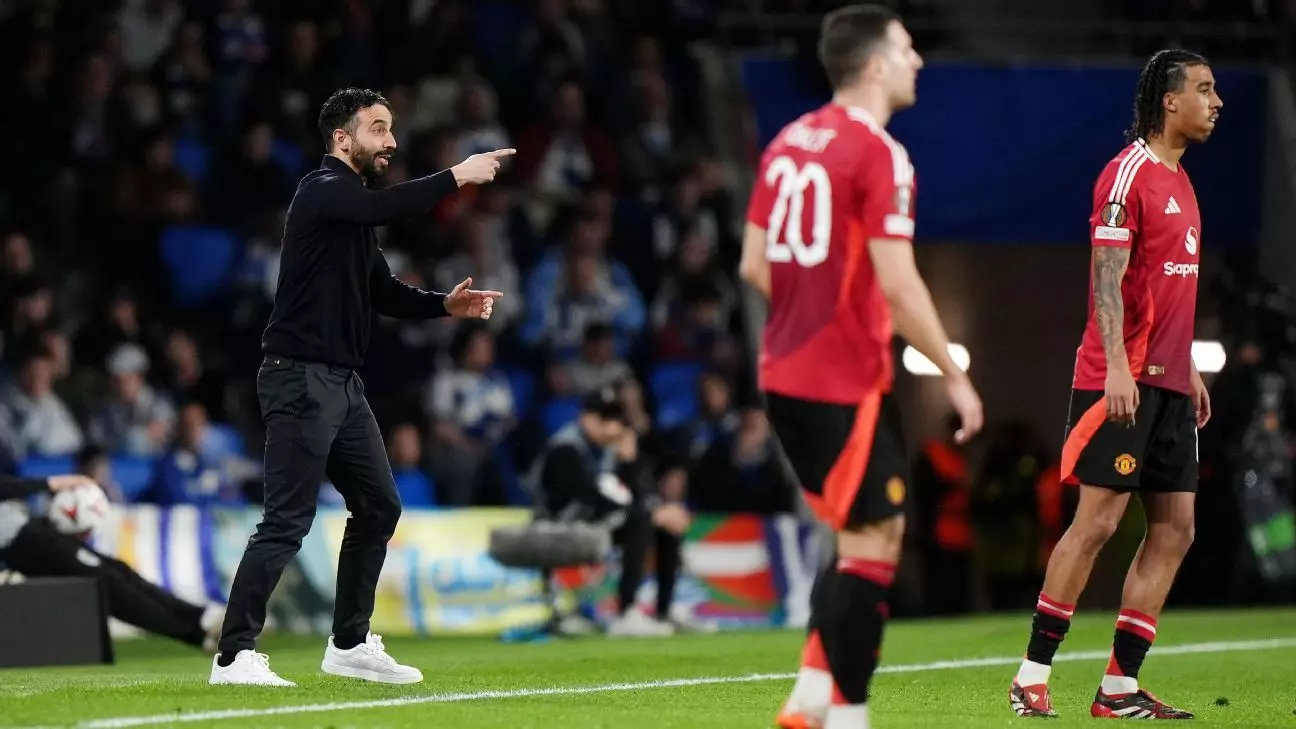
On a chilly Thursday night in San Sebastián, Manchester United walked away from a tightly contested Europa League match with Real Sociedad, emerging with mixed emotions. The 1-1 draw suggests that the team still holds a competitive edge in this knockout stage, but it also highlights missed opportunities and lingering frustrations. As Ruben Amorim leads this revamped squad, there is an undercurrent of disappointment mingled with hope—a reminder of the thin line between victory and defeat in European competitions.
The crux of the match lay in United’s inability to capitalize on present opportunities. Scoring enough to bury the tie before heading back to Old Trafford felt within reach, yet the failure to convert clear chances posed substantial questions. Real Sociedad, despite their own challenges in front of goal, left with a renewed sense of belief that they could advance, marking prospectively their first quarterfinal appearance in a major European tournament since 1989. This tournament means more than just the trophy; it’s a chance to invigorate their historical narrative and reclaim fortunes in continental football.
Moments of Control and Disappointment
As the match unfolded, there were glimpses of United playing confidently, especially in the first half. However, that performance was tinged with a profound lack of clinical precision—a familiar refrain. Amorim’s side showcased an impressive level of control, dictating the tempo and pressuring Sociedad to adapt. Yet, the scoreboard remained stagnant at 0-0 at half-time, revealing a compelling paradox of potential unfulfilled.
Tactically, United struggled to make the most of their advantageous positions. An incident illustrates this dilemma succinctly: Diogo Dalot, presented with a golden opportunity to cross to the waiting Rasmus Højlund, opted instead to retreat. The frustration emanating from Højlund was palpable; a striking visual of a forward’s frustration when served half-measures rather than full opportunities. Amorim, acknowledging the split-second decisions that often dictate outcomes in football, expressed that creating chances is just part of the equation—execution transforms potential into results.
The Turn of Fortune: Gaining Ground but Losing Control
After a hard-fought contest, United finally breached Sociedad’s defenses, thanks to a clever play that resulted in Joshua Zirkzee’s strike whizzing past the goalkeeper. It was a moment of celebration, highlighting Zirkzee’s growing confidence and form. Yet it also beckoned a poignant truth: at 1-0, the match felt tantalizingly ripe for the taking. The momentum should have pressed heavily toward the Manchester side, yet old habits of indecisiveness resurfaced, leading to squandered opportunities and missed chances to extend the lead.
In this sport, the psychological nature of the game can shift dramatically with goalmouth scenarios. The late equalizer from Sociedad was a testament to rapid momentum shifts—where United, once in control, suddenly found themselves combating a new reality. The controversial penalty awarded to Sociedad reminded everyone how fickle fortune can be—previous frustrations metamorphosed into panic and apprehension, thereby altering the narrative of a match once firmly held in a calculated grip.
The Fragile Nature of European Ambitions
As Amorim reflects on a game full of both opportunity and missed chances, it’s clear that building a successful team is not just a vertical pursuit but an intricate balance of psychological resilience and tactical astuteness. Effective communication and decision-making in key moments can often dictate the fates of entire seasons, particularly in knockout competitions where one moment can define legacies.
Despite the disappointment of yielding a late equalizer, the progressive steps visible in United’s performance signal a burgeoning potential. Under Amorim’s management, there is a palpable sense of growth—yet, that growth is overshadowed by the pressing necessity for results. Looking ahead to the return leg at Old Trafford, the duality of anticipation and anxiety is bound to heighten. Both players and fans alike must rally together, channeling frustrations into the unified pursuit of advancement.
As United departs from San Sebastián, one is left pondering the paradox of their European campaign. There lies both challenge and possibility in equal measure. What will it take to harness latent potential into palpable success? Only time—and performance on the European stage—will unveil the answers to these pressing questions.