
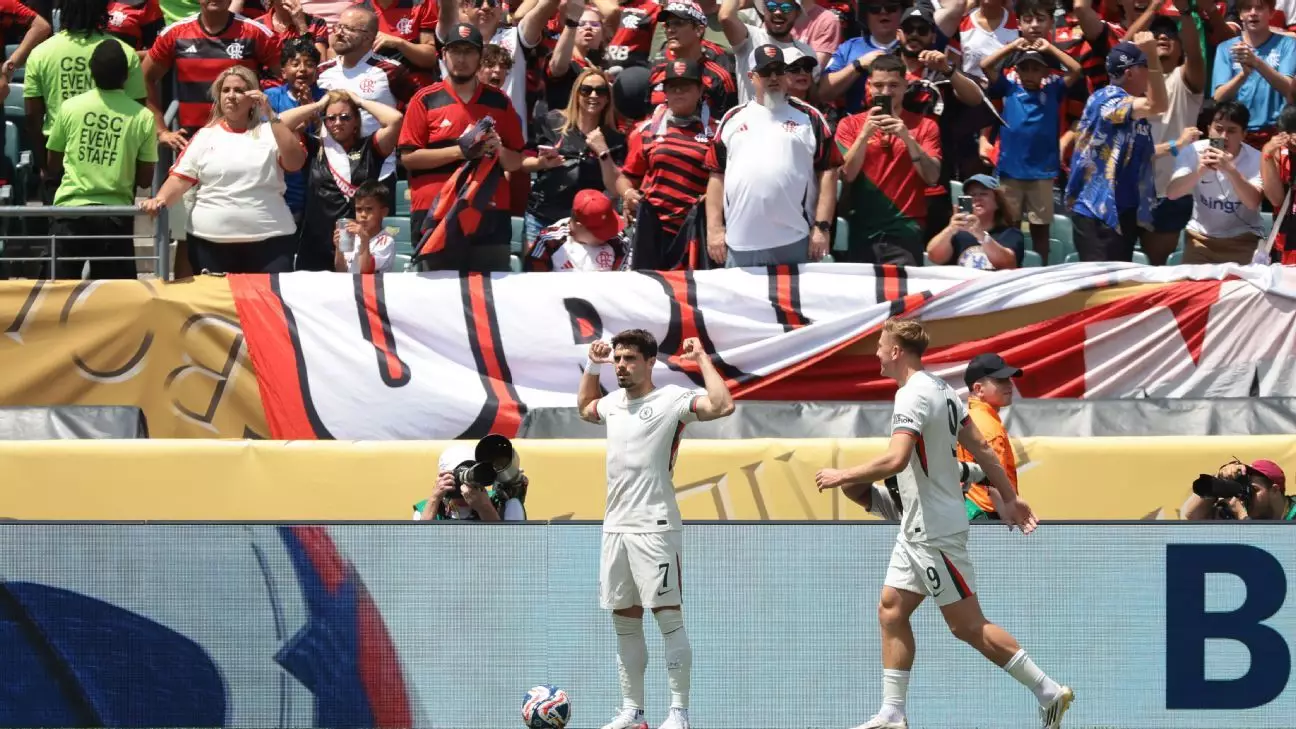
In a striking matchup at the Club World Cup, Flamengo demonstrated a relentless drive against Chelsea, overwhelming the European champions with their fiery spirit. Pedro Neto’s candid admission that Flamengo exhibited more “desire” encapsulates the heart of a tournament where sheer willpower can outshine tactical prowess. Despite Neto’s personal achievement of scoring his second goal in as many matches, it was not sufficient to secure a victory for Chelsea, a team renowned for its incredible talent but seemingly lacking the fervor that characterized their Brazilian rivals.
The Turning Point: Momentum Shift
Neto’s analysis of the match revealed a stirring insight into the dynamics of football. While Chelsea may have initially controlled possession in the first half, it was Flamengo’s ability to capitalize on opportunities that set them apart. The second half saw a dramatic shift as Flamengo took the initiative, and Chelsea’s Nicolas Jackson received a red card—an incident that effectively dismantled any chance of a Chelsea comeback. Neto’s emphasis on “desire” points to a crucial factor often overlooked: the psychological edge that a team can forge through sheer determination.
More Than Just a Game
In light of the intense competition, Neto expressed immense gratitude for being part of such a prestigious tournament, prioritizing the grand experience over mundane leisure like sunbathing on a beach. His statement resonates profoundly in a world of professional sports where many players dream of the opportunity to compete on such a global stage. This mindset is not merely professional; it is a genuine appreciation for the beautiful game that transcends individual accomplishments and well-deserved acknowledgement.
The Contrast of Football Cultures
Marc Cucurella’s observations about the disparity between South American and European teams highlight an intriguing dimension of international football. His reflection on the contrasting “momentum” faced by teams like Boca Juniors and Flamengo versus Chelsea is a testament to the unpredictability of football. Although the Premier League is hailed as the pinnacle of football, Cucurella’s acknowledgment of unique conditions facing South American teams sheds light on the cultural nuances impacting performance. The different styles of play, climatic conditions, and ways of preparation can significantly influence outcomes in pivotal matches like this.
A Call for Reflection
As Flamingo now leads Group D, Chelsea finds itself at a crossroads, needing a victory against Esperance Sportive de Tunis to ensure progression to the next round. This defeat serves as a clarion call for Chelsea to reassess its strategies and player mentality in high-stakes matches. The Club World Cup is not just another tournament; it is a bridge connecting continents and cultures through the common language of football. Embracing this opportunity to grow amidst adversity could very well be the catalyst Chelsea needs to reclaim their footing on the international stage.
This stirring match not only highlights the clash of two football philosophies but also reflects the enduring spirit of competition where desire, momentum, and the understanding of football culture can redefine the outcome of any game.