
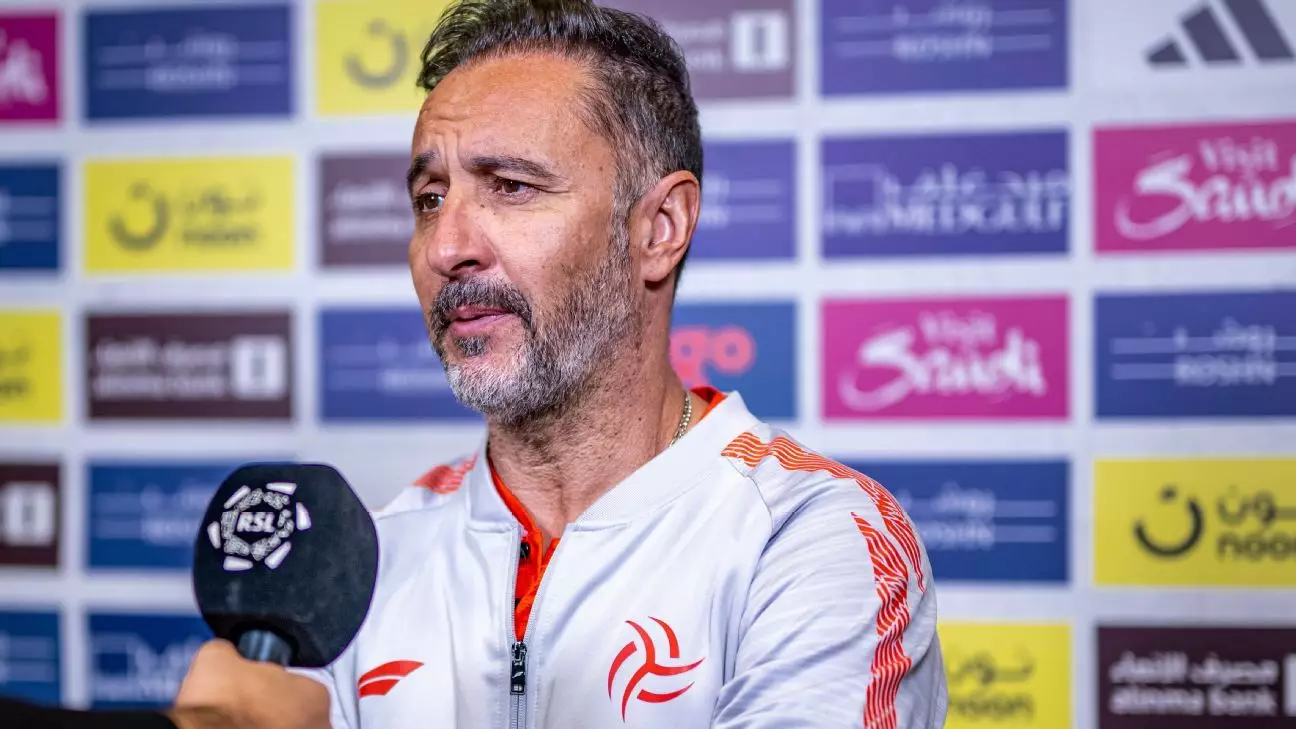
In the wake of Gary O’Neil’s departure from Wolverhampton Wanderers, the club has taken a significant step by appointing Vitor Pereira as the new head coach. This transition marks a pivotal moment in the club’s efforts to stabilize after an unsettling start to the Premier League season. Having served as the manager of Al Shabab in the Saudi Pro League, Pereira brings a global perspective, having managed teams across eight different countries over the past 11 years. His wealth of experience is expected to infuse new strategies and insights into a struggling squad currently dealing with the pressures of relegation.
The club’s chairman, Jeff Shi, emphasized the importance of this moment, highlighting Pereira’s reputation as an accomplished coach capable of navigating the complexities of top-flight football. Given the Wolves’ precarious position in the league, currently sitting 19th with merely two victories from 16 matches, the immediate focus for Pereira will be to instill resilience and confidence within the squad. This leadership challenge is compounded by the necessity to unify players and coaching staff alike, as collaboration will be essential in steering the club towards safety before the season progresses further.
Vitor Pereira is no stranger to high-pressure environments. He garnered significant acclaim during his tenure at FC Porto, succeeding renowned coach Andre Villas-Boas in 2011. Under Pereira’s guidance, Porto clinched consecutive Primeira Liga titles, establishing him as a formidable figure in Portuguese football. His managerial journey has also seen him achieve league success in Greece with Olympiacos and in China with Shanghai SIPG. Such a diverse background reflects his adaptability and capability to lead teams in various settings, which could prove vital as he seeks to revitalize Wolves.
Nonetheless, Pereira’s task is not without its hurdles. Wolves face an immediate test against Leicester City, a match that could be critical for both teams as they aim to escape the dreaded drop zone. Following this, the fixture list presents daunting challenges against established Premier League teams, including Manchester United and Tottenham Hotspur. Each of these encounters will require Pereira to quickly implement his tactics and foster a competitive mentality within the squad, shaping how they approach the rest of the season.
As Pereira embarks on this new journey, his success will largely hinge on his ability to connect with his team and galvanize their efforts on the pitch. Players need to buy into his vision for the club, and the support from the board, fans, and the broader Wolves community will be crucial during this transition phase. The commitment shown by Pereira in accepting the role reflects his desire to return to England’s top tier, where he once was at the forefront of managerial consideration. In this critical juncture for Wolverhampton Wanderers, their future undeniably rests on Pereira’s guidance and strategic acumen.