
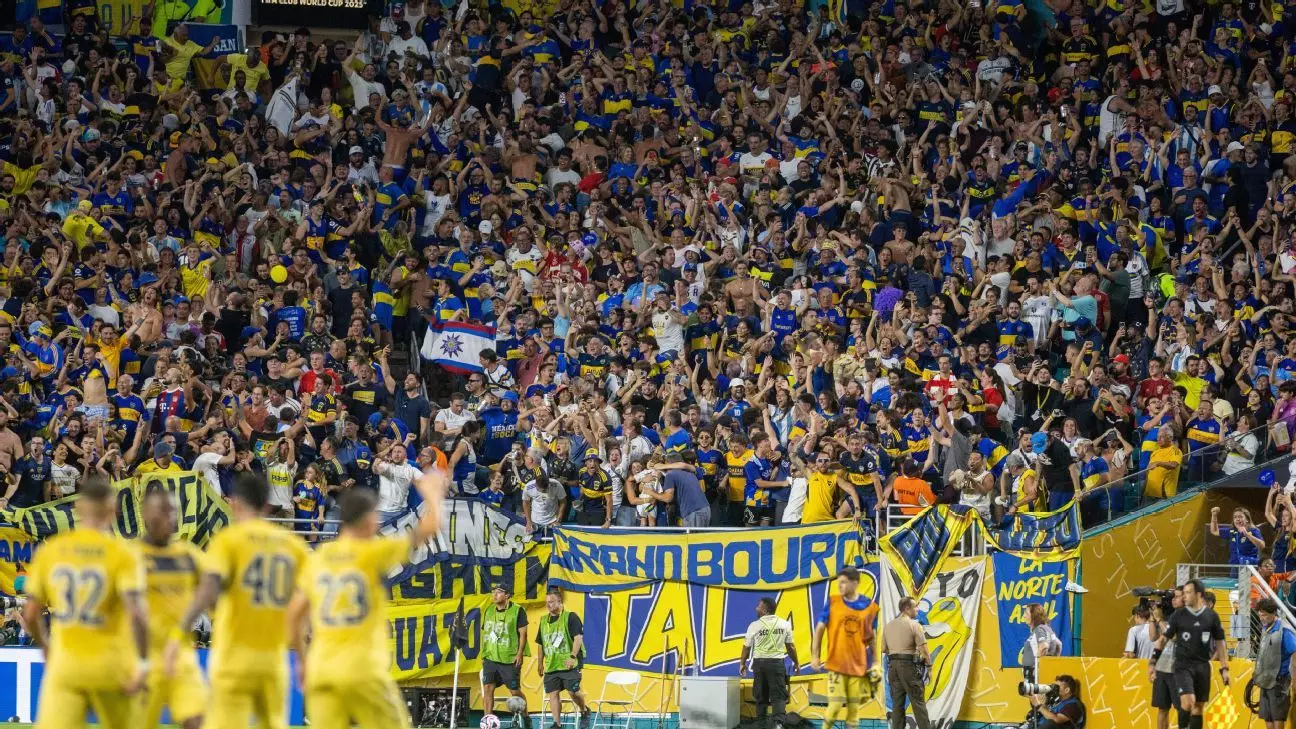
Tobin Heath’s perspective on American soccer carries weight. As a decorated player with multiple NCAA championships, Olympic golds, and World Cups, Heath has witnessed firsthand what it takes for soccer to capture a nation’s heart. She explicitly connects the potential of the Club World Cup to a transformative effect on soccer culture in the United States—a country traditionally dominated by other sports. Heath’s observation of packed stadiums in South Florida, where fervent crowds roared as Bayern Munich played Boca Juniors, speaks volumes about untapped enthusiasm within American soccer fans. That energy, she insists, was something she never imagined would manifest so vibrantly on U.S. soil.
Unlike the 1999 Women’s World Cup that inspired Heath’s generation, the Club World Cup might become a similarly formative event for a new wave of soccer enthusiasts. The tournament exemplifies the possibility of soccer engaging diverse American audiences, beyond the traditional hubs. Although attendance across venues has fluctuated, these bursts of passion could serve as seeds for deeper roots in the country’s sports landscape.
A Star’s Magnetic Pull: Messi’s Impact on Inter Miami and Beyond
One undeniable truth in this tournament is Lionel Messi’s magnetic influence. His presence on Inter Miami has vaulted the club into the international spotlight, an ascent that would have been unlikely without him. Yet, Messi’s statistical performance in the tournament hasn’t been remarkable, underscoring differently what his true value is: global star power that transcends mere numbers. Arsène Wenger, part of FIFA’s technical group, nicely encapsulated this dynamic by recognizing Messi’s unique role in encouraging American engagement with soccer.
While Inter Miami is the only U.S.-based club to have progressed to the knockout stages, its success—boosted by Messi—raises a question: can a club built on a global superstar genuinely spur a longstanding soccer boom in the U.S., or is this excitement merely a fleeting phenomenon? Messi’s influence is arguably a double-edged sword—it draws attention but also risks overshadowing the broader structural growth of soccer in America.
The Technical Study Group: Deconstructing the Beautiful Game
The FIFA technical study group offers a glimpse into the future of soccer analysis. Armed with multi-screen technology and comprehensive data analytics, the group dissects every nuance of play. Their 50-plus page reports quantify everything from ball recovery time to sprint intensity, illuminating what strategies and athletic profiles define successful teams. This deep dive elevates understanding beyond traditional analysis and aids in shaping better coaching tactics and athlete development.
Despite the tournament’s uneven attendance and occasional field-quality criticisms, the technical study group remains enthusiastic about what the Club World Cup reveals: an ever-evolving style of play, resilience under varying conditions, and the tactical diversity that makes soccer universally fascinating. Tobin Heath’s excitement about the upcoming World Cup next summer is grounded not just in the spectacle but in the tangible growth of the sport’s culture and infrastructure in the U.S.
Challenges Beneath the Surface: Field Quality and Infrastructure
While the excitement is palpable, the tournament hasn’t been without flaws. European clubs have openly voiced concerns about pitch conditions at venues in cities like Charlotte and Orlando—locations not renowned for their soccer turf standards. Arsène Wenger’s candid remarks highlight these shortcomings, admitting some pitches fell short of European expectations. Even MetLife Stadium, which will host the Club World Cup final, drew criticism for having a softer turf that slowed ball speed.
This criticism reveals a critical challenge for organizers: elevating field quality to meet global standards consistently. The promise to improve playing surfaces for the 2026 World Cup is being taken seriously, but the discrepancies exposed during the Club World Cup expose deeper questions about the U.S.’s readiness to host world-class soccer events. Field conditions affect player performance and viewer experience, both crucial for building lasting enthusiasm.
A Crucible for Growth, Not Just a Preview
To frame the Club World Cup merely as a “dress rehearsal” for the 2026 World Cup understates its importance. It is a crucible testing how well soccer can capture American public attention, challenge organizational logistics, and integrate into a complex sports culture saturated with alternatives. The packed stadiums in Miami contrasted sharply with less crowded venues, signaling market unpredictability but undeniable pockets of fervor.
Heath’s optimism about soccer’s future in the U.S. is contagious, but that optimism must be met with robust investment in grassroots development, infrastructure, and broader fan engagement beyond marquee events and star-driven hype. Messi’s Inter Miami and the spectacle of international clubs clashing in American arenas offer hope that a soccer revolution is underway—but the real measure will be sustained growth in participation, viewership, and cultural embrace long after the tournament ends.