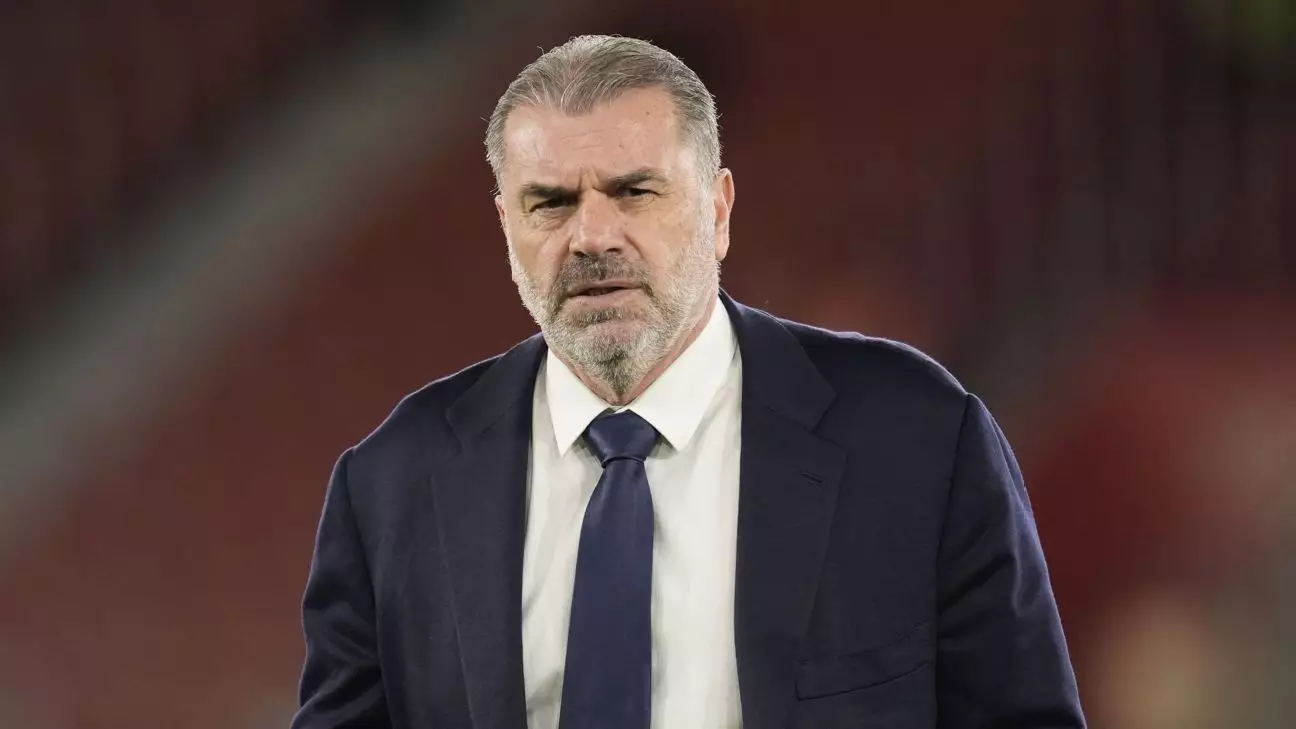
Ange Postecoglou: Navigating Criticism and Establishing Identity at Tottenham
In the fast-paced world of football management, criticism is an unavoidable aspect. For Tottenham Hotspur’s head coach, Ange Postecoglou, scrutiny has become a significant part of his tenure since he took the reins last summer. The Australian manager’s commitment to an attacking style has drawn both admiration and derision, often leading to sensational narratives that seem to overshadow substantive analysis of his tactics. Recently, Postecoglou expressed his concerns about some of the critiques, labelling them as “offensive” and attributing part of the backlash to his “silly accent.”
This statement raises important questions about the nature of scrutiny in sports, particularly when it veers into personal territory, as it often does in the vicious media landscape surrounding high-profile football figures. Amid the intense spotlight, Postecoglou remains committed to his footballing ideals, which is commendable. However, the persistence of discontent among fans and commentators has reached a new height this season, as Tottenham finds itself languishing in 10th place in the league.
Central to the critique of Postecoglou’s management is his insistence on a front-footed attacking philosophy—a hallmark of his coaching style. This has led to several thrilling yet chaotic matches, including a dramatic Carabao Cup quarterfinal against Manchester United, where Tottenham, despite being in a dominant position, nearly conceded a late comeback. Such matches illustrate the double-edged nature of his tactics: while they can lead to captivating displays of football, they can also expose defensive vulnerabilities that critics (like Jamie Carragher) are quick to seize upon.
Carragher’s remarks about the need for Tottenham players to adopt a more pragmatic approach have sparked further debate about Postecoglou’s methodology. On one hand, such voices can serve as constructive criticism, pushing managers to adapt and improve. On the other, they may also reflect a misunderstanding of what Postecoglou aims to achieve—a long-term identity that prioritizes an aggressive, offensive game.
The tension between immediate results and establishing a coherent footballing philosophy is inherently difficult to navigate. Criticism from pundits, albeit damaging at times, can also be a catalyst for change, possibly providing the Spurs’ squad with a wake-up call to rally around their manager during a testing phase of the season.
Interestingly, Postecoglou has found solidarity in an unlikely source: Liverpool manager Arne Slot. This mutual respect highlights a therapeutic aspect of professional football: when pressures mount, solidarity among coaches can be a source of resilience. Slot’s acknowledgment of Postecoglou’s efforts to re-establish Tottenham’s identity speaks volumes in a climate where many would rather offer scathing reviews instead of encouragement.
Slot’s backing reveals an essential truth in football management—the importance of fostering an understanding amongst peers. While results remain paramount, the respect shown by fellow managers signifies a deeper appreciation for the complexities involved in transitioning teams towards a defined philosophy. Both managers face substantial expectations from their clubs and fans, yet Slot’s praise offers Postecoglou comfort amidst the storm of criticism. It underlines the significance of shared experience in the world of football, providing an emotional anchor amid the swirling tide of expectations.
As Tottenham continues to grapple with inconsistency, Postecoglou’s commitment to his footballing philosophy will be put to the test. The upcoming fixture against Liverpool will serve as a litmus test for his strategies and decisions. Will the team galvanize under pressure, or will the weight of collective scrutiny prove too much?
Ultimately, the narrative surrounding Postecoglou is as much about football as it is about resilience in the face of criticism. His ability to stand firm amidst a barrage of negative feedback contributes to the larger discourse about the roles managers play in developing a team’s identity. For Tottenham Hotspur and their passionate supporters, the hope remains that Postecoglou’s ideals can translate into consistent performances, allowing for a return to the club’s storied history while simultaneously carving out a future that aligns with his vision.