

Arsenal, a club historically synonymous with silverware and league dominance, finds itself still chasing elusive greatness after nearly two decades. Despite a renaissance under Mikel Arteta, the Gunners have been confined to the role of perennial runners-up, tantalizingly close yet never quite able to clinch the Premier League title. This relentless cycle of second-place finishes has cast a shadow over the club’s ambitions, exposing an underlying complacency or perhaps a mental barrier that prevents them from crossing the final hurdle. However, recent statements from William Saliba highlight a shift in mentality—an unwavering commitment to finally overcoming the psychological hurdle and claiming what has long been within their grasp.
Saliba’s vow to give everything signifies more than just a personal pledge; it embodies a club-wide hunger and a refusal to settle for the comfort of second best. His words reveal an acute awareness that past failures are not merely opportunities missed—they are lessons to be learned and catalysts for an even more relentless pursuit of victory. The inspiration drawn from these near-misses must evolve into a strategic, mental, and physical blueprint for overcoming obstacles that have haunted the club for years. Arsenal’s history is peppered with moments of brilliance, but true greatness requires consistency and resilience in the face of adversity. Saliba’s leadership on the field mirrors this philosophy, indicating that a new, more galvanized Arsenal could be on the horizon.
Transformative Leadership and the Power of Collective Growth

Under Arteta’s stewardship, Arsenal has undergone a transformation that has reinvigorated their identity and playing style. The acquisition of players like Declan Rice and Gabriel Magalhães, including Saliba himself, underlines a strategic push toward stability and strength across the squad’s core. While individual talents are vital, it’s the collective cohesion—the synergistic partnerships and shared ambitions—that truly dictates success. Saliba’s partnership with Gabriel, for instance, exemplifies this unity; not merely the sum of individual skills but a reflection of a shared understanding matured through experience and adversity.
Saliba’s comments on the positive impact of new signings reinforce the notion that Arsenal isn’t resting on laurels but actively seeking to fill gaps and elevate performance. The club’s relentless pursuit of excellence, coupled with an unwavering focus on team harmony, could turn out to be the critical element that differentiates them from their perennial rivals. Success at this level isn’t crafted solely through tactical acumen or individual brilliance but through a collective mentality that refuses to accept anything less than ultimate victory.
The Challenge of Mental Resilience and the Road Ahead
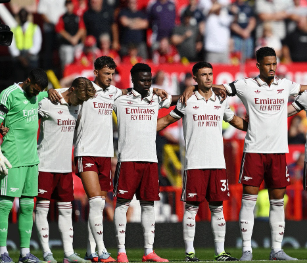
The narrative of Arsenal’s near successes underscores an undeniable truth: mental resilience is the battleground where titles are lost or won. The team’s recent performances suggest they are on the cusp of breaking that barrier, yet many critics point to psychological fragility in tight moments. Saiba and his teammates’ recent victory at Old Trafford, achieved under pressure and with debut-signing pressures mounting, underlines their growing confidence. But it’s only the beginning.
Winning isn’t an isolated event but a cultivated trait—something earned through consistency, mental fortitude, and the relentless pursuit of excellence. Arsenal’s current journey leaves little room for complacency. The club’s management, coaching staff, and players must develop an unshakeable belief that they can overcome the setbacks and frustrations of the past. Enhancing resilience requires more than just hard work; it demands a mindset rooted in persistence, adaptability, and an unbreakable conviction that victory is not just a possibility but an expectation.
The season ahead will be a defining chapter in Arsenal’s quest for greatness. There will be setbacks, tactical challenges, and fierce competition from established giants like Manchester City and Liverpool. Yet, with Saliba’s burning desire, a cohesive squad, and a culture aimed at atoning for the sins of the past, Arsenal might finally turn their near-misses into a lasting triumph. If they truly internalize the lessons of their history and cultivate an unshakeable belief in their capacity to win, that long-awaited Premier League trophy may not stay just out of reach for much longer.