Breaking the Chains: Arsenal’s Quest for Glory
When assessing the storied history of football, no period is more defining for a club than the era of success, and few teams have embraced this mantra more aggressively than Liverpool in the 1980s. Their motto, “First is first, and second is nowhere,” encapsulates a ruthless ambition that has echoed through the ages. For Mikel Arteta and his Arsenal squad, such ideals can either serve as an inspiring rallying call or a formidable pressure cooker, reminding them that greatness is not merely about participation but achieving tangible success. As the Gunners prepare to clash with Paris Saint-Germain in the Champions League semifinals, the stakes could not be higher. Victory in Europe would not just signify a milestone; it would be the pivotal moment that dissolves the “Nearly Team” label that has clung to them for far too long.
The Challenge of Transition
This season has been a litmus test for Arsenal’s aspirations. Although they are undoubtedly a more cohesive and competitive unit under Arteta, victories have often been blemished by missed opportunities. Drawing seven times in the Premier League, akin to Liverpool’s total for the entire campaign, highlights a troubling trend of inconsistency—one that plagues teams in their quest for silverware. It is a double-edged sword: on one hand, laying the groundwork for future success; on the other, fostering an environment where second-best feels like a perpetual consolation prize. Arteta’s leadership has transformed Arsenal, but the question remains: how can they turn potential into achievement?
Lessons from the Past
Arsenal fans have been in a state of limbo for quite some time, yearning not just for progress but for the glamour that comes with winning. The echoes of previous glory—four FA Cups since 2004—serve as a bittersweet memory, contrasting sharply with the recent dominance of rivals such as Manchester City and Chelsea, who have amassed trophies with alarming regularity. This disparity is not just statistical; it highlights a fundamental shift in the landscape of English football, where success is no longer a dream but an expectation for top clubs.
The lessons drawn from Liverpool’s journey under Jurgen Klopp are invaluable. The Reds faced numerous disappointments as they sought to reclaim their status, finishing as runners-up in various competitions before finally savoring victory in the 2019 Champions League. This narrative illustrates that enduring hardship and learning from failure often precede monumental success—a truth that resonates deeply with Arsenal’s current plight. To escape the shadow of “what could have been,” the Gunners must harness their cumulative experiences and push directionally toward triumph, much like Klopp’s early days at Anfield.
The Psychological Hurdle
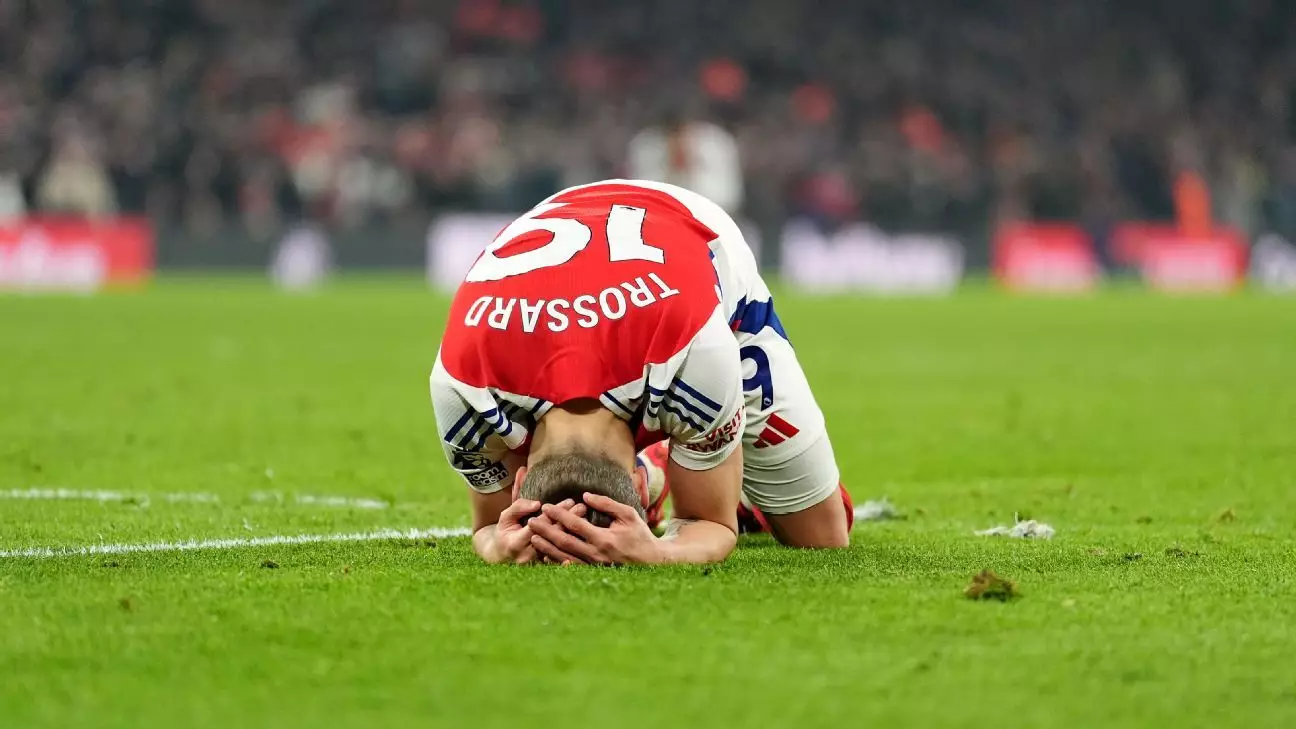
If Valencia or even Villarreal can dispatch Arsenal in critical fixtures, the psychological barrier of performing under pressure clearly looms large. Arsenal’s failure to secure crucial wins in semifinals—occasions where they were expected to excel—reveals an unsettling pattern that is hard to dismiss. Teams consistently challenged by the specter of impeding expectations often falter when the moment arrives to seize greatness. The ghosts of past failures can gnaw at the confidence of even the most talented squads. The comparisons with Tottenham Hotspur, who failed to convert their promising talents into trophies, cut deep, and the Gunners must be wary of falling into a similar trap.
As Arteta references the dream of winning at Arsenal, it’s essential that ambition morphs into achievement. The charismatic duo of Bukayo Saka and Declan Rice, alongside defensive stalwart William Saliba and maestro Martin Ødegaard, symbolizes a collection of talent that should, in theory, be capable of securing the silverware that fans crave. Fans adore skill and prowess—yet without the parsimonious satisfaction that comes from victory, even the most mesmerizing performances ring hollow.
Anticipation of Glory
The undeniable truth is that every encounter in this Champions League run serves as a defining moment—a chance to replace doubt with affirmation. As Arteta navigates through arguably one of the most challenging competitions in club football, the electricity in the air represents more than just the pursuit of the trophy; it embodies a broader aspiration to shift the narrative surrounding the club. Can they rise to the occasion in the same way Liverpool did, or will they succumb to the burdens that accompany high expectations?
To turn this fervent desire into tangible results hinges on their ability to learn from past failings and elevate their game when stakes are at their highest. The old adage rings true: “First is first, and second is nowhere,” but in that thirst for victory lies their potential for growth—and perhaps, just perhaps, their path to regaining prominence in the footballing world.