
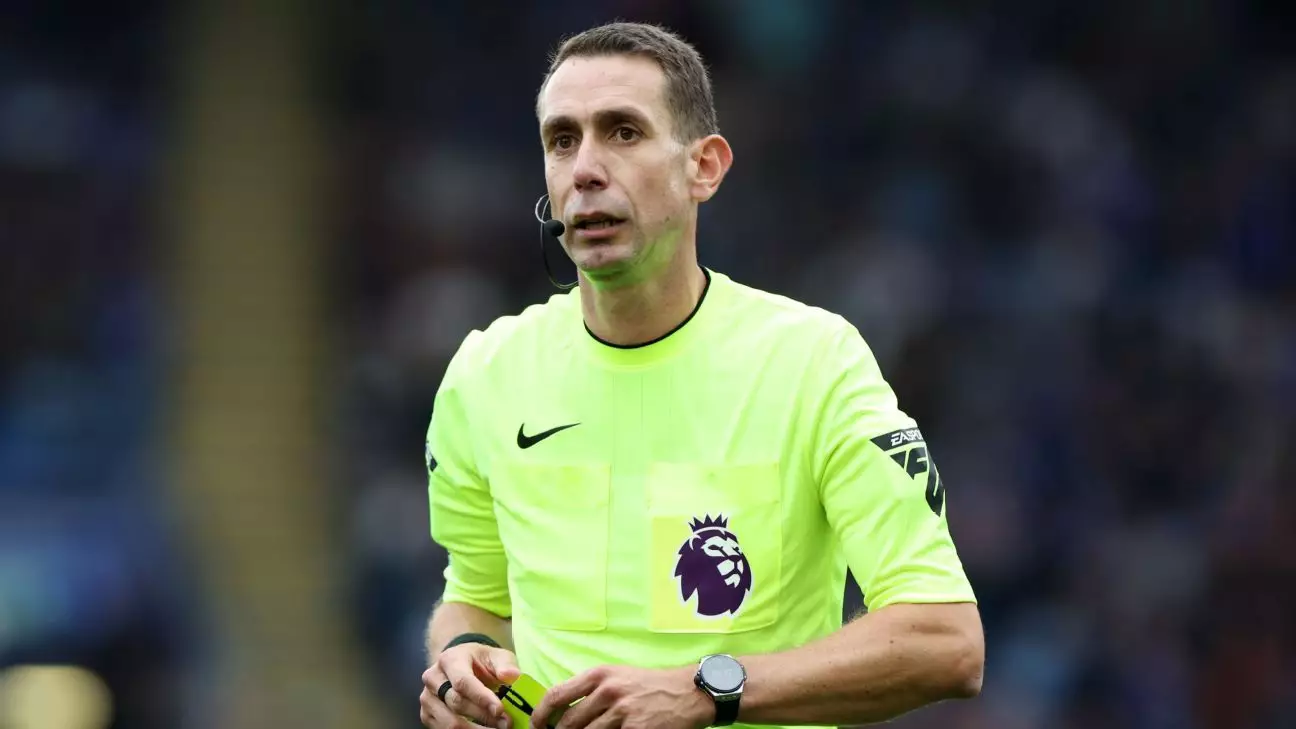
In a shocking turn of events, David Coote, a seasoned Premier League referee, has found himself at the center of a controversy that could have serious ramifications for his career and the integrity of officiating in football. The investigation, launched by UEFA, is reportedly a response to a video that has surfaced, allegedly depicting Coote engaging in inappropriate behavior while on duty during Euro 2024. This incident underscores the intense scrutiny that referees face, where even fleeting moments can blow up into scandals with far-reaching consequences.
The initial piece of evidence updating the public on Coote’s situation involved another video where he verbally disparaged Liverpool FC and its former manager, Jurgen Klopp. Such remarks, especially from a referee who is expected to maintain neutrality, may lead to questions about his objectivity on the pitch. Following the emergence of that clip, the Professional Game Match Officials Limited (PGMOL), the body overseeing refereeing in English football, removed him from active duty. This safeguarding step emphasized the importance of accountability among officials, especially when their public behavior raises concerns.
Once the second video surfaced, depicting what appears to be a much more serious breach, UEFA acted swiftly to ensure that Coote would not officiate any further matches at their tournaments. The new allegations are compounded by the initial concerns about his comments, revealing a pattern of problematic behavior that could damage both the reputation of the referee and the institution he represents. The timing of this second video is particularly incriminating, with it having been filmed merely a day after his last officiating duty at the Euro 2024 quarterfinal match between two football powerhouses, Portugal and France.
In a statement released to the media, UEFA confirmed the initiation of an investigation led by an Ethics and Disciplinary Inspector. This highlights the seriousness with which governing bodies approach issues concerning the conduct of officials, emphasizing their commitment to upholding disciplinary standards. The investigation also serves a dual purpose: to address the behavior of Coote while reinforcing the integrity of officiating at all competitive levels.
As the situation unfolds, it raises critical questions about the future of officiating standards and the importance of ethical behavior among referees. PGMOL expressed its awareness of the situation and assured the public that the welfare of David Coote remains a primary concern. However, the incident also shines a light on the broader implications for the sport. The integrity of refereeing is paramount to maintaining trust among players, fans, and stakeholders. If referees cannot adhere to ethical standards, the game’s credibility is jeopardized.
The fallout from this controversy may prompt governing bodies to reconsider their policies regarding referee conduct, training, and monitoring. The evolution of technology in capturing moments like these, especially when shared on social media platforms, has made it increasingly difficult for officials to engage in behavior that contrasts with the professional image they are expected to project. The expectations of transparency and accountability have never been higher, and it is clear that everyone involved in football—referees included—must be prepared to face scrutiny in ways they may not have anticipated just a decade ago.
The saga surrounding David Coote serves as a significant reminder of the responsibilities held by referees, not just in their officiating duties, but as representatives of integrity in sport. As this investigation continues, the repercussions will undoubtedly lead to discussions on how the profession of refereeing will navigate the complex interplay between personal behavior and professional obligation in a modern digital landscape.