
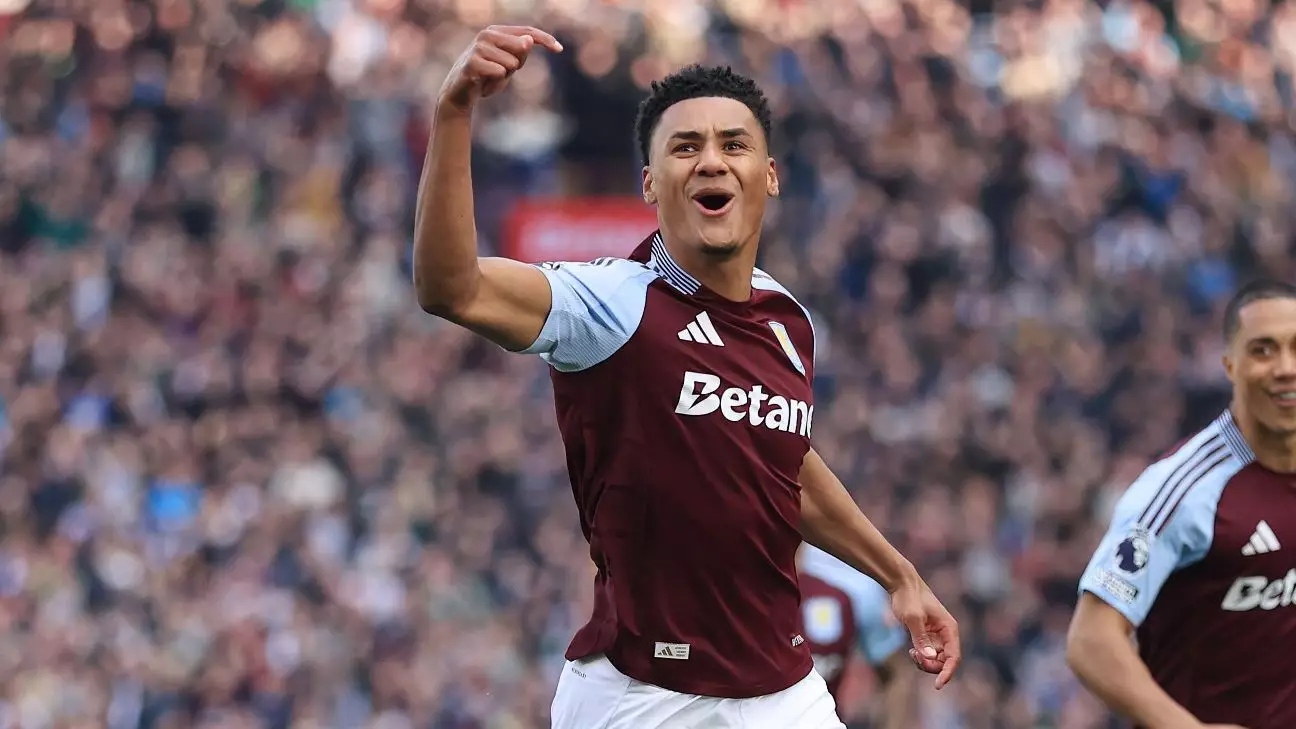
In the ever-evolving landscape of football transfers, the potential swap deal between Manchester United and Aston Villa, involving Marcus Rashford and Ollie Watkins, is a fascinating case study. Both clubs are seemingly locked into a dance of negotiation, with Manchester United keen to offload Rashford despite his longstanding association with the club, while simultaneously aiming to secure the services of Watkins, a rising talent with a knack for scoring goals. This particular swap could be emblematic of a larger trend in football: the increasing reliance on swap deals as a means of navigating inflated transfer fees in a hyper-competitive market.
Historically, swap deals have been fraught with complications due to differing valuations and emotional attachments players have to their clubs. Rashford, for instance, has long been a fan favorite at Old Trafford, yet the reasoning behind this potential deal stems from more than just financial maneuvering; it’s a gamble on performance and potential return on investment. If Manchester United truly believes that Watkins can be the missing piece to their attacking puzzle, they may very well be willing to let go of a player who, despite his rich history with the club, could be seen as dispensable given the right circumstances.
The Battle for Eberechi Eze
As the winds of transfer speculation swirl, another intriguing name emerges: Eberechi Eze. The Crystal Palace midfield sensation is now at the center of a tug-of-war between Manchester United and Aston Villa, signaling how crucial his ability to dictate play and create chances is considered by clubs looking to build a successful roster. With a hefty price tag reportedly set around £50 million, securing Eze’s signature could solidify a midfield or attack, depending on how a club sees him fitting into their tactical setup.
What makes the Eze situation compelling is the level of competition between clubs—each side vying not just for a player, but for a strategic advantage that could bolster their identity on the pitch. If Manchester United cannot secure Eze this summer, the repercussions could extend beyond just their midfield. Losing out to Aston Villa, who are apparently keen to maintain momentum in a crumbling Premier League landscape, demonstrates how quickly fortunes can pivot in football.
Mighty Challenges Ahead for High-Profile Clubs
As if the intricacies of the Rashford-Watkins swap or the Eze saga weren’t enough, other clubs are also grappling with potential maneuvers that could reshape the landscape of the Premier League. Manchester City’s search for a replacement for Ederson has put them in the pole position for FC Porto’s Diogo Costa, especially given the goalkeeper’s impressive skill set. A release clause of £63 million may seem steep, yet City’s confidence in securing a deal for around £50 million indicates not only their financial prowess but also their unwavering ambition.
Meanwhile, Liverpool’s pursuit of Brentford’s Bryan Mbeumo, despite Mohamed Salah’s new contract, further emphasizes the trend of clubs stockpiling talent. Mbeumo’s addition could signal a strategic revamp, allowing for versatility in attacking formations. Liverpool’s approach highlights an essential understanding of squad depth: smart clubs prioritize having quality substitutes who can change the tempo of a match or step in seamlessly when key players are unavailable.
United’s Goalie Conundrum
In the case of Manchester United’s Andre Onana, many overlook that the goalkeeper’s future is contingent upon impending transfer campaigns involving players in outfield positions. United’s tactical overseer, Ruben Amorim, has placed higher significance on fortifying the midfield and attacking lines rather than seeking a new number one. It raises questions about whether Onana could weather the storm of criticism surrounding his form, or if further scrutiny from fans and media will force a reevaluation of his position as United’s last line of defense.
The overarching narrative, driven by these numerous transfer possibilities, highlights the delicate balance between ambition and pragmatism in football management. Clubs must not only invest intelligently but also assess the immediate and long-term ramifications of their decisions—both on the pitch and in their broader business models. As the transfer window looms closer, anticipation grows concerning which clubs will emerge as the victor in this high-stakes game, and which players will become the latest stars in the ever-expanding universe of the Premier League.