
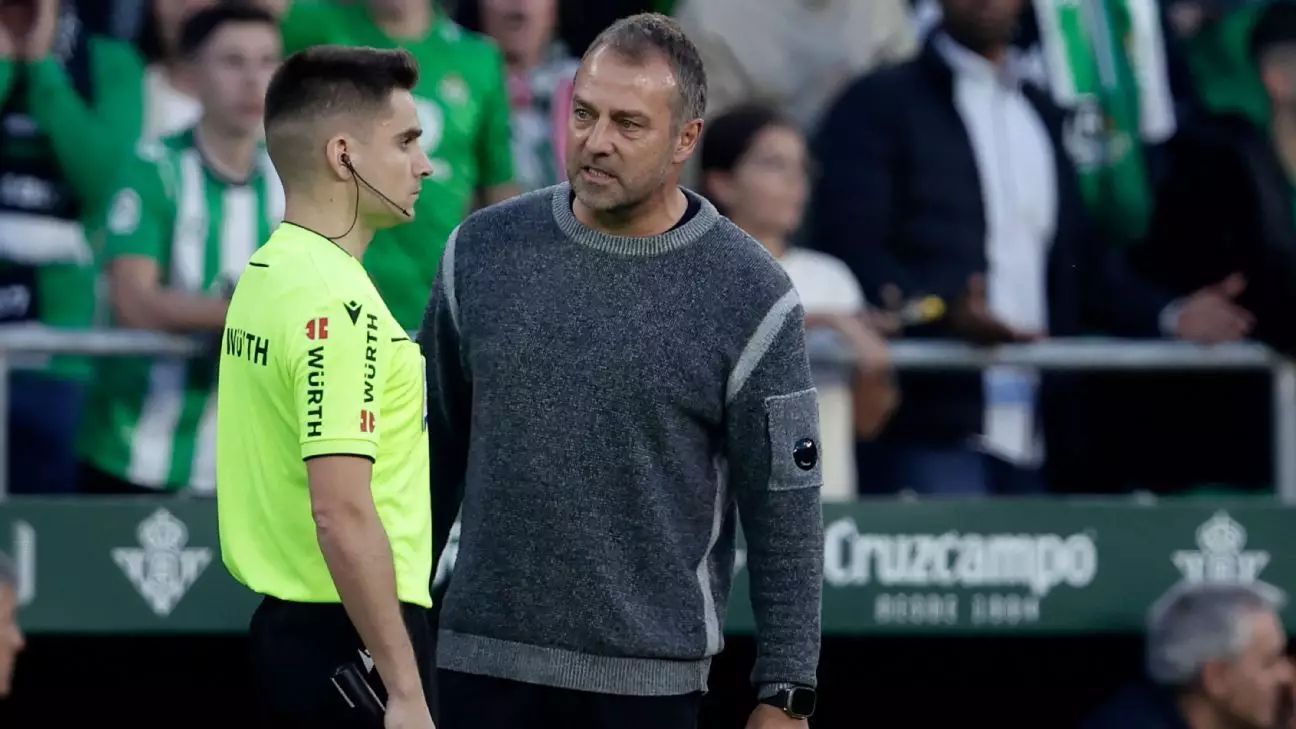
In the high-stakes world of professional football, coaching is not just about strategies and formations, but also emotional control. Hansi Flick, the head coach of FC Barcelona, has recently found himself in hot water following a two-match touchline ban after being sent off in a LaLiga match against Real Betis. Flick has taken responsibility for his actions, openly recognizing the need to improve his emotional regulation on the field. His admission showcases a commendable level of accountability, emphasizing that even seasoned professionals can find themselves overwhelmed in critical moments.
Flick’s ejection was prompted by his vehement protest against a controversial penalty awarded to Betis after a challenge by Frenkie de Jong. While many fans and players may sympathize with a coach eager to defend his team, his nonchalance towards authority ultimately cost him. His red card signifies more than just a disciplinary issue; it raises pertinent questions about emotional response management and its far-reaching repercussions in competitive sports.
The consequences of Flick’s ban extend beyond his immediate absence from the touchline. Barcelona is grappling with a string of inconsistent performances, having squandered points in four of their last five league matches. This inconsistency can be detrimental to team morale and fan confidence. The knowledge that their coach will be absent for the crucial upcoming matches against Leganés and Atlético Madrid compounds these challenges. Barcelona must navigate these games without their figurehead, which places immense pressure on Flick’s assistant, Marcus Sorg.
While Sorg has the experience and knowledge to manage the squad effectively, the transition can be challenging. Flick’s underlying message about not venting frustrations on referees is now a guideline for the entire team during his absence. The players will need to focus on channeling their emotions positively to avoid any further lapses in concentration on the pitch – a sentiment coming directly from their head coach’s misstep.
Flick’s statement, “I have to improve my control of my emotions,” is more than just a reflection of his own shortcomings; it opens the door for a broader conversation about the mental fortitude required in coaching. The pressure placed on coaches in major leagues is extraordinary, as their emotional states can directly influence player performance. Emotional outbursts, while sometimes seen as passionate leadership, can derail focus and contribute to negative outcomes on the field.
Barcelona must now reconcile the intensity required to win with the calm needed to perform effectively. Flick’s presence on the sidelines, especially during tense matches, plays a crucial role in maintaining this balance. With his absence, it will be interesting to observe whether Sorg can sustain the team’s competitive spirit without allowing emotions to spiral out of control.
Looking Ahead to Upcoming Matches
Despite the setback against Betis, Barcelona displayed resilience with an impressive 3-2 win against Borussia Dortmund in the Champions League. This victory is a critical morale booster as the squad prepares for the upcoming matches in LaLiga. The return of key players such as Ronald Araújo, who has been recovering from a hamstring injury, is also a silver lining for the team. His presence could be pivotal in shoring up the defense and reinstating confidence among the players.
As the team gears up for the match against Leganés, they hold a precarious two-point lead over arch-rivals Real Madrid, who have a game in hand. Every point is vital in a title race where margins are slim. Performance consistency, both in terms of individual player contributions and team dynamics, will be crucial to maintaining that lead.
Flick’s frustrations with officiating also highlight a repeated theme in football: the often contentious relationship between coaches, players, and referees. His assertion that “we’re all humans and we make mistakes” resonates deeply in the world of football, where decisions can swing the course of games. The broader implication here is the need for improved standards in officiating, allowing both coaches and players to focus on their game rather than conflicts surrounding officiating decisions.
Flick’s experience serves as a reminder of the importance of emotional regulation for not only coaches but players and referees alike. As they navigate the complexities and pressures within such an unpredictable arena—particularly in the top leagues—learning to manage emotions constructively can turn their passion into productive energy, ultimately helping teams achieve their goals.
Hansi Flick’s reflection on his emotional control after his recent suspension is a multifaceted lesson encompassing accountability, team dynamics, and the psychological pressures of coaching at the highest level. As Barcelona moves forward, the focus will be on harnessing this experience to foster an environment of resilience and constructive progression.