Marcus Rashford: At the Crossroads of Challenge and Change
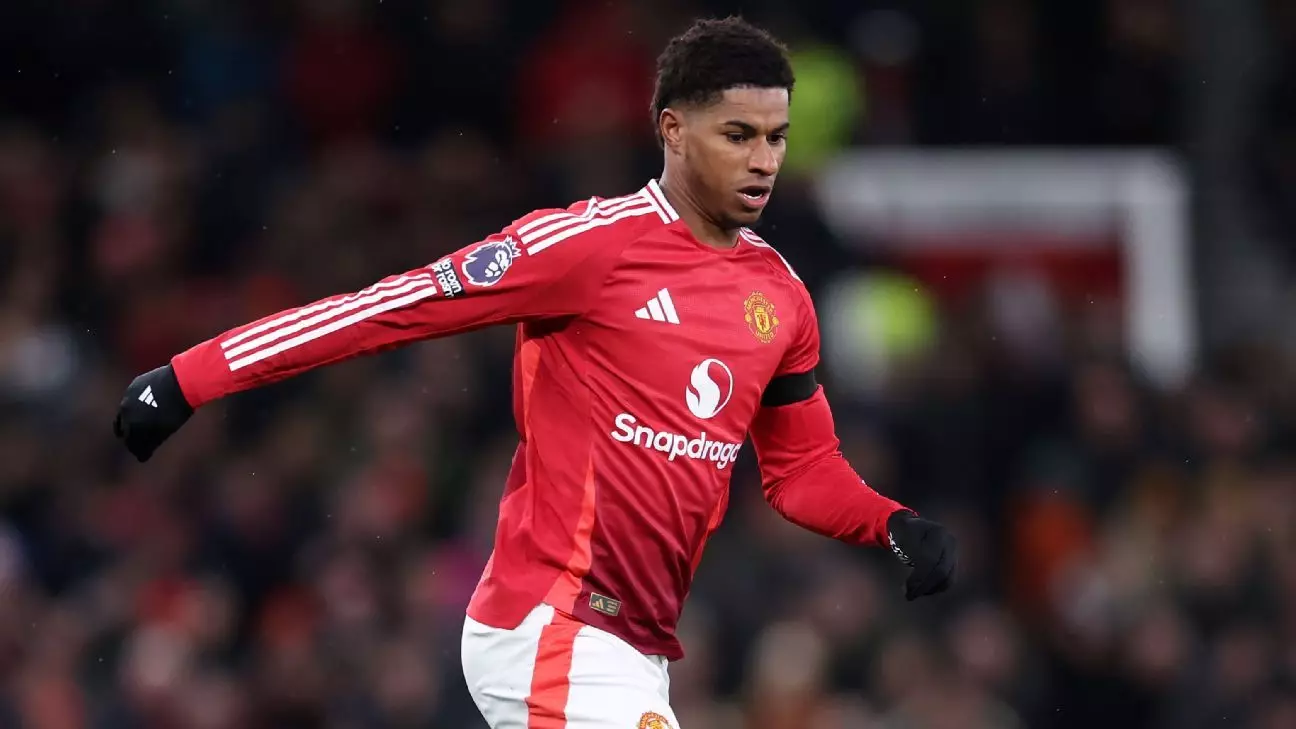
The world of football is rife with speculation, especially surrounding players whose careers take unexpected turns. In the case of Marcus Rashford, the 27-year-old forward of Manchester United, recent comments have ignited discussions about his future with the club. After being notably omitted from the squad during a crucial derby match against Manchester City, Rashford’s remarks conveyed not only disappointment but also a readiness to embrace new challenges, leading many to contemplate whether a departure from Old Trafford is imminent.
Rashford’s exclusion was stark and surprising, motivating both fans and pundits to dissect the reasons behind this critical decision made by manager Ruben Amorim. The new manager’s emphasis on various off-field factors—training performance, dressing, eating habits, and teammate interactions—reflects a broader concern about professionalism within the squad. Despite having once been an indomitable force for the club, partnerships with coaches and teammates appear strained, which raises questions about Rashford’s commitment and role under Amorim’s stewardship.
The struggles facing Rashford are not solely rooted in tactical decisions; they extend to personal and professional challenges. The past few seasons have seen the young talent oscillate between phenomenal performances and frustrating setbacks, including disciplinary actions from previous managers for missing meetings. His perceived off-field distractions highlight a player grappling with the pressures of elite-level football while trying to maintain his form amid adversity.
At this juncture, Rashford’s career choices loom large. His recent admission of feeling “disheartening” and his candid acknowledgment of wanting a fresh challenge signal a deep dive into self-reflection. Such pronouncements imply that Rashford is considering what lies beyond the Manchester climate he has known for nearly a decade. This contemplation resonates with the sentiments of many players who, after experiencing considerable success, face the challenge of navigating setbacks and the evolving demands of their roles.
Rashford’s narrative is complex; despite being a home-grown darling of Manchester United, he finds himself facing mounting criticism from a segment of the fanbase. In a sport where loyalty and expectations often collide, such criticism can weigh heavily on an athlete’s psyche. Rashford’s assertion of feeling “misunderstood” sheds light on the struggle for recognition amid the relentless demands of a club steeped in history.
Yet, one must ponder: how does a player maintain a sense of self amidst external pressures? Rashford appears keenly aware of his status as a professional athlete, framing his experiences as an inevitable part of personal and professional growth. He acknowledges that every setback provides an opportunity for resilience—a characteristic that could ultimately define his legacy.
As Rashford considers his future, speculation has arisen about potential suitors. Reports indicate that while European interest may wane, the lucrative offers from the Saudi Pro League present an intriguing opportunity for players seeking both financial stability and a fresh start. This prospect aligns with Rashford’s readiness for “the next steps,” hinting that he may prioritize personal growth over loyalty to a singular club.
Moreover, Rashford’s recent four and a half-year contract extension—which reportedly includes a hefty weekly salary—means that should he depart, Manchester United could secure a substantial transfer fee. The financial intricacies of such a move further illustrate the delicate balance between a player’s desire for personal growth and the club’s business objectives.
Rashford’s journey within Manchester United has not only been a testament to his talent but also a mirror reflecting the complexities of modern football. With both achievements and disappointments coloring his tenure, he is acutely aware that peaks and troughs are an inevitable cycle. As he prepares for a potential change, a notable phrase stands out: “There’s not really an end point.” This recognition suggests an understanding that evolution is crucial—a philosophy that may soon propel him toward new challenges, allowing him to carve out a distinct identity in football.
As Manchester United prepares for a pivotal Carabao Cup quarterfinal against Tottenham Hotspur, Rashford will undoubtedly be in the minds of fans and teammates alike. His future may hang in the balance, but his resolve and determination will continue to shape his narrative—no matter where his next chapter unfolds.