Pressure and Performance: Manchester United’s Struggle for Stability
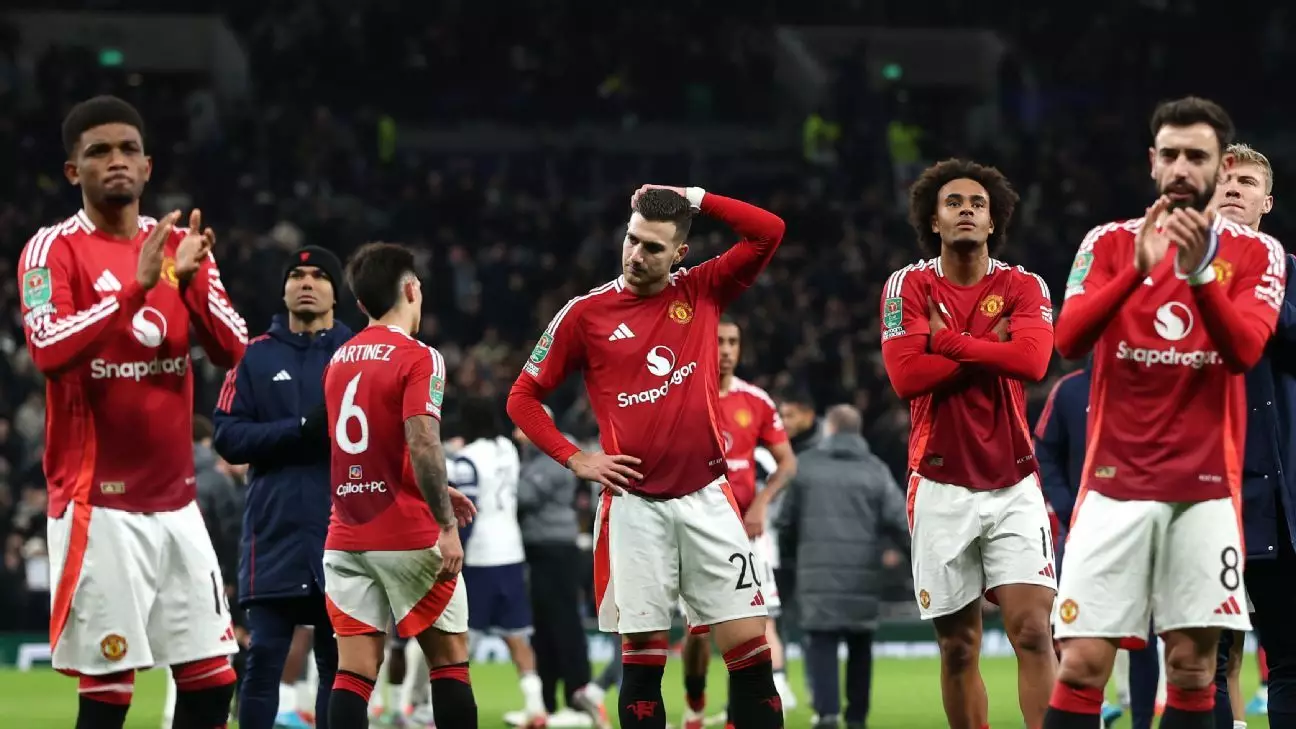
In the high-stakes environment of professional football, few clubs are burdened with expectations as intense as those faced by Manchester United. Following a disappointing start to the season, manager Ruben Amorim has candidly admitted that his players are feeling the weight of external criticism, which seems to be adversely affecting their performance on the pitch. Currently sitting in 15th place on the Premier League table, United’s recent record, which includes just one win in their last four matches, highlights a deeper issue than mere technical shortcomings. The players’ awareness of scrutiny—be it through social media, news outlets, or discussions among former players—hangs over them like a dark cloud, potentially stifling their natural instincts and gameplay.
Amorim articulated that the pressure to succeed at a storied club with such a distinguished history like Manchester United is immense. “They feel the pressure that they need to win,” he noted, indicating that the burden of public expectation is palpable. Players often enter their matches aware that even small mistakes will be magnified by criticisms. This constant examination might lead them to overthink their actions, thus obstructing fluid play and the instinctual decision-making that can often make the difference in tight games.
The team’s morale is another critical factor in the analysis of their performance woes. The latest development regarding redundancies at the club has added another layer of discomfort. Amorim mentioned the impending layoffs with sensitivity, recognizing that staff morale is intertwined with the players’ mindset. While players often appear to occupy a ‘bubble’ of sorts, secluded from the repercussions of administrative decisions, the tension in the club is palpable and undoubtedly contributes to an already pressurized atmosphere.
Despite the players’ detachment from off-pitch issues, the overarching anxiety stemming from poor results and external criticism has an omnipresent influence. The difficulty in navigating this complex web of pressures—both internal and external—cannot be understated. Players are expected to deliver peak performances while also managing emotional fallout, making the path to recovery even more challenging.
Amidst the current maelstrom, Amorim revealed a long-term strategy aimed at restoring Manchester United’s former glory. The vision entails a gradual rebuilding process, with an emphasis on better recruitment strategies. For over a decade, the club’s financial resources have been spent extravagantly, yet tangible success has remained elusive. Amorim’s candid acknowledgment of the “need to improve recruitment” underscores the issue at hand: a series of ill-fated transfers and misjudged tactical investments that have hindered the team’s progress.
However, while ambitious plans for 2028 and beyond signal hope, it’s important to recognize the precarious nature of such declarations. There’s no ironclad assurance that these strategies will yield success; after all, football is unpredictable. The gap between vision and execution is often filled with unforeseen challenges, and the road to improvement may well be fraught with setbacks.
The transition from an environment fraught with negativity to one that fosters productivity will be of utmost importance for United. Amorim’s acknowledgment that players “take it so personally” speaks volumes about the need for a supportive culture. Building resilience within the squad, enabling players to embrace challenges rather than succumb to fears of failure, could be pivotal.
As pressure intensifies, Amorim’s task will not only involve crafting tactical improvements but also equipping his players with the mental tools to thrive in a vitriolic atmosphere. It is, after all, the player’s spirit that can ultimately transform a team’s fortunes.
Amidst the ongoing turmoil, Manchester United must strive to stabilize both performance and morale. The journey is steep, fraught with obstacles, and the club’s future may well depend on its ability to weather the storm of criticism while creating a nurturing environment where success can finally take root.