
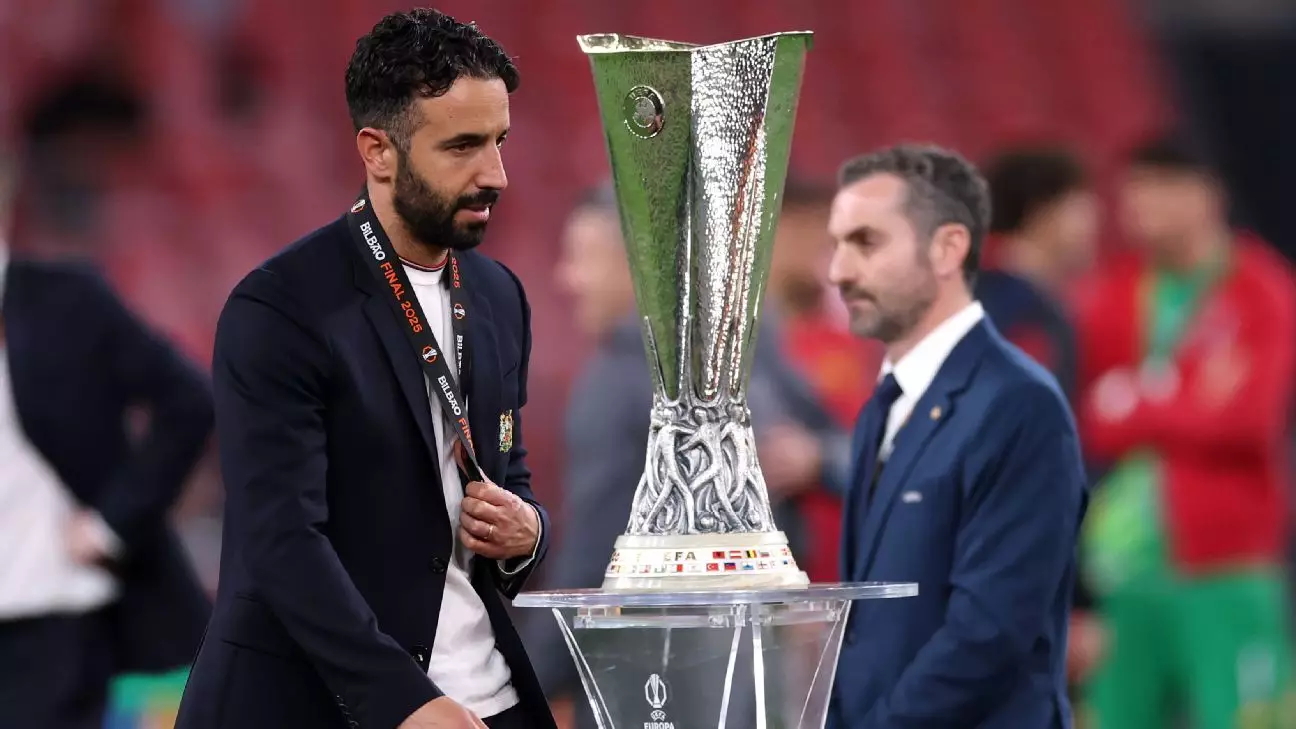
Despite a frustrating conclusion to the season with a defeat in the Europa League final against Tottenham, the Manchester United hierarchy continues to back Ruben Amorim as their head coach. The loss in Bilbao, which saw United narrowly lose 1-0, marked a significant milestone in Amorim’s career, as securing a trophy in his first season was a primary aim. However, sources indicate that his job security doesn’t hinge on this setback. This decision to retain him highlights the club’s long-term vision and faith in Amorim’s capability to rebuild and revitalize a faltering squad.
The situation is indicative of a shift within the club’s culture, moving away from impulsive managerial dismissals to a more stable, nurturing approach. The 40-year-old coach may have encountered a rough patch—indicated by 14 defeats in just 26 matches since his appointment in November—but the hierarchy is evidently prioritizing continuity and development over instant gratification. This is essential for a storied club like Manchester United, which has been grappling with inconsistent performances over recent seasons.
Financial Realities and Tactical Adaptations
The absence from European competitions poses financial implications for Manchester United, potentially costing them around £100 million in Champions League revenues. This revenue shortfall could curb their flexibility in the upcoming transfer window, a concern that Amorim has already addressed. He alluded to the reality that not participating in the Champions League presents a dual challenge—one that hinders the club’s financial maneuverability but also opens up opportunities for more focused training and squad improvements within the Premier League context.
Amorim’s pragmatic approach in his recent post-match reflections sheds light on a vital adaptability theme. He peered into the future, indicating a need for two strategic plans in the transfer market. This suggests a well-rounded perspective: recognizing the adversities while being prepared to exploit the positives that could result from a more streamlined focus on domestic league play.
Issue of Support and Fan Engagement
While the board’s unwavering support for Amorim is heartening, the sentiment in the fanbase is crucial for the club’s morale. It is anticipated that fans will rally behind their coach during the season finale against Aston Villa, demonstrating a united front in tumultuous times. Fan engagement can often serve as a barometer of a club’s health, reflecting whether supporters still see their team as capable of achieving greatness under current leadership.
Amorim has openly stated that he would leave without compensation if the board decides to change direction, which underscores his commitment to the club. This level of dedication may resonate deeply with fans, fostering a spirit of loyalty and community around the club. Such engagement can serve as a catalyst for positive change, encouraging not only support but also a reclamation of pride in Manchester United’s storied history.
In a climate that has been marked by uncertainty and dissatisfaction, the decision to retain Amorim offers a glimpse of hope. The club appears ready to embrace a rebuilding phase under his stewardship, setting the stage for a transformation that could once again steer Manchester United towards its former glory. The alignment of leadership vision, fan engagement, and tactical adaptations may provide the necessary synergy to navigate through these challenging times.