
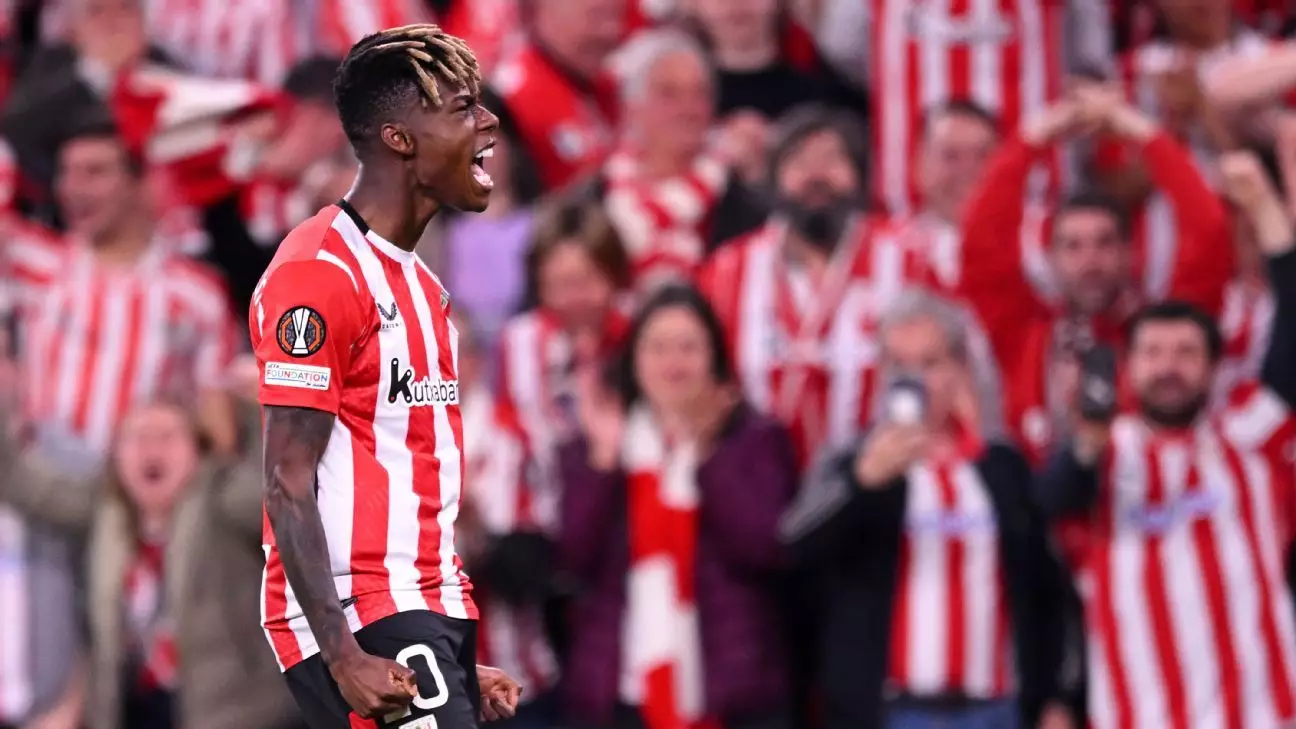
Athletic Club has long stood as a bastion of Basque culture and footballing integrity. While other clubs opt for the unfettered pursuit of global talent, Athletic stays true to its tradition of only employing players who are either from the Basque region or have come up through its development system. This philosophy not only reflects the team’s commitment to its roots but also creates a deep and profound bond between the players and their supporters. When these players don the iconic red-and-white stripes, they are not just representing a football club; they are embodying the culture and tenacity of the Basque people.
The fervor surrounding Athletic Club is palpable, especially when they meet formidable opponents like Manchester United. While many clubs might view these match-ups as mere transactions within the sport, for Athletic, there is a spiritual dimension. The club’s unwavering focus on local talent fosters a sense of belonging and pride that is often absent from clubs with a more mercenary approach to recruitment. Their journey to this stage of European football reflects the passion and the heart of a community that refuses to compromise its identity.
Celebration and Consequences: A Tale of Triumph and Hangovers
In the aftermath of their triumphant Copa del Rey win—an achievement that had eluded them for four decades—Athletic Club’s celebrations transformed into a wild spectacle. The famed Gabarra boat, a historical vessel celebrated for its association with Athletic’s past glories, saw a revivifying journey down the Nervión River, accompanied by thousands of ecstatic fans. The irrepressible joy of that moment was magnified as players, buoyed by adrenaline and perhaps a few too many celebratory beers, reveled in the euphoria.
But joyous celebrations can often carry unforeseen consequences. The players’ enthusiastic partying didn’t simply usher in triumphant jubilation; it also sowed the seeds of what could be perceived as complacency or distractions during crucial fixtures. Athletes, regardless of their physical prowess, are still human, and the toll of an exuberant celebration can weigh heavily on performance in the subsequent matches. Athletic’s failure to capitalize on their momentum—evidenced by a cruel late penalty that cost them two vital points against Villarreal—highlights that fine line between celebration and responsibility. In such scenarios, the club’s commitment to its community and history seems to clash with the harsh realities of modern football.
Ernesto Valverde: The Architect of Resilience
At the helm of this spirited club is coach Ernesto Valverde, a figure synonymous with Athletic’s identity. His leadership embodies not just tactical brilliance but a profound understanding of Basque culture and values. Valverde, with his myriad interests—ranging from photography to cycling—offers a unique perspective, fostering an environment where players feel valued as individuals, not just athletes. His previous flirtations with clubs beyond the Basque region, including near-misses with giants like Manchester United, only deepen his loyalty to Athletic.
Valverde’s journey is interwoven with the club’s story, one that has yet to see European glory. Despite having faced disappointment in past finals, his resilience mirrors that of the club he leads. He serves as a bridge between Athletic’s historic past and its aspirations for a brighter future, emphasizing unity, passion, and a collective fight against the odds. His experience becomes vital, especially in the high-stakes environment of European competitions where pressure mounts and expectations soar.
Where Legacy Meets Future Aspirations
For Athletic Club, football transcends the simple pursuit of trophies; it is about weaving a narrative that encapsulates their identity. The aspirations of the club are not merely grounded in league standings or European titles but shaped by a desire to create moments that resonate with their fans. The fervent supporters who pack the stands at San Mamés are not there just to watch; they are participants in a grand spectacle that speaks to their shared heritage. The feeling of community, camaraderie, and identity is palpable, making every match a celebration of more than just sport.
Approaching their Europa League semi-final against Manchester United, Athletic Club finds itself at the crossroads of pride and hope. This moment represents not only an opportunity to advance in a prestigious tournament but to assert their philosophy against one of football’s most storied franchises. The gravity of competing at such a level could hardly be overstated, but amidst the legacy of the past lies an irrefutable spirit: the drive to fight for every goal, every point, and every moment spent on the pitch. Athletic Club isn’t merely a team; it’s a way of life, and as they gear up to face Manchester United, they are ready to channel the weight of their traditions, their culture, and their dreams into a monumental clash on football’s grand stage.