
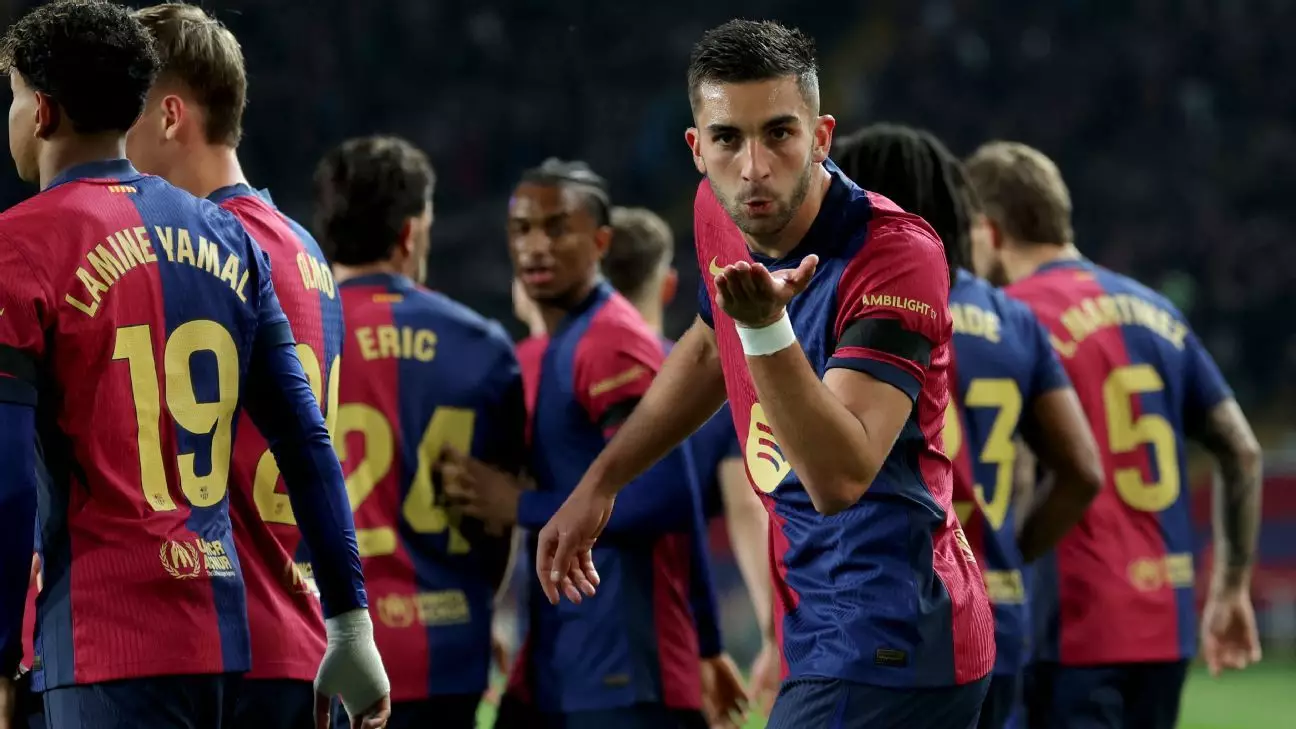
In a striking display of sportsmanship and justice, Osasuna has lodged an appeal with the Royal Spanish Football Federation (RFEF) regarding a pivotal incident in their recent LaLiga clash against Barcelona. The crux of the issue lies in the participation of defender Iñigo Martínez, who, despite being sidelined with an injury while withdrawing from the Spanish national squad, played the full 90 minutes in a match that resulted in a comprehensive 3-0 victory for Barcelona. At its heart, this situation presents a dilemma that goes beyond mere sports regulations; it questions the integrity and adherence to rules that govern fair play in professional football.
Understanding the Medical Technicality
Osasuna’s stance is firmly anchored in Article 5 of Annex I of the FIFA Regulations on the Status and Transfer of Players, which specifically stipulates that a player who has withdrawn from international duty for medical reasons must refrain from participating in club matches for five days following the end of that international period. This regulation exists to prevent teams from exploiting players’ injuries for competitive advantage, ensuring that player welfare remains a priority in the sport. With Martínez’s recent knee issues being the linchpin of this argument, Osasuna believes that Barcelona’s decision to field him was not just questionable but outright contrary to the established guidelines of the game.
Implications for Team Dynamics and Fair Play
This appeal underscores a broader issue in the realm of football: the constant tension between regulations and competitive integrity. Osasuna’s claims, if upheld, would not only have ramifications for Barcelona’s standing in this particular match but could also serve as a precedent for greater scrutiny over player eligibility across leagues and tournaments. As clubs vie for supremacy, it is critical that the integrity of the game is maintained, and that teams are held accountable for their actions. The emotional weight of this situation is compounded by the tragic circumstances that led to the rescheduling of the match, following the untimely passing of Barcelona’s club doctor, illustrating how intertwined personal tragedies and sports can be.
The Broader Picture in Spanish Football
As we delve deeper into this dispute, it becomes evident that this is not just an Osasuna versus Barcelona scenario but a reflection of the challenges and complexities that Spanish football faces. The decisions of governance bodies like the RFEF are under scrutiny, as their role becomes increasingly pivotal in resolving such disputes. How they manage this situation could either reaffirm or undermine the faith of clubs and fans in their regulatory authority. Furthermore, Barcelona’s lack of options, emerging from their rejection of postponement requests due to a crowded fixture list, showcases the perilous nature of scheduling in modern football and its potential consequences on player health and club ethics.
The implications of this unfolding scenario extend beyond immediate points in the league. It’s a vital reminder of the responsibilities clubs carry not only to their players but also to the ethos of competitive sport. As this appeal progresses, the football community awaits with bated breath, intrigued by how these events will shape the narrative of this season and resonate within the halls of sports law and fairness in football.