
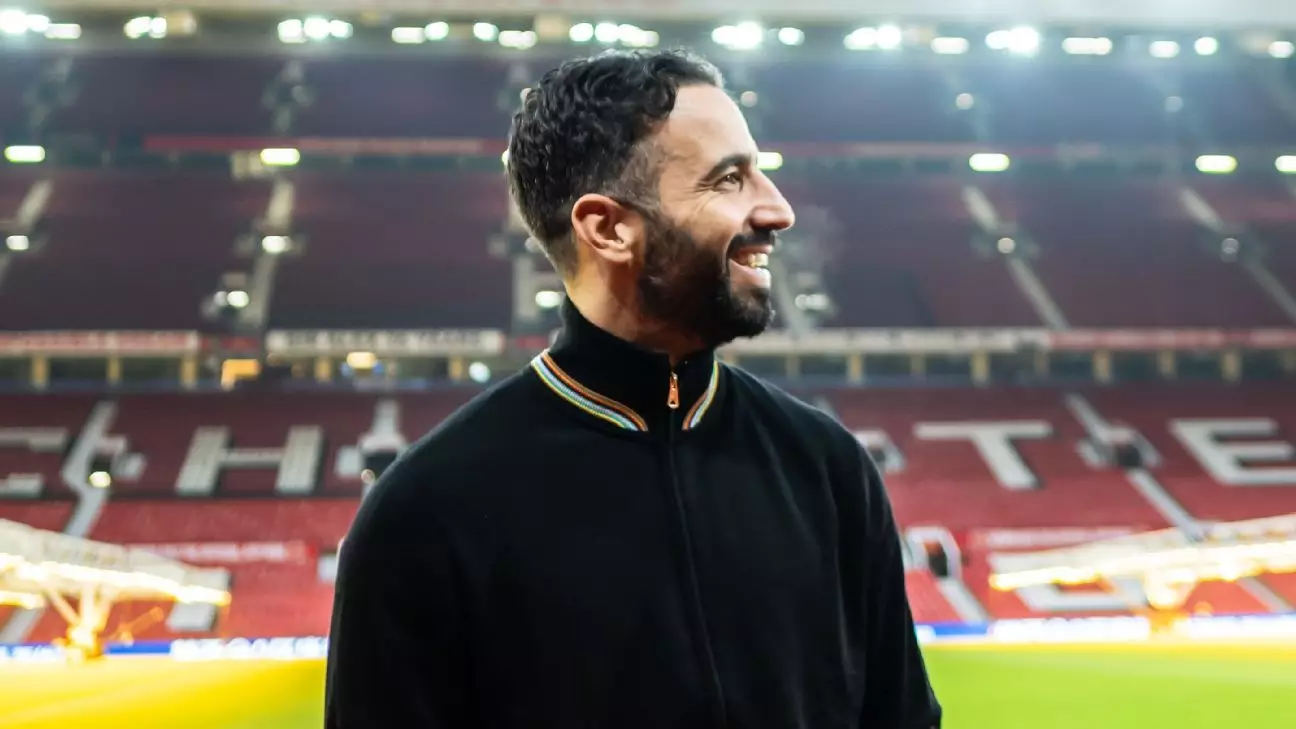
Rúben Amorim’s new era at Manchester United has officially started. Amorim embarked on his journey as the head coach of Manchester United, having secured the necessary visa to begin his tenure. The anticipation surrounding his appointment has reached fever pitch, fueled by his prior successes and an impressive track record in coaching. As he took the reins in the training grounds of Carrington, the pressing question loomed: can Amorim rejuvenate a club that has been in a state of transition for several years?
Amorim’s initiation into his new role coincides with a critical time in the season, with his first match set to take place against Ipswich Town. The timing could not be more opportune; Manchester United’s players, who recently enjoyed a short respite following a resounding victory over Leicester City, are now back and eager to begin this new chapter. Notably, prominent players like Marcus Rashford and Casemiro have returned to training, poised to integrate into Amorim’s tactical framework.
Rehabilitation and Readiness
The rehabilitation of key players adds another layer of complexity to Rúben Amorim’s early days as Manchester United manager. Players like Luke Shaw, Kobbie Mainoo, Mason Mount, and Leny Yoro are pivotal to the squad’s success, and their return to full fitness will play a significant role in shaping the team’s trajectory. Amorim’s recent meetings with these players marked an essential step in building rapport, understanding their individual recovery needs, and ensuring their eventual reintegration into the squad. Establishing these relationships early demonstrates Amorim’s focus on fostering a cohesive and motivated unit.
Beyond individual connections, Amorim is bolstered by his newly-assembled backroom staff, who have now secured work permits and are ready to contribute to the team’s development. Their collective experience and fresh perspectives bring a renewed sense of possibility, offering the potential to implement innovative tactics and strategies. However, the timeline for embedding Amorim’s footballing philosophy remains uncertain. Can the players and staff align quickly enough to meet the club’s high expectations?
Significant Challenge For Amorim
Amorim’s ability to navigate the upcoming grueling fixture list will be a defining test of his tenure. With nine matches packed into the month leading to Christmas, the squad’s physical endurance and tactical flexibility will be stretched to their limits. Depth and resilience will be key, particularly with several players still recovering from injuries.
Moreover, managing the expectations of both the club hierarchy and its passionate fanbase presents its own challenges. Amorim’s excitement about taking on the role, as shared in his first MUTV interview, signals his understanding of the magnitude of his position. As the club’s “first-choice” candidate, his appointment reflects a shared vision for long-term success.
Balancing immediate results with a sustainable plan for the future will test Amorim’s leadership and tactical acumen. With the weight of Manchester United’s storied history and ambitious aspirations on his shoulders, the early months of his tenure will set the tone for what’s to come.
Management And Fans’ Expectations
Final Thoughts
As Rúben Amorim takes charge of Manchester United, the weight of expectation is immense, and the path forward is anything but straightforward. His task is both exhilarating and daunting: to restore the club to its former glory while navigating the intricate dynamics of modern football. With an impressive pedigree for nurturing young talent and implementing tactical innovations, Amorim has the tools to succeed, but success will hinge on more than just technical expertise.
Blending the experience of established stars with the potential of emerging players like Kobbie Mainoo and Alejandro Garnacho will be crucial. Amorim must foster a cohesive squad that can adapt to his strategies while remaining resilient under the pressures of a grueling schedule. Early results will likely set the tone for his tenure, and his ability to make quick, decisive adjustments will be critical in maintaining momentum and trust from fans and management alike.
The challenges are substantial, from meeting the club’s lofty ambitions to managing the expectations of a global fanbase eager for a turnaround. However, with the backing of the board and a squad brimming with potential, Amorim has the opportunity to craft a legacy that cements him as one of the great architects of Manchester United’s modern era.
Ultimately, Rúben Amorim’s new era at Manchester United is just beginning. The road ahead promises to be a defining chapter not only for him but also for a club yearning for resurgence. Time will reveal whether he can deliver the transformative leadership that fans and stakeholders so desperately crave.