
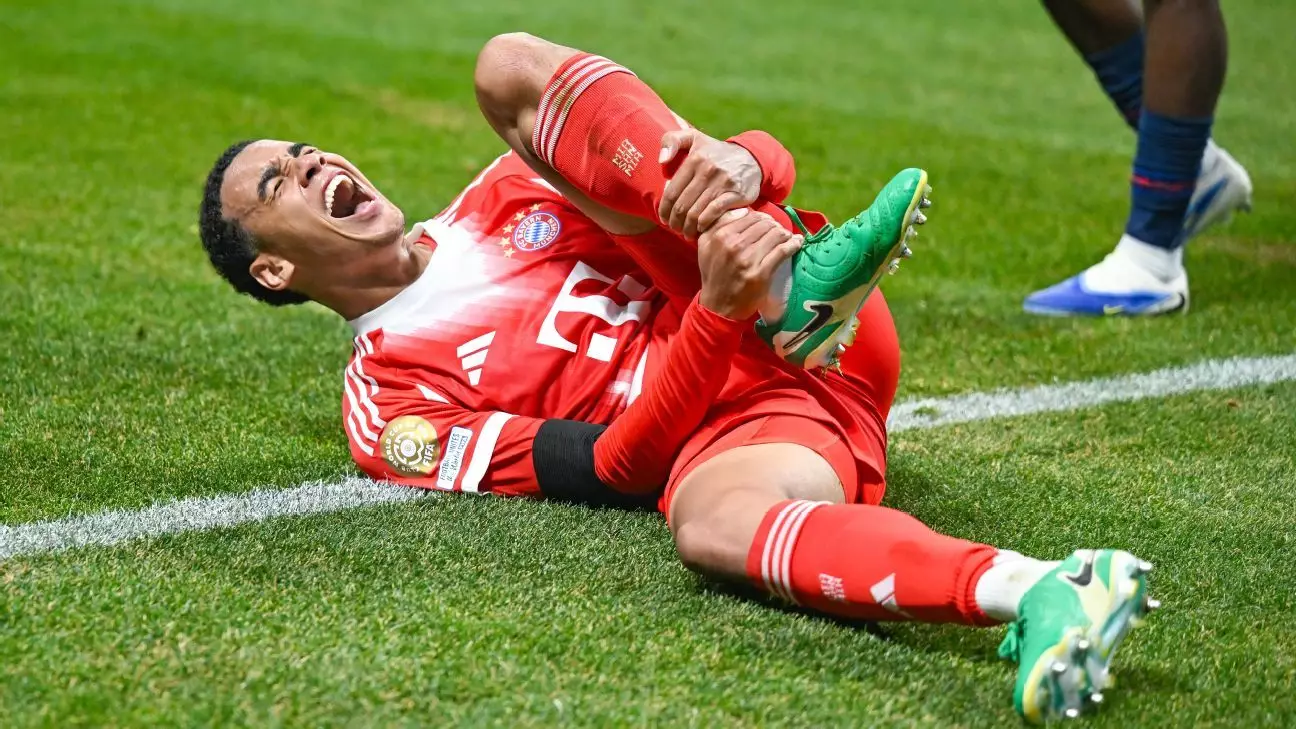
In the world of professional sports, few moments evoke as much concern as a severe injury to a promising young athlete. Jamal Musiala, a rising star at Bayern Munich, now finds himself sidelined after suffering a fractured fibula and an ankle dislocation during a high-stakes match against Paris Saint-Germain. This incident underscores how unpredictability and physical risks are inherent in football, even at the highest levels of competition. The injury not only threatens Musiala’s career trajectory but also raises questions about the safety protocols and conduct on the field. While players often accept the inherent dangers of the sport, the emotional and physical toll of such setbacks can be profound, and the timing couldn’t be more challenging for a player of his age and potential.
The Personal and Professional Toll on Musiala
Musiala’s injury is more than just a physical setback; it strikes at the heart of his burgeoning career. Known for his agility, vision, and creative flair, the young midfielder has become a pivotal figure within Bayern’s squad. A lengthy recovery period means months of rehabilitation, missed matches, and the risk of losing momentum just as he was beginning to establish himself as a key player. The emotional strain of such an injury can be overwhelming, especially for a young athlete eager to make a mark on the international stage. The commitment from Bayern’s management to support him reflects the recognition that recovery isn’t solely physical—it’s also mental. Nonetheless, the injury’s impact extends beyond Musiala himself, affecting team dynamics, strategic planning, and fan morale. His return will require patience, resilience, and unwavering determination—qualities that are tested when a promising talent faces such an obstacle.
The Broader Reflection on Sportsmanship and On-Field Conduct
The incident has also ignited a conversation about the nature of tackles and challenges in modern football. Manuel Neuer’s criticism of Gianluigi Donnarumma highlights the thin line between aggressive play and recklessness. Neuer’s stance emphasizes fairness, respect, and player safety—values that are sometimes compromised in the pursuit of victory. It raises pertinent questions: Are referees empowered enough to penalize reckless challenges adequately? Are players sufficiently trained in safety protocols to prevent serious injuries? All too often, the focus on winning obscures the importance of protecting athletes from preventable harm. Musiala’s injury serves as a stark reminder that every challenge contains an element of risk, and the sport’s culture must prioritize responsible conduct. Moving forward, clubs, players, and governing bodies must collectively examine how to foster safer gameplay without compromising the passion and intensity that define football.
The Future Beyond the Injury
While Musiala’s immediate future looks uncertain, his injury also sparks a broader conversation about resilience and long-term growth in sports. Historically, many athletes have turned devastating injuries into comebacks that redefine their careers. With the right medical care, mental fortitude, and unwavering support, Musiala has the potential not only to recover but to emerge stronger. His journey will likely become a testament to perseverance, inspiring countless fans and aspiring players worldwide. Nevertheless, it also serves as a stark warning about the toll that relentless physical demand exacts on modern athletes. As football continues to evolve into a faster, more aggressive game, safeguards must also improve. Injuries like Musiala’s challenge the sport’s stakeholders to balance competitiveness with protection, ensuring that the future of football remains both thrilling and safe for generations to come.