
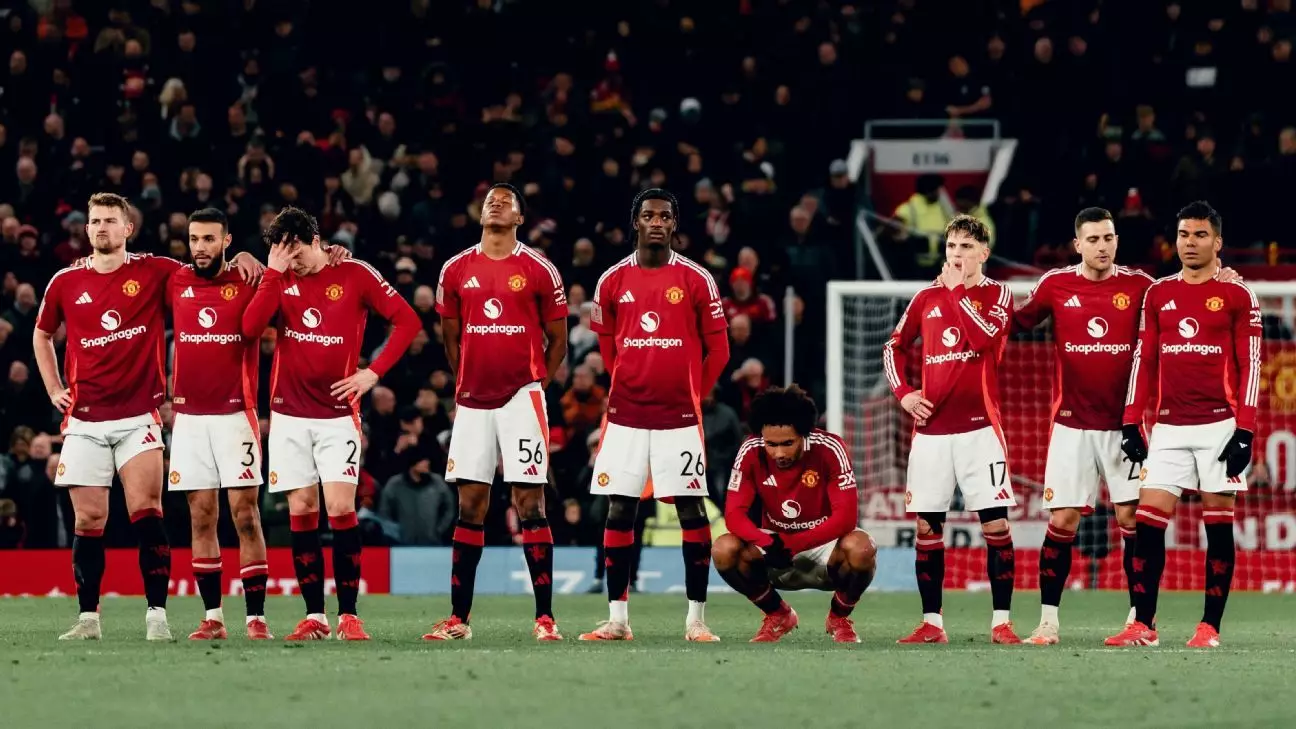
Once the epitome of football dominance, Manchester United’s presence at Old Trafford transcended mere sporting prowess; it exuded an aura of invincibility that left opponents quaking in their boots. The legendary figures who graced the pitch, from George Best to Wayne Rooney, not only showcased extraordinary talent but also instilled a sense of fear in rival defenses. In the earlier days of the Premier League, United’s success was predominant under Sir Alex Ferguson, with thirteen titles claimed in just 21 seasons. Today, however, the red devils find themselves in a dire situation, languishing far from the top of the table and struggling to reclaim their former glory. The once-terrifying fortress of Old Trafford has now become a welcoming ground for opponents, evidenced by several humbling defeats suffered on their home turf.
Surprisingly, the modern era has brought a profound decline in United’s performance domestically. The victory lap once reserved for their historical dominance has now turned into a series of apprehensive strolls for visiting teams. Premier League foes like Liverpool, Spurs, and Bournemouth have showcased their strength by recording decisive victories at Old Trafford, often leaving fans wondering where it all went wrong. Currently, Manchester United occupies the ignominious 14th position in the league standings, a far cry from the heights they once reached. The objectives that used to come easily now seem like distant dreams; a top-seven finish, requisite for European qualification, lies tantalizingly out of reach as the current season unravels.
The humiliation suffered in the FA Cup against Fulham further underscores the inconsistencies plaguing the squad. This season’s Europa League beckons as the club’s potential lifeline, with upcoming matches against formidable opponents like Real Sociedad holding the key to saving what remains of their season. Yet, with a recent pattern of erratic performances, belief in a turnaround is dwindling fast.
Ruben Amorim’s appointment has been met with a blend of optimism and skepticism. The Portuguese manager, who previously achieved great success at Sporting CP, finds himself in an unenviable position. Tasked with breathing new life into a stagnating squad, Amorim exhibits charisma but often appears overwhelmed, with his despair evident on the touchline during matches. Despite possessing a formidable coaching pedigree, the limitations of his tactical system, primarily the 3-4-3 formation, have been increasingly scrutinized. So far, it has produced disheartening numbers—only four wins from 15 league matches—raising questions about its efficacy.
Amorim’s ambition to implement attractive football might face challenges stemming from the players’ adaptability to his vision. Only a handful of positive moments—like thrilling victories in crucial matches—have punctuated a largely underwhelming campaign, leading to concerns about squad cohesion and morale. While his dedication and rigorous training methods could yield fruit in future seasons, immediate improvements are paramount.
A significant part of Manchester United’s struggles can be traced back to questionable recruitment. The hefty investments in players like Antony and Rasmus Højlund have borne little fruit, frustrating fans and raising doubts about the club’s scouting prowess. Signing players for exorbitant fees—only to witness their disappointing performances—highlights the severe impact of the current recruitment strategy. Compounding these issues, injuries to key defenders and attacking talents have widened the gap between expectations and reality.
While some of United’s summer acquisitions have showcased potential, overall, the squad’s depth and quality have come under severe scrutiny. The integration of youthful talents such as Chido Obi offers a glimmer of hope, but the immediate reliance on inexperienced players may not be the solution required to turn the tide.
As Manchester United navigates the tumultuous waters of the current season, it becomes vital for the management and fans alike to cultivate patience. Amorim’s comments about the team’s questionable status—an arguably reckless proclamation—illustrate the fragile nature of team morale. Once a beacon of footballing excellence, United now finds itself at a crossroads, facing a test of commitment.
Projecting a turnaround within just a few seasons may seem ambitious, yet history has shown that rebuilding often requires time. Solid recruitment strategies, revitalized playing styles, and nurturing new talent may ultimately write a promising chapter in United’s storied history. However, the road ahead remains fraught with challenges, with fans hoping that the glory days are not as far behind as they seem. With a significant summer approaching, the focus should shift toward laying a solid foundation for sustained success rather than succumbing to short-term pressures. The gradual evolution, not a quick fix, may yet reignite the spark of “The Theatre of Dreams.”