
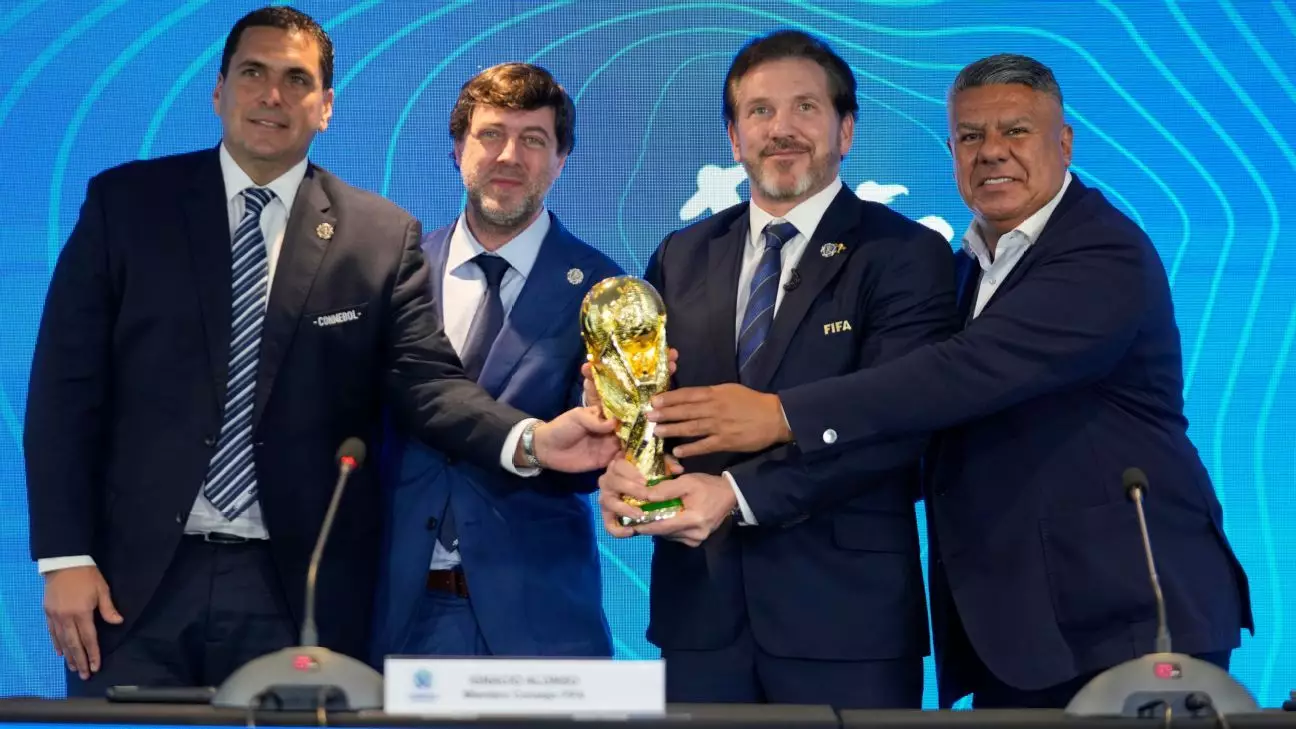
In an unexpected turn of events, UEFA president Aleksander Čeferin has openly criticized the proposal to expand the men’s World Cup to 64 teams by 2030. As a prominent FIFA vice president, Čeferin joined in discussions during a ruling council meeting where the idea was presented by a Uruguayan delegate. His subsequent remarks, delivered at a press conference following UEFA’s annual meeting in Belgrade, Serbia, encapsulate a sense of incredulity and concern regarding the potential shift in tournament dynamics. “This proposal was maybe even more surprising for me than you,” he stated, highlighting his bewilderment.
The Business of Football vs. Quality of Play
At the heart of this debate lies a fundamental question: does expansion genuinely serve the game’s best interests? FIFA president Gianni Infantino has long championed the concept of competition expansion, often citing financial growth and global development as key motivations. However, as Čeferin rightly points out, doubling the number of participating teams from 48 to 64 may compromise the quality of the competition itself. With the logistics of cramming 128 matches into an already busy calendar, one cannot help but ponder whether the true essence of the World Cup—the intensity, skill, and drama—might be drowned out by sheer volume.
Critics argue that the influx of more teams could dilute standards, leading to lopsided encounters and diminishing the prestige that comes with qualifying for the World Cup. Currently, the qualifiers serve as a rigorous pathway to the tournament, but with expanded entries, the pathways would be muddied and devalued—a reality that could ultimately alter the competitive landscape across continents.
The Complexity of the 2030 Celebration
The proposed 2030 World Cup is poised to be an unprecedented event, spanning three continents—each with its unique footballing culture, history, and expectations. As noted by Čeferin, it is already “the most complex World Cup” due to its logistical challenges, designed to commemorate the tournament’s 100-year anniversary. With Spain, Portugal, and Morocco set as co-hosts while allowing Argentina, Uruguay, and Paraguay to feature in the celebration, the intricacies involved are numerous. Introducing 64 teams complicates this further and risks overshadowing the historical significance of the event.
Moreover, Čeferin’s skepticism about the origins of this proposal indicates a broader concern about decision-making processes within FIFA. The World Cup is one of football’s greatest stages, and when proposals arise from behind closed doors without prior discussion among major stakeholders, it raises questions about transparency and coherence within FIFA’s governance.
The Future of World Football
The debate surrounding the potential expansion of the World Cup comes at a crucial time for football, as global expectations continue to evolve. The Olympic spirit of competition and fair play needs to be preserved amid financial motivations and market expansion. If football’s governing bodies prioritize profit over quality, they may inadvertently create a product that dissociates from the passion and tradition that fans globally cherish.
As the May 15 annual FIFA congress in Asunción approaches, it remains to be seen whether the proposal will gain traction or fade into the annals of controversial football discussions. For now, the chorus of dissent from influential voices like Čeferin serves as a critical reminder to safeguard the integrity of the sport—even as it evolves in a modern, commercially-driven landscape.