
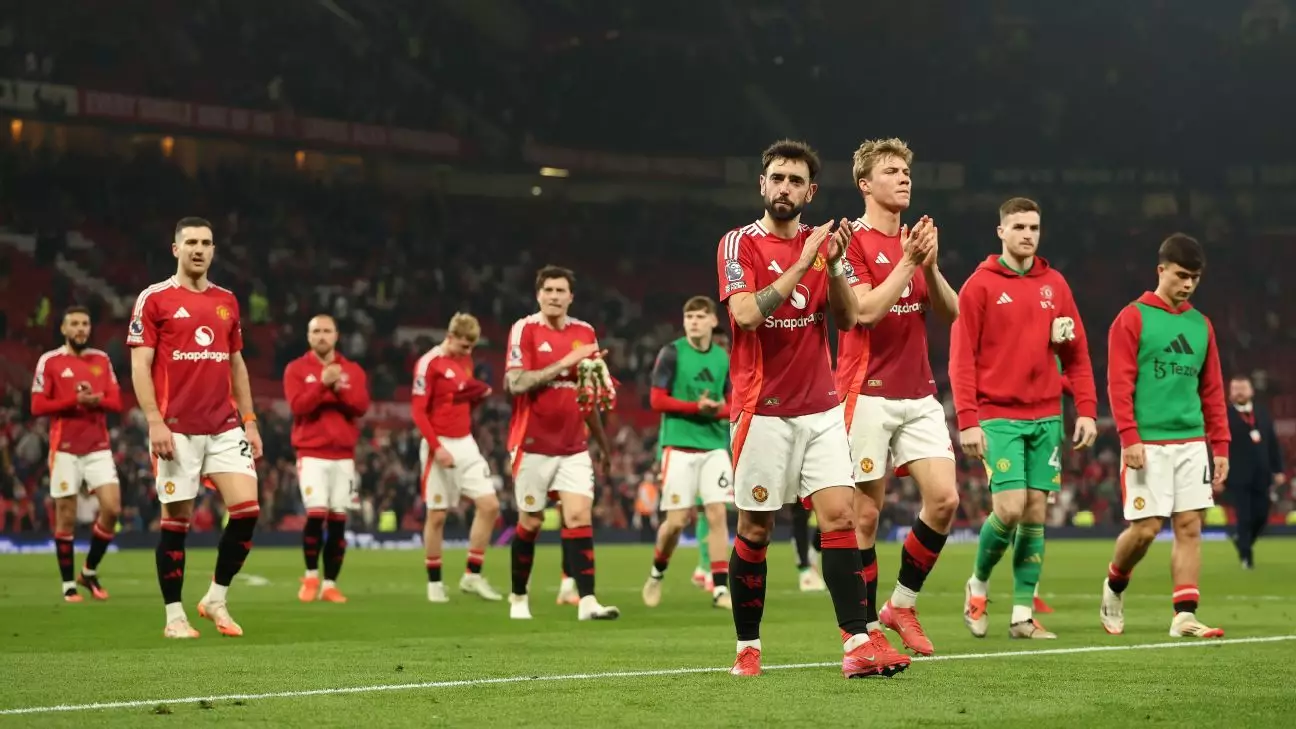
In an era where football teams increasingly rely on tactical versatility and creative flair, Manchester United finds itself grappling with a perplexing challenge—how to enhance their creativity on the pitch. After their recent 1-1 draw against Arsenal at Old Trafford, a game punctuated by brilliance from captain Bruno Fernandes, coach Ruben Amorim articulated a pressing need: the Red Devils “need more Brunos.” This sentiment is not merely a compliment to Fernandes; it reflects a larger issue within United’s squad that demands urgent attention.
Bruno Fernandes has become something of an enigma at Manchester United—a luminous figure in an otherwise dim landscape. With seven goals to his name, he stands as the club’s leading scorer, illustrating a stark contrast to a team that currently resides in the uncomfortable depths of 14th place in the Premier League. After Fernandes netted a crucial first-half free kick, which was underscored by a potential game-winning shot later thwarted by Arsenal’s David Raya, it became painfully clear that United has been overly reliant on their captain as a game-changer.
The Characteristics of a Game-Changer
What is it that makes Fernandes so indispensable? Amorim highlighted Fernandes’ continual readiness to step up, his availability, and a work ethic that sets an example for others. However, this is both a tribute to the player and a reflection of the inadequacies that lie within the broader squad. Essentially, if Manchester United is to ascend from their current position, they must cultivate or recruit players who can embody Fernandes’ qualities—players who are not only skillful but also willing to step out of their comfort zones and make game-defining contributions.
Fernandes’ frustration can sometimes be palpable, particularly when the rest of the team falls short of expectations. His desire to win undoubtedly creates additional pressure—not only for himself but also for his teammates. Amorim’s comment about needing “more Brunos” underscores a call for a culture shift at the club. It is evident that the values and skills displayed by Fernandes are not being mirrored uniformly across the rest of the squad.
Rival Coaches Recognize Fernandes’ Brilliance
Interestingly, even Arsenal’s Mikel Arteta praised Fernandes after the match, suggesting that the free kick exemplified the shrewdness that one would expect from a seasoned player. While the tactical corner taken by Fernandes was legitimate, Arteta expressed concern about the referee’s positioning of the wall, implying that nuance often plays a crucial role in defining outcomes in competitive football. “Football is for clever people,” he stated, a reflection on the mental agility needed to succeed. These comments reverberate as a critique of United’s strategic approach, particularly how they employ tactical awareness in matches.
Arsenal’s dominant possession—68% throughout the game—further amplifies concerns regarding United’s offensive strategy. Amorim noted this disparity and expressed a desire for his team to adopt a more aggressive approach in attacking situations. The existing philosophy evidently prioritizes defensive solidity, but in an age of attacking prowess, merely holding back is no longer a formula for success. Instead, the focus should shift toward employing a more dynamic approach to maximize the capabilities of their players.
Beyond Tactical Adjustments: A Call for a Collective Identity
Amorim’s ambitions go beyond mere tactical adjustments; he seeks a fundamental transformation in how Manchester United approaches games. The coach pointed out a crucial gap in the team’s possession play and pressing mechanisms. If United is to rise through the ranks of the Premier League, they cannot afford to linger in a defensive shell. They need to embody a collective identity that prioritizes attacking flair while maintaining a semblance of defensive discipline.
Anticipating their upcoming Europa League clash with Real Sociedad, the pressure is mounting for Manchester United to innovate and adapt. With their future hanging in the balance, it is imperative that the players—the ones not named Bruno—step up to the challenge. The infusion of creativity and tactical dynamism is non-negotiable. If this club cherishes its legacy, it must ignite a spark beyond the brilliance of a single player, catalyzing a renaissance that returns Manchester United to its rightful place in football history.