
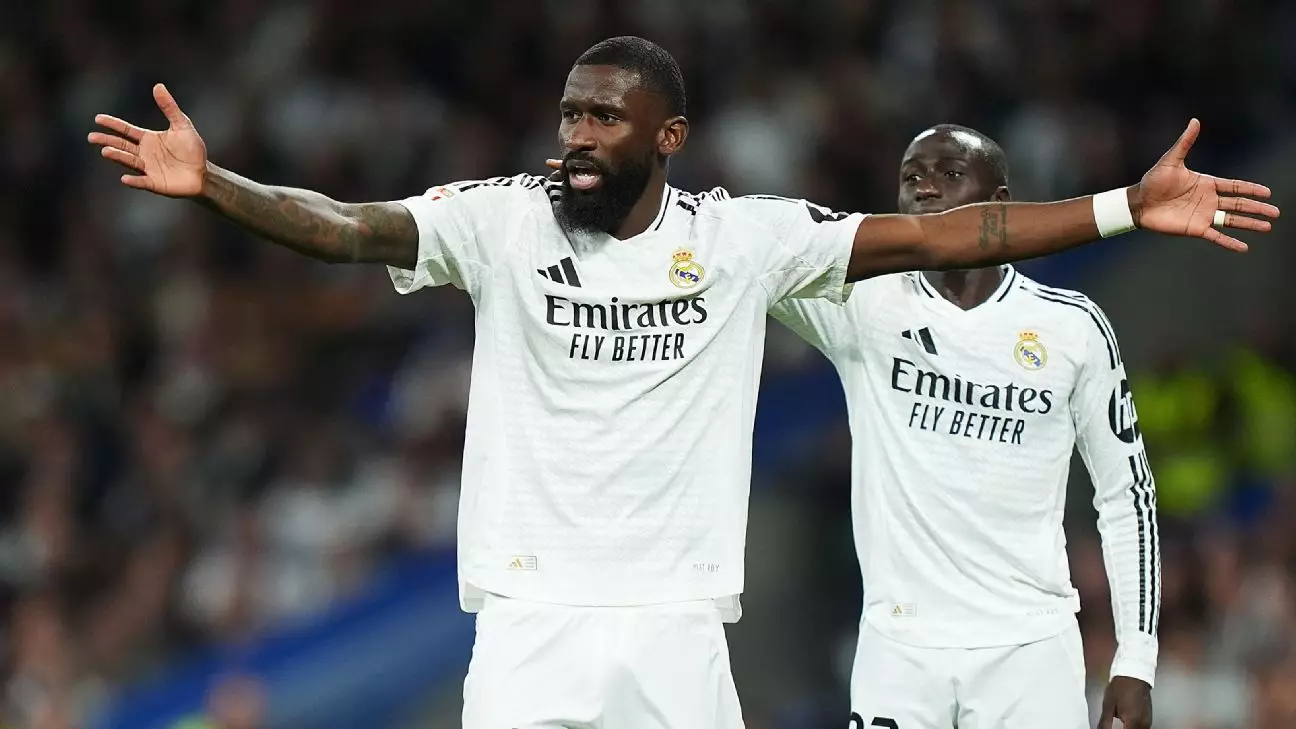
The recent Copa del Rey final saw Real Madrid facing off against their perennial rivals, Barcelona, in a dramatic clash that ended in disappointment for Madrid fans. The match, which concluded with a nail-biting 3-2 scoreline, turned not only on the skill of the players but also on unexpected red cards and heated exchanges that marred the event. Among the most notable incidents was Antonio Rüdiger’s ejection, which encapsulated the tension of the evening, reflecting not only the emotions of the players but also the underlying pressures that come with such high-stakes encounters.
Rüdiger’s actions, which included throwing an object onto the pitch and exhibiting aggression towards the referee, prompt deep scrutiny. He has since apologized via social media, acknowledging his loss of composure and expressing regret for disappointing his team and fans. Such moments, although they can stem from frustration and passion, highlight a critical need for self-control in professional sports, particularly during moments of extreme pressure.
A Reflection of Broader Issues Within the Club
The incident did not occur in a vacuum; rather, it was part of a larger narrative of discontent that has been brewing within Real Madrid. The club had boycotted pre-match media activities, citing hostility and animosity from the officiating team. This protest reflects a culture of conflict, where frustrations about perceived injustices can boil over, manifesting in on-field behavior that undermines the spirit of the game itself. It raises crucial questions about how external pressures influence player conduct and decision-making in high-stakes environments.
Moreover, Rüdiger’s ejection raises uncomfortable discussions about the mental state of players focused on achieving peak performance amidst increasing scrutiny. The emotional toll taken on professional athletes can lead to regrettable decisions, as seen when multiple players faced sanctions after the final whistle. The chaos suggests a need for better mental health resources for players and a culture shift that emphasizes emotional intelligence as much as technical skill.
The Broader Implications for Team Dynamics
The ramifications of Saturday’s defeat extend well beyond the scoreline. The red cards issued during the match signal deeper issues within team dynamics. Constant disappointment, like the early exit from the Champions League and now this cup final loss, can erode morale and breed resentment. Real Madrid is a club steeped in tradition and expectations; failure to secure trophies leads to increased scrutiny on coach Carlo Ancelotti and the squad’s cohesion. When a team’s emotional state sours, it triggers a catastrophic ripple effect, impacting future performances.
Rüdiger’s behavior is a stark reminder that players are not merely robotic athletes; they are human beings capable of strong emotions. His apology reflects personal accountability, but it also highlights the culture within the team that fosters such behavior. If Real Madrid is to recover from this setback, they must address these systemic issues head-on and cultivate an environment where players can express themselves while maintaining discipline and respect for the game.
In the wake of such upheaval, one can only hope that this introspection and urgent reevaluation create a stronger, more resilient team moving forward.