
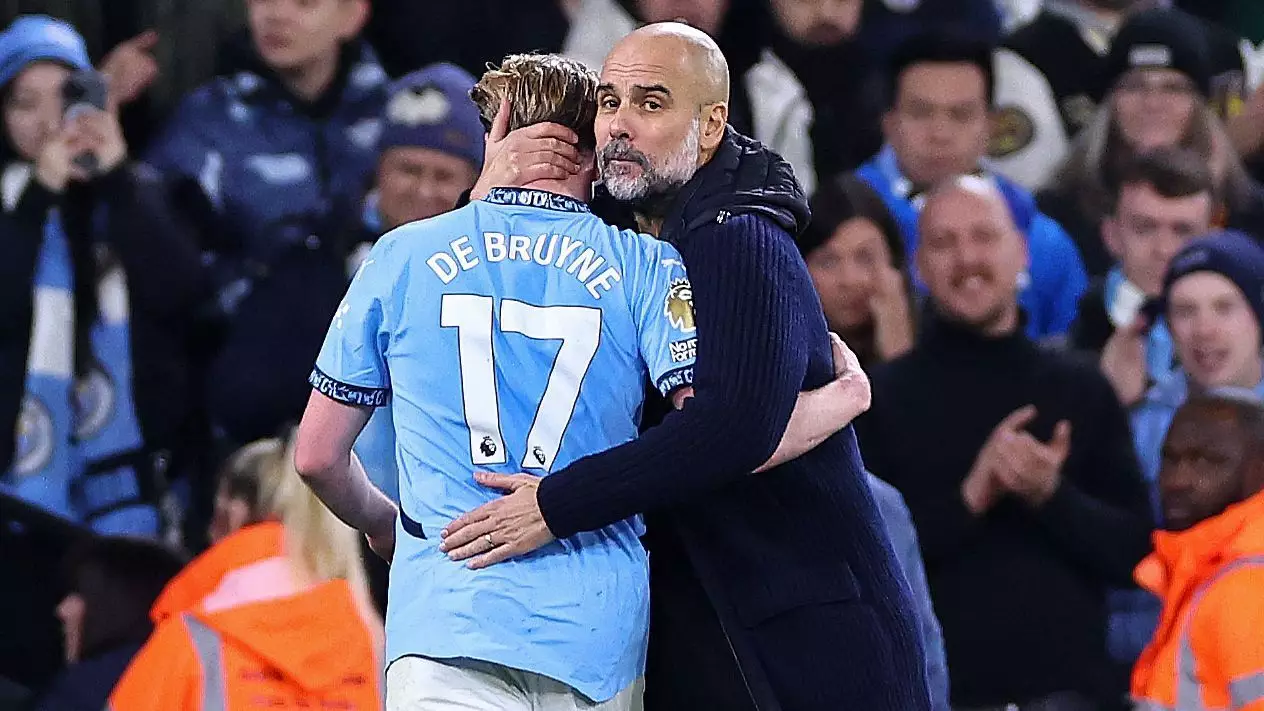
As Manchester City prepares for a crucial match against Everton, they find themselves precariously positioned in the league. Currently sitting in fifth place with just a handful of games remaining, the specter of missing out on Champions League football looms ominously over the club. The stakes could not be higher, as Pep Guardiola’s aspirations for summer reinforcements hinge on the team’s performance down the stretch. A slip-up could have dire consequences, not only for immediate ambitions but for the club’s long-term trajectory.
Guardiola has made it abundantly clear that the allure of Champions League football is a seductive factor for potential signings. In modern football, competition is fierce, and top talent has various options, many of which come with the postcard promise of European glory. Guardiola’s candid admission reveals a vulnerability that is atypical for a club of City’s stature. If the players the club covets have alternatives at clubs with Champions League guarantees, the City hierarchy may find itself vying for a dwindling pool of talent.
Building for Tomorrow
A summer revamp, largely anticipated after a lackluster showing, could see the departure of key figures, including an aging Kevin De Bruyne. His departure is just the tip of the iceberg, as Guardiola ponders the futures of several senior players. Having already splashed £180 million in January, the club’s commitment to investing in new talent is apparent, yet the underlying issues of squad reliability and performance must also be addressed.
Guardiola’s approach to rebuilding suggests a desire to cultivate a more dependable squad, which is vital for any aspiration of trophies. He has historically preferred a smaller, cohesive group of players, someone with whom he can forge a trusting bond. The increasing prevalence of injuries has amplified the need for strategic recruitment; players who can consistently contribute to the team’s objectives have become both rare and essential.
The Dilemma of Reliability
In his own words, Guardiola expressed frustration over the challenge of working with players who are not consistently match-fit. The sentiment resonates deeply within professional sports, where every player’s inability to deliver can have reverberations throughout the entire squad. For Guardiola, the emphasis is on reliability—players who can give their all week in and week out. If they continue to dial in lesser commitment, potentially crippling injuries aside, it poses questions for the overall strategic planning.
As Guardiola navigates through these turbulent waters, his remarks cast a sharp spotlight on the complexities of maintaining a team’s competitive edge. The question of whether to retain unreliable players for the upcoming season is looming larger than ever. Should the club decide to hold onto these players, it might necessitate a more significant reshaping of the squad to maintain competitiveness in domestic and international arenas.
Vision vs. Reality
In an era defined by high stakes and public scrutiny, Guardiola faces a crucible of expectations. The beautiful game has transformed into a battleground where successful recruitment isn’t merely about acquiring talent; it requires tactical foresight, alignment with the club’s ethos, and an effective understanding of player psychology. The harsh reality of potential Champions League exclusion can morph into a major disincentive for most elite-caliber talents.
Yet, within this framework, there lies an opportunity for Manchester City to redefine its identity. Adapting to the changing landscape of transfer dynamics could see the club prioritizing homegrown talent, perhaps less glamorous yet equipped with a profound knowledge of the club’s ambitions. The internal challenge of nurturing and developing players from within might serve as a more sustainable solution, promoting resilience and loyalty while circumventing the complexities brought on by high-profile acquisitions.
In short, as Manchester City approaches the season’s end, the reality of their league position will have far-reaching implications—not only for the present squad but also for the future they envision. Guardiola’s reflections encapsulate a truth: ambition cannot exist in a vacuum of reality, and strategic decision-making is paramount to not just immediate success but a legacy that could define the club for years to come. The journey toward reclamation of their rightful status among Europe’s elite teams has begun, shaped by the choices they must navigate in the near future.