The Role of Athletes in Political Discourse: Insights from Joshua Kimmich
In the world of sports, athletes often find themselves in the intersection of admiration and scrutiny, particularly when political issues arise. Recently, Joshua Kimmich, the new captain of the German national football team, articulated a nuanced perspective on this intersection. With the spotlight on Saudi Arabia’s bid to host the 2034 FIFA World Cup, Kimmich emphasized that while athletes should embody certain values as role models, voicing political opinions is not necessarily part of their obligation. This sentiment brings to light the ongoing debate regarding the role of athletes in engaging with political discourse and the implications that arise from such situations.
Kimmich’s assertion that players ought to stand for universal values indicates an awareness of the influence athletes wield as public figures. Their celebrity status comes with a responsibility; they are seen as role models by many young fans around the globe. However, Kimmich proposed a distinction between embodying values and engaging in political discussions. His perspective suggests that while athletes should represent ideals such as equality and justice, it may be more prudent for them to avoid stepping into the realm of political commentary where they may not have expertise.
This raises critical questions about the expectations placed on athletes. Should their primary role be to perform on the field, or should they also act as spokespersons for societal issues? The burden of political advocacy can detract from their primary duty—competing and excelling in their sport. Thus, the balancing act between being a champion on the field and a spokesperson for political correctness is a tightrope that many athletes navigate.
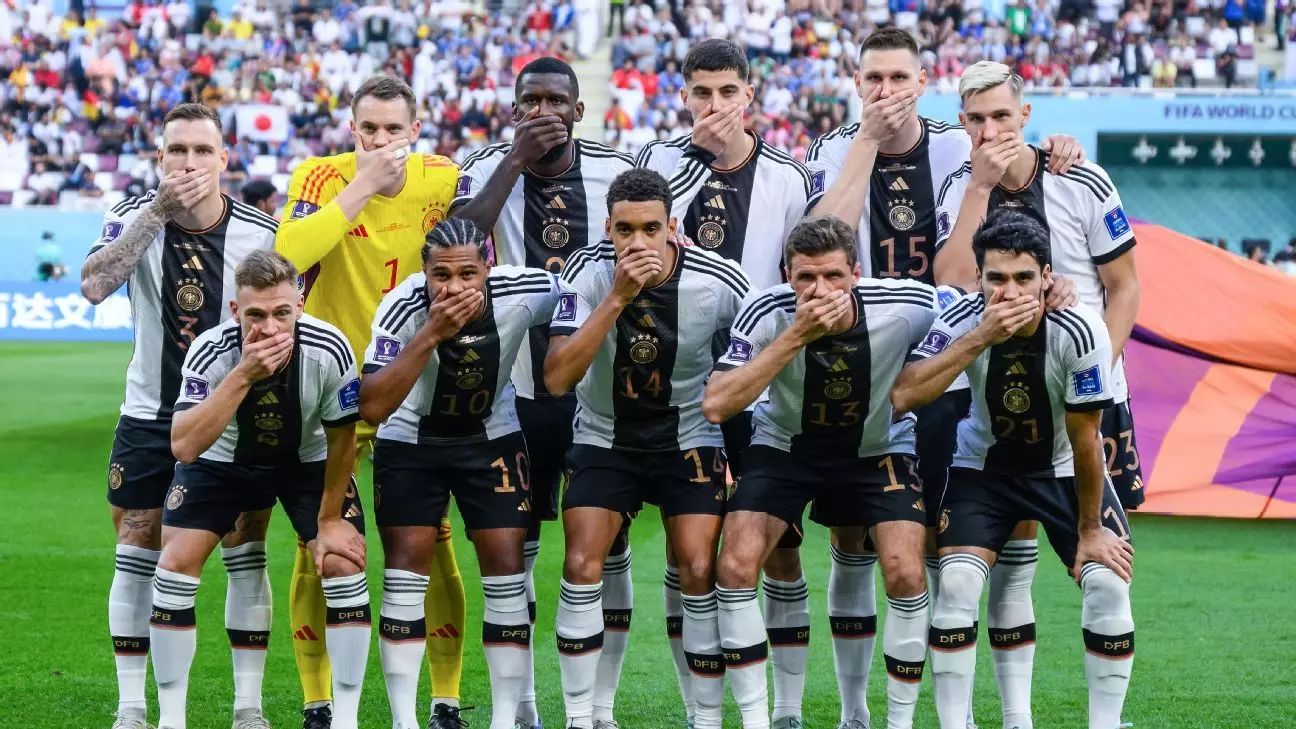
Reflecting on past experiences, Kimmich noted how Germany’s political engagement during the 2022 World Cup in Qatar did not yield the expected positive outcomes. The captain mentioned that while his team attempted to advocate for human rights, it hindered their enjoyment of the tournament and their overall performance. The German team’s demonstration, where players covered their mouths in protest of FIFA’s sanctions regarding the “OneLove” armband, exemplified this struggle; despite the intention to stand for progressive values, the act may have indirectly affected team morale and focus.
This experience points to a broader implication within elite sports: political participation can come at a cost. Athletes must weigh the impact of such actions not only on their image but also on their performance and camaraderie as a unit. While the desire to champion human rights is commendable, it is equally important for teams to ensure that their political expressions do not compromise their competitive integrity.
As the FIFA Congress approaches, with Saudi Arabia as the sole bidder for the World Cup, the question of human rights looms large. Kimmich’s caution underscores a significant concern among athletes and sports organizations alike—navigating the landscape of international politics while striving to maintain focus on the sport itself. The complexity of Saudi Arabia’s human rights record can dissuade thoughtful reflection on the moral implications of hosting a global sporting event in a country facing criticism.
While Kimmich expressed a desire for future generations of players to concentrate on competition rather than politics, it remains essential for athletes to maintain a level of awareness about the politics surrounding their sport. His assertion that “we have people who should deal with politics” reveals an understanding that political discourse, while essential, may not be the primary responsibility of athletes.
Kimmich’s remarks illuminate the dynamic interplay between sport and political activism. While he advocates for athletes to remain authentic role models, he also recognizes the limitations of their political influence. This reflects a broader need for a framework where athletes can leverage their platform effectively without sacrificing their primary role as competitors. Ultimately, striking a balance between authenticity in sports and navigating the challenges of political discourse is crucial. As sports continue to intersect with global politics, the voices of athletes will play an enduring role, but the way they engage with these issues will define their legacy—both on and off the field.