
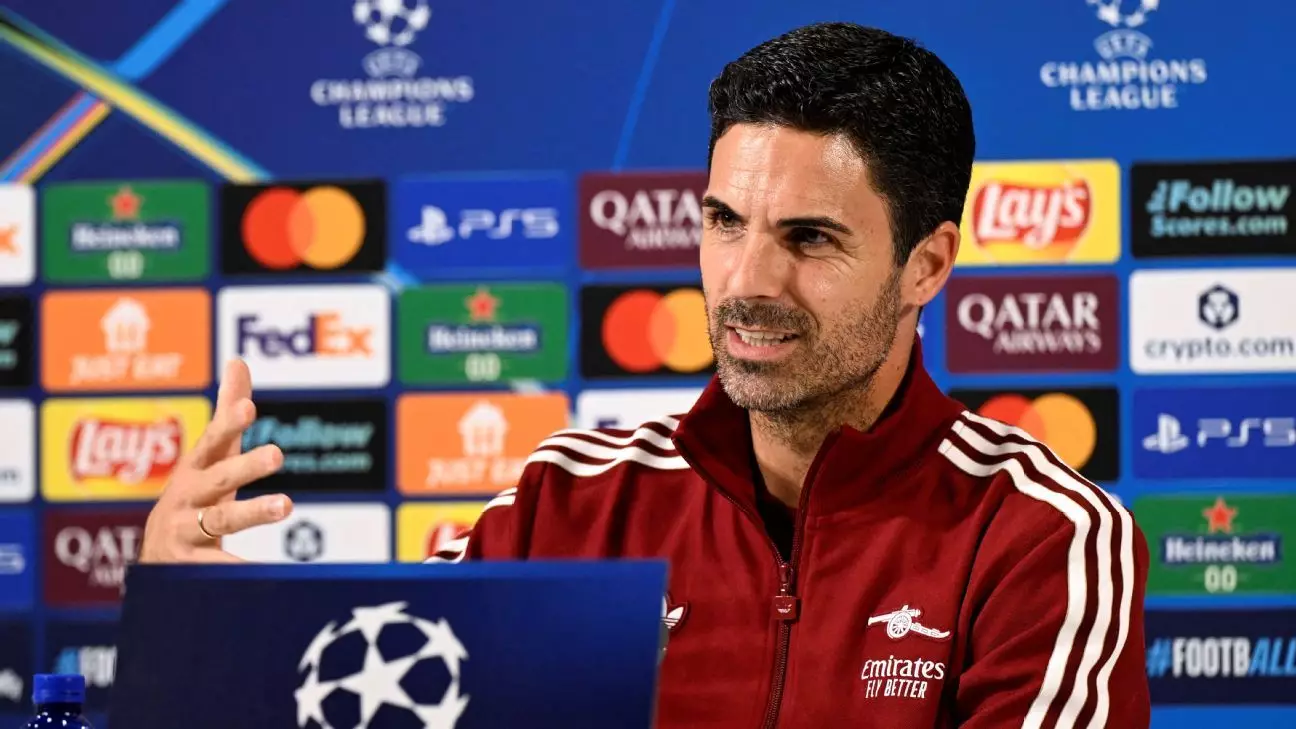
Arsenal Football Club, one of England’s most storied and revered institutions, has long been haunted by the specter of its European futility. With 13 English top-flight titles, the Gunners boast a proud national legacy, yet their quest for continental supremacy continues to elude them. For decades, Arsenal has been regarded as the biggest club never to have secured the coveted Champions League trophy, a symbol of true European greatness. This persistent lack of success is not merely a statistic; it is a profound barrier that defines their identity and fuels their ambitions.
Under the stewardship of Mikel Arteta, the club appears poised at a crossroads—whether to accept this historical shortcoming or to harness it as the catalyst for transformation. Arteta’s rhetoric about “changing the history of our club” goes beyond mere rhetoric; it signals a shift in mindset. In a competitive landscape where giants like Real Madrid, Barcelona, Bayern Munich, and Manchester United have repeatedly lifted the trophy, Arsenal’s yearning becomes a relentless pursuit—not just of victory, but of recognition. Their single final appearance in 2006 and limited semifinals since the inception of the competition underscore how rare breakthrough moments truly are for a club of their stature.
The question isn’t solely about winning but about rewriting the narrative. For Arsenal, the Champions League is not just a tournament; it’s a crucible that tests their resilience, character, and hunger. Their desire for European glory signifies an internal resolve to elevate themselves beyond the shadows of their past failures. As Arteta eloquently notes, failure in this competition is part of the journey—an unavoidable reality that demands perseverance. The challenge, then, is collective mental toughness and unwavering belief that they can transcend historical limitations. Success, in this context, would mean finally overcoming the psychological barriers that have held them back for so long.
Facing the Goliaths: The Roadblocks and the Courage to Stick to the Vision
Arsenal’s recent runs have demonstrated both promise and pitfalls. Their narrow semi-final defeat last season to PSG—despite an impressive second-leg performance—served as a painful reminder of how thin the margins are at this level. The bittersweet feeling of coming so close only emphasizes the importance of relentless improvement and confidence. It also accentuates the gap that still exists between their aspirations and their current capabilities.
Given the injuries that have plagued their squad—Bukayo Saka, Martin Ødegaard, Kai Havertz, Ben White, and Gabriel Jesus—the immediate task is daunting. Yet, Arteta’s optimistic outlook persists. He believes that, despite setbacks, the spirit and quality of his team remain sufficient to contend with the best in Europe. His excitement about starting anew, even in the face of adversity, reflects a mindset rooted in resilience. This mindset is crucial for a team striving for greatness; it is about embracing adversity as fuel rather than surrendering to it.
Arsenal’s quest entails a foundation built on unwavering belief and meticulous attention to detail. For success in this brutal competition, the squad must be not only talented but also adaptable, mentally tough, and unified. Arteta’s acknowledgment that “the margins are super small” indicates a profound understanding that every decision, every moment, must be seized with precision. It underscores the necessity of cohesion, both physically and psychologically, to seize opportunities when they arise and to withstand setbacks without losing composure.
The Power of Ambition and the Need for Ruthless Execution
Looking ahead, Arsenal’s road to success will demand more than hope—it will require ruthless execution, strategic ruthlessness, and a relentless hunger to learn from failures. Arteta’s mention of clubs that attempt multiple times before winning highlights a crucial insight: greatness is often born from perseverance and undeterred ambition. It is a message that resonates deeply in Arsenal’s case.
The desire to “change history,” as Arteta puts it, signifies a willingness to take risks and to believe in the impossible. The long history of near-misses has created a fertile ground for growth—each disappointment a lesson, each setback a stepping stone. For Arsenal, unlocking the door to Champions League glory will hinge on maintaining a high level of performance in every match, cultivating mental resilience, and cultivating a squad that can thrive under pressure.
Ultimately, Arsenal’s pursuit of the Holy Grail in Europe is a testament to their unyielding belief in their potential. The club’s narrative is no longer just about history but about actively shaping a new chapter—a chapter where the team’s resilience, ambition, and refusal to accept limits propel them toward ultimate triumph. The coming seasons will reveal whether this storied club can turn their dreams into reality and etch their name definitively into European football’s pantheon.